.webp&w=384&q=75)

Loading, please wait...
Loading, please wait...
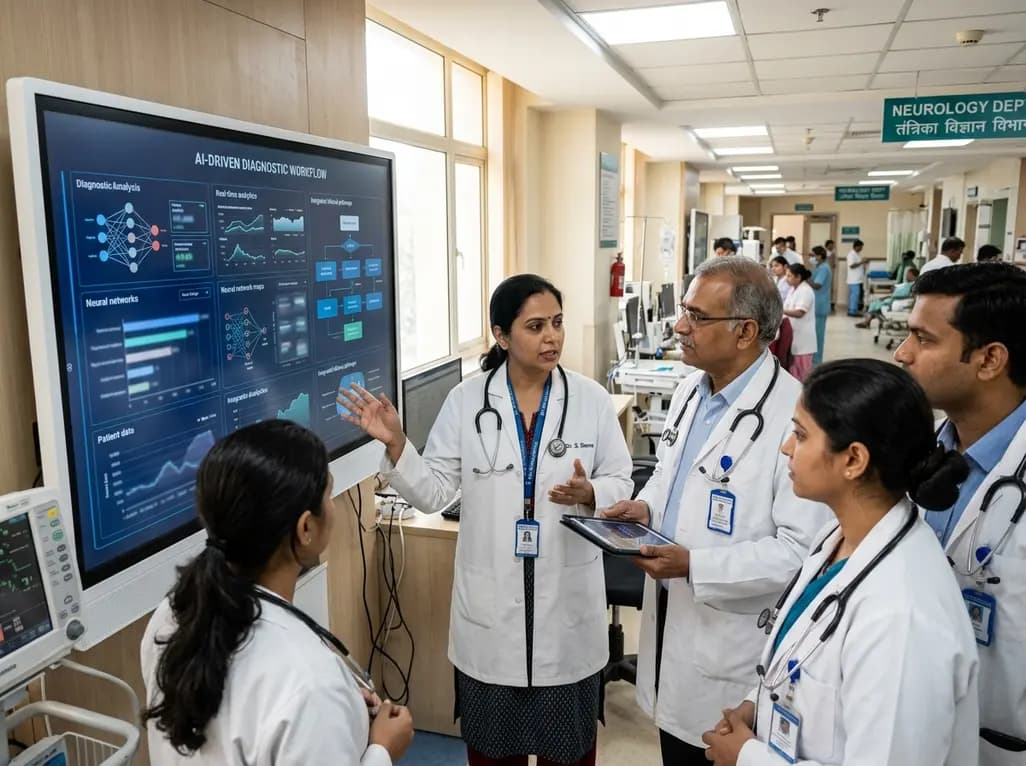
The transition toward AI-native hospitals represents a major evolution in modern healthcare delivery across India. Healthcare organizations previously treated machine learning as isolated pilot projects. Today, healthcare leaders recognize that execution matters far more than mere technology acquisition. Rising patient volumes, an aging demographic, and chronic disease burdens demand rapid operational adaptation. India's hospital market continues to expand swiftly toward unprecedented financial milestones. Consequently, expanding physical bed counts alone cannot solve capacity constraints. Healthcare systems must optimize institutional efficiency and assist medical specialists. Therefore, embedding algorithmic intelligence directly into daily clinical routines has become a foundational healthcare necessity.
Many healthcare facilities previously purchased digital solutions without altering their underlying care pathways. Consequently, these institutions struggled to move past preliminary trial phases. Successful organizations adopt an entirely different approach to digital implementation. Specifically, scaling institutions treat artificial intelligence as a comprehensive workflow redesign rather than an information technology purchase. Administrators evaluate operational handoffs, determine who reviews findings, and establish clear validation protocols. In contrast, unsuccessful centers simply purchase disconnected software tools. When hospital teams fail to modernize operational pathways, clinical adoption inevitably stalls. Furthermore, staff members encounter alert fatigue and operational friction. Therefore, leadership teams must actively redesign baseline clinical protocols before deploying machine learning systems. Modern healthcare delivery demands end-to-end process synchronization across departments. Additionally, successful hospital leaders involve frontline clinicians during the earliest architectural discussions. Clinicians provide invaluable insight into daily clinical obstacles and patient documentation delays. When practitioners shape deployment pathways, institutional trust grows rapidly. Furthermore, healthcare teams clearly define how algorithm results reach attending physicians without causing disruptive interruptions. As a result, automated diagnostic triage integrates cleanly into routine consultations. Hospitals that prioritize workflow orchestration avoid unnecessary administrative friction. In contrast, institutions that bypass workflow analysis face persistent resistance and fragmented data silos. Consequently, sustainable digital transformation requires disciplined workflow engineering before technology procurement.
Radiology represents the primary clinical domain where process modernization became urgent and mandatory. High imaging volumes and structured, quantifiable outcomes forced diagnostic departments to act quickly. Furthermore, imaging specialists faced overwhelming daily case backlogs across acute emergency departments and outpatient centers. Diagnostic platforms in India now process tens of thousands of imaging studies every single day. This operational scale succeeds because administrators rebuilt the reporting environment from the ground up. In addition, deep learning systems now pre-screen imaging studies to detect critical anomalies like acute intracranial hemorrhages. Consequently, triage algorithms escalate life-threatening findings directly to duty radiologists within minutes. This rapid prioritization significantly accelerates clinical intervention during acute emergencies. Radiologists no longer review imaging scans in simple chronological sequences. Instead, intelligent queues prioritize time-critical pathology without delay. Moreover, automated pre-drafting reduces repetitive typing for complex imaging reports. As a result, radiologists focus their primary energy on nuanced anatomical interpretations. Ultimately, radiology provides an effective template for algorithmic deployment across other clinical domains. Similarly, pathology and cardiology departments are beginning to observe comparable workflow benefits. However, diagnostic imaging remains the proven proving ground for large-scale enterprise execution. By demonstrating consistent diagnostic quality across high volumes, modern imaging workflows show how computational tools enhance clinician stamina.
The concept of AI-native hospitals extends far beyond basic departmental tool deployments. In these advanced environments, intelligence functions as foundational operational infrastructure rather than disconnected modular add-ons. Hospital administrators evaluate algorithmic investments through long-term clinical efficiency and sustainable institutional performance. Consequently, health systems embed computational intelligence across diagnostic triaging, predictive inpatient beds, and surgical scheduling. Furthermore, machine learning models continuously synthesize electronic medical records, laboratory parameters, and patient vitals. Attending physicians instantly receive automated alerts regarding deteriorating inpatients. Therefore, clinical teams intervene proactively before acute complications escalate into life-threatening emergencies. In addition, intelligent patient scheduling minimizes outpatient waiting times and optimizes operating theater utilization. Administrative teams also leverage automated documentation scribes to reduce clinical administrative burdens. As a result, physicians reclaim meaningful time for direct, face-to-face patient interactions. Modern healthcare leadership recognizes that intelligence must serve clinical care directly. Thus, modern hospital operating models unite clinical expertise, administrative logistics, and computational automation into one cohesive ecosystem. Meanwhile, digital platforms seamlessly synchronize data between remote outpatient clinics and centralized tertiary hospitals. Consequently, patients in secondary and tertiary centers receive equivalent diagnostic oversight from experienced medical specialists. This comprehensive integration ensures consistent clinical standards across disparate healthcare facilities.
Deploying computational models inside hospital networks demands strict clinical governance and regulatory transparency. Diagnostic algorithms in India represent Software as a Medical Device governed by the CDSCO under Medical Device Rules. Therefore, hospital procurement teams must verify valid medical device registrations before clinical commissioning. In addition, institutions must maintain complete compliance with national data protection mandates and sovereign privacy standards. However, regulatory clearance alone does not guarantee widespread clinician trust. Early algorithmic deployments often sparked practitioner anxiety regarding medical liability and diagnostic accuracy. Furthermore, early commercial benchmarks compared computational performance against unrealistic diagnostic baselines. Over time, healthcare leaders realized that algorithms should support rather than replace human judgment. Consequently, hospitals must institute definitive sign-off protocols for all algorithmic suggestions. Attending physicians always retain ultimate diagnostic authority and legal accountability for treatment decisions. Moreover, clinical committees must periodically audit algorithmic accuracy across diverse patient demographics. As a result, clear governance safeguards patient safety while protecting institutional integrity. Similarly, robust liability protocols ensure that clinicians understand their exact responsibilities when accepting or overriding machine recommendations. Consequently, institutional clarity alleviates legal hesitation among practicing physicians. Ultimately, trustworthy computational systems empower medical staff while preserving essential human oversight.
Healthcare organizations frequently struggle to quantify the economic value of artificial intelligence. Traditionally, financial committees evaluated digital investments through narrow metrics like direct cost savings per diagnostic scan. However, leading healthcare executives increasingly reject this limited financial framework. The clearest indicator of digital return emerges from specialist clinical time reclaimed. When triage algorithms prioritize critical diagnostic studies, diagnostic turnaround drops significantly. Consequently, emergency teams initiate targeted clinical treatments much faster, preventing costly inpatient complications. Furthermore, expedited patient flow reduces diagnostic bottlenecks across intensive care units and emergency bays. Reduced turnaround times also lower hospital lengths of stay for acute admissions. As a result, hospital beds turnover more efficiently, expanding overall hospital capacity. Moreover, automated documentation assistants prevent physician burnout and improve staff retention rates. Retaining highly qualified specialists yields substantial long-term economic stability for healthcare networks. Therefore, progressive hospital boards judge digital investments by overall patient outcomes, clinical throughput, and practitioner endurance. In addition, enhanced diagnostic turnaround accelerates outpatient referrals and strengthens institutional reputation. Patients naturally prefer healthcare facilities that provide rapid, dependable, and precise clinical evaluations. Thus, clinical efficiency translates directly into sustainable organizational growth and superior community healthcare delivery.
Q1: What distinguishes traditional digital hospitals from AI-native hospitals?
Traditional digital hospitals primarily digitize paperwork by layering electronic health records and standalone software onto existing operational routines. In contrast, AI-native hospitals reconstruct clinical workflows from the ground up around computational intelligence. These advanced healthcare institutions embed predictive analytics, automated diagnostic triaging, and real-time clinical decision support directly into daily care pathways. Consequently, computational intelligence actively guides institutional capacity, streamlines patient queues, and assists medical specialists at every clinical touchpoint.
Q2: How does diagnostic AI impact clinical liability for Indian healthcare practitioners?
Diagnostic artificial intelligence operates strictly as clinical decision-support software under Indian medical device regulations. Consequently, algorithmic outputs do not replace licensed medical specialists or assume independent legal responsibility. Qualified physicians retain complete diagnostic authority, final sign-off responsibilities, and clinical liability for all patient care decisions. Therefore, healthcare institutions establish rigorous governance protocols requiring licensed clinicians to review, validate, or reject computational findings before finalizing diagnostic reports.
Q3: How do hospitals measure return on investment when scaling intelligent workflows?
Progressive hospital leadership measures return on investment by evaluating specialist clinical time reclaimed and overall operational throughput rather than simple cost savings per scan. Effective algorithmic triage shortens emergency turnaround times, decreases intensive care bottlenecks, and shortens total hospital lengths of stay. Furthermore, automated clinical documentation mitigates physician burnout and expands outpatient consultation capacity, directly driving superior clinical outcomes and institutional financial sustainability.
Disclaimer: This content is for informational and educational purposes only. It does not constitute medical advice or replace professional judgment. Refer to the latest local and national guidelines for clinical practice.
References

Read summarized clinical updates, watch expert medical content, and earn CME certifications right from your smartphone.
Open your smartphone camera to scan and install.





As healthcare demand accelerates across India, leading healthcare providers are shifting focus from software procurement to operational redesign. Discover how structured diagnostic workflows, clinical accountability, and integrated digital platforms turn pilot algorithms into scalable institutional capabilities.
Today
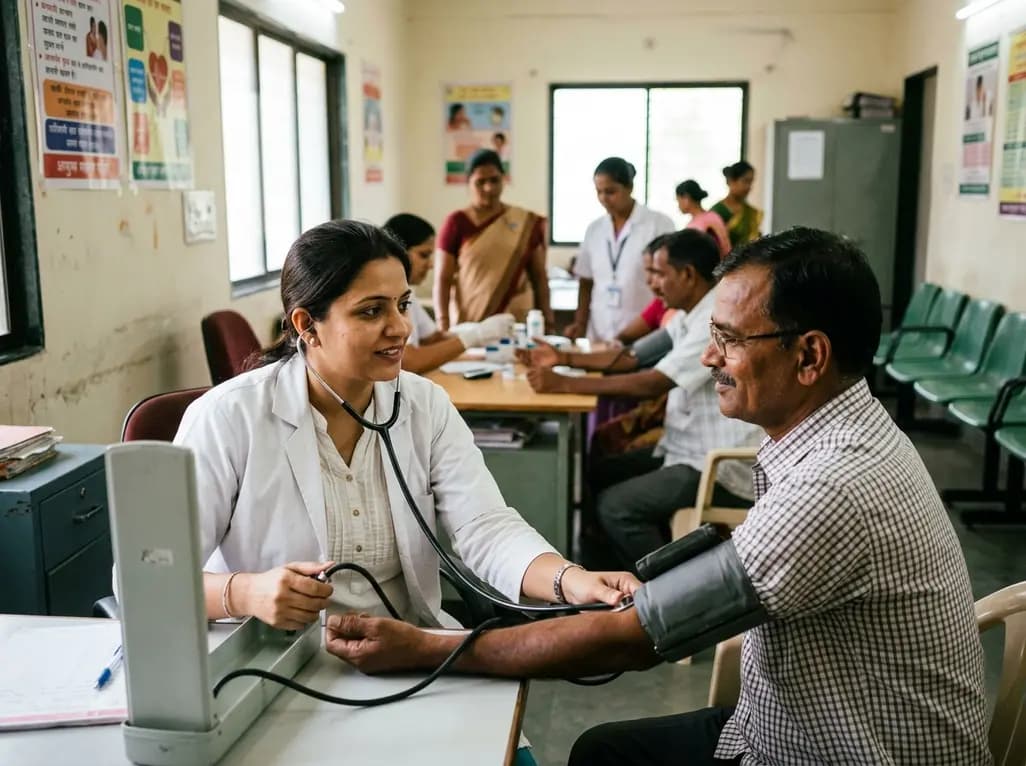
India has screened over 420 million adults for chronic metabolic conditions through its network of Ayushman Arogya Mandirs. This public health milestone underscores an aggressive shift toward early detection, decentralized primary care, and expanded insurance coverage under central health initiatives.
Today
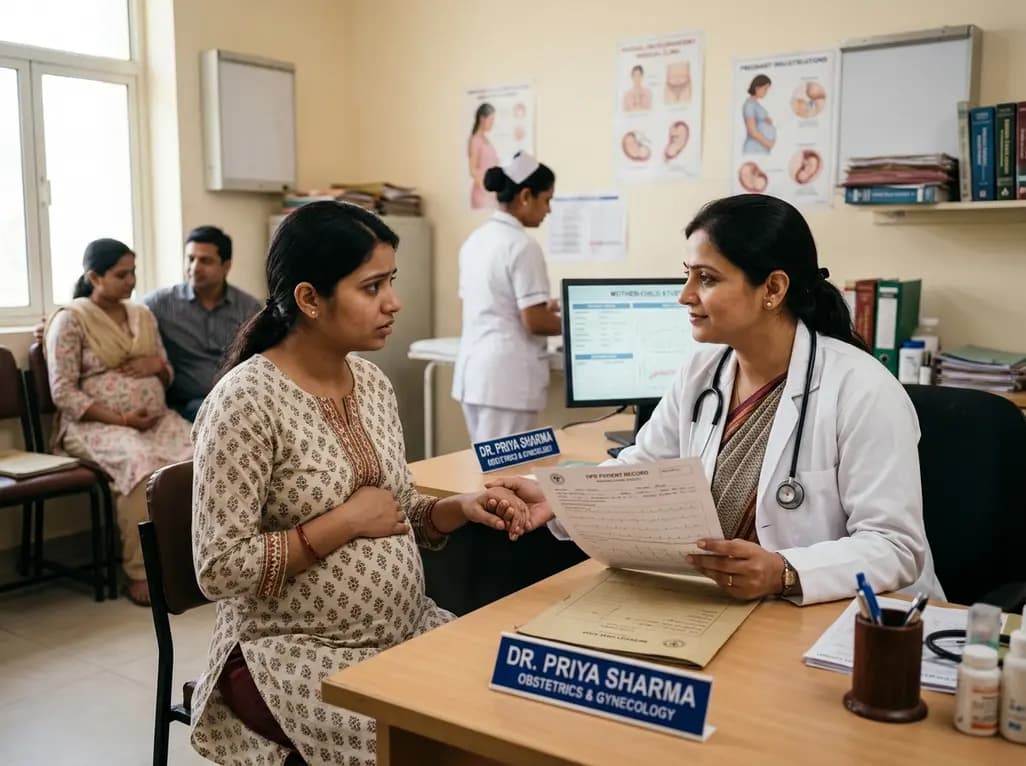
A large population cohort study evaluated over 167,000 mother-child pairs to assess the link between maternal mood disorders, pharmacotherapy, and long-term child neurodevelopment. The results underscore that maternal illness, rather than pharmacotherapy alone, drives most special educational needs in offspring.
Today
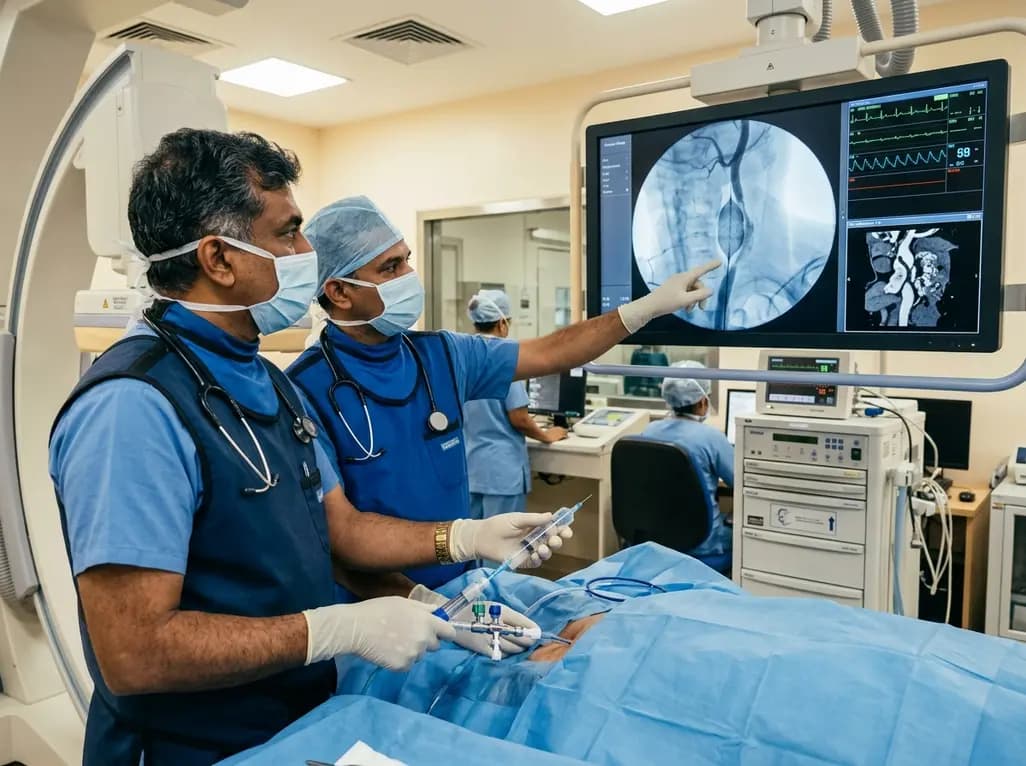
Discover how rescue cutting balloon angioplasty successfully modifies heavily calcified carotid stenosis, enabling stent delivery without baroreceptor instability and ensuring favorable long-term neurologic outcomes.
Today
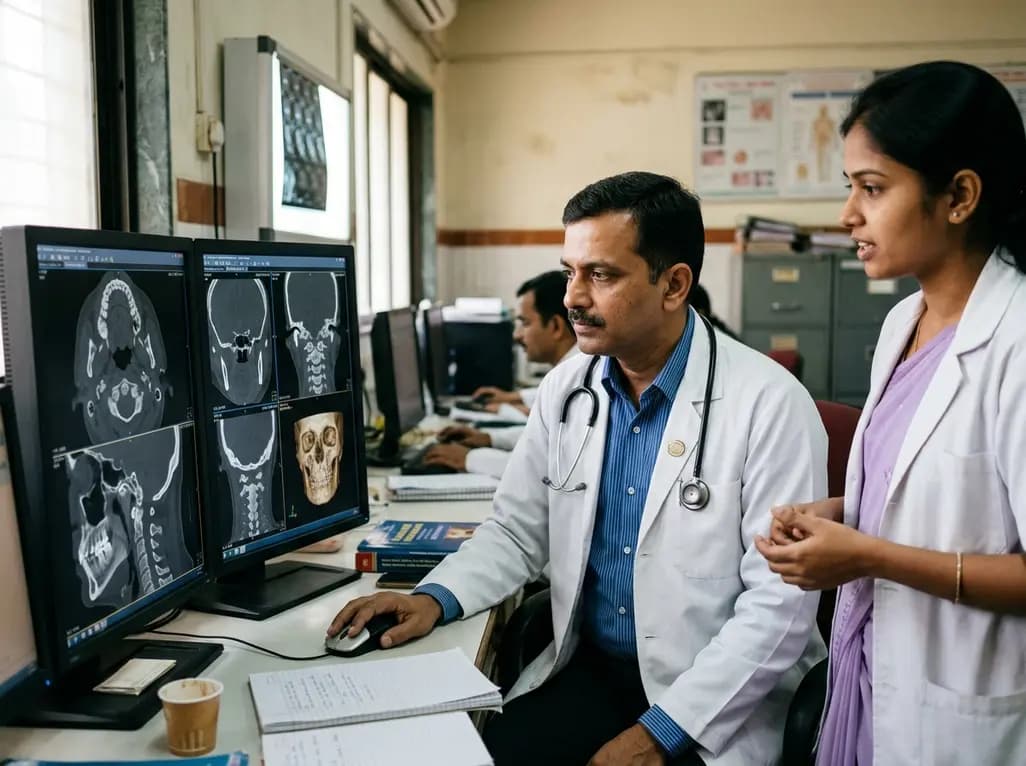
A retrospective CBCT study reveals that superior TMJ space asymmetry correlates moderately with occipital condyle-atlas-axis asymmetry in unilateral TMJ osteoarthritis, highlighting an imaging correlate between jaw biomechanics and upper cervical alignment rather than a standalone diagnostic marker.
Today
Data from the 2026 Workforce Health Index reveals that 38.7% of urban employees and dependents exhibit abnormal glycemic control. Emerging at increasingly younger ages, this metabolic shift intersects with severe vitamin deficiencies, highlighting the urgent need for early workplace screenings and targeted clinical care.
Today
