.webp&w=384&q=75)

Loading, please wait...
Loading, please wait...

Integrating technological innovation into healthcare curricula has become a prominent priority for modern universities. Recently, AI in nursing education has gained substantial momentum as academic institutions explore digital tools to enhance teaching, research, and clinical simulations. However, educator perspectives regarding these emerging technologies reveal a complex intersection between digital optimism and instructional caution. While academic leaders recognize the potential of algorithmic platforms to transform pedagogical paradigms, actual implementation frequently encounters significant cultural, structural, and philosophical hurdles. Understanding these nuanced viewpoints is essential for developing balanced frameworks that prepare future healthcare professionals for technologically advanced environments without sacrificing foundational clinical competencies.
Technological advancement is accelerating across healthcare disciplines, prompting academic nursing faculties worldwide to evaluate generative tools, predictive models, and intelligent tutoring systems. A comprehensive scoping review synthesizing data across fifteen studies from eight countries and encompassing 2004 nursing academics highlights distinct patterns of usage. Nursing educators predominantly leverage digital platforms to streamline administrative workflows, draft research manuscripts, and optimize lecture preparation. Consequently, educators experience notable gains in day-to-day productivity and scholarly efficiency.
However, educators rarely deploy artificial intelligence for direct student evaluation or high-stakes clinical assessments. Faculty members express persistent hesitation regarding automated grading reliability, algorithmic opacity, and potential academic integrity breaches. Furthermore, educators emphasize that human assessment remains vital to evaluate interpersonal competence and holistic judgment. Although faculty members actively utilize technology for administrative tasks, direct student-facing pedagogical applications remain limited. As a result, educational institutions face the challenge of bridging the gap between personal faculty productivity and structured classroom integration.
Educational researchers frequently employ the Substitution, Augmentation, Modification, Redefinition (SAMR) framework to evaluate how educators embed novel technology into their curricula. When researchers apply this model to evaluate academic adoption, a clear structural pattern emerges. Approximately two-thirds of documented institutional applications operate strictly at the augmentation level. In these instances, digital tools enhance existing instructional routines without fundamentally altering learning objectives.
Remarkably, none of the evaluated studies demonstrated transformative redefinition, where technology enables entirely new pedagogical tasks. This discrepancy illustrates a pronounced adoption paradox within modern healthcare academia. While most nursing academics express strong beliefs that algorithmic tools will revolutionize healthcare training, actual classroom practice remains decidedly conservative. Faculty members readily replace conventional search engines with conversational agents or generate lecture outlines using algorithmic tools. Nevertheless, educators avoid restructuring clinical decision-making exercises around advanced computational platforms. This conservative stance stems from a deliberate effort to safeguard patient safety and evidence-based standards.
Widespread curricular integration continues to face formidable practical and institutional obstacles across diverse educational institutions. The most prominent barrier reported by nursing faculty is the absence of comprehensive institutional policies. Without explicit institutional guidelines regarding academic integrity, ethical usage, and data privacy, individual educators often hesitate to introduce automated tools into their formal coursework. Furthermore, significant knowledge gaps persist among faculty members, as few institutions provide structured, ongoing professional development programs focusing on digital literacy.
In addition to policy vacuums, global access disparities exacerbate implementation inequities between institutions. Academic centers in high-resource regions frequently access sophisticated simulation platforms and enterprise-grade software licenses. Conversely, poorly funded nursing schools often lack the essential digital infrastructure required to deploy advanced educational tools. Consequently, these socioeconomic divides threaten to widen global educational disparities. To mitigate these disparities, healthcare education leaders must advocate for equitable resource allocation and transparent regulatory frameworks.
Nursing is intrinsically grounded in human empathy, physical presence, and relational communication. Therefore, nursing academics voice legitimate concerns regarding the potential erosion of clinical reasoning and core professional values. If students rely prematurely on predictive algorithms or automated summaries, they may fail to cultivate deep critical thinking and diagnostic intuition. Academic educators emphasize that diagnostic algorithms cannot replace the nuanced observation required at a patient’s bedside.
Moreover, educators worry about the potential dilution of professional nursing identity. When learners view clinical decision-making as a purely computational task, the holistic essence of nursing care risks marginalization. Hence, faculty members advocate for a balanced pedagogical strategy. In this hybrid model, artificial intelligence acts as an adjunct cognitive aid rather than an authoritative substitute for human judgment. By emphasizing ethical stewardship, educators can teach students to critique algorithmic recommendations while honoring patient autonomy and dignity.
To overcome current integration barriers, nursing leadership must develop structured, evidence-based transition strategies. First, academic institutions should establish clear institutional governance frameworks that define acceptable technology usage across coursework, research, and clinical evaluation. Transparent guidelines protect academic integrity while empowering faculty members to design innovative teaching modules. Second, universities must invest in continuous faculty development programs that demystify algorithmic mechanics and pedagogical design principles.
Additionally, curriculum designers should collaborate closely with clinical educators to create authentic simulation scenarios. Virtual patient encounters powered by adaptive algorithms can provide safe environments for undergraduate students to practice therapeutic communication and diagnostic prioritization. However, these digital exercises must always culminate in structured, faculty-led debriefing sessions. Through intentional curricular design, nursing schools can cultivate technologically proficient graduates who remain deeply committed to person-centered clinical excellence.
The adoption paradox describes a scenario where nursing educators express strong optimism regarding the transformative potential of digital tools, yet institutional implementation remains remarkably conservative. While faculty recognize the future impact of technology, most actual applications remain confined to basic administrative or productivity tasks rather than reshaping core instructional delivery.
The SAMR framework classifies educational technology adoption into four progressive tiers: substitution, augmentation, modification, and redefinition. In academic nursing, most current initiatives operate at the augmentation level, providing functional enhancements to existing tasks. Currently, educational programs have not achieved true redefinition, which requires creating entirely new pedagogical paradigms.
Nursing educators express caution regarding student assessments due to concerns about algorithmic bias, opaque decision-making processes, and potential violations of academic integrity. Furthermore, automated systems cannot accurately evaluate nuanced relational attributes, bedside empathy, and hands-on psychomotor competencies that represent essential requirements for safe, holistic clinical nursing practice.
Disclaimer: This content is for informational and educational purposes only and should not be considered medical advice. Always consult a qualified healthcare professional regarding any medical condition or treatment. Refer to the latest local and national guidelines for clinical practice.
References
Hawkins N et al. Artificial Intelligence in Nursing Education: A Scoping Review of Academic Perspectives. J Adv Nurs. 2026 Aug 15. doi: 10.1111/jan.70728. PMID: 42603140.
Doston T, Fontenot J, Morris D, Hebert M. The Use of Artificial Intelligence in Nursing Education: A Scoping Review. J Nurs Educ. 2025 Aug;64(8):479-488. doi: 10.3928/01484834-20250313-03. PMID: 40801516.
Habobi S, Abualrahi A, Bumarah R, et al. From Substitution to Redefinition: The SAMR Model as a Framework for AI Adoption in Nursing. Am J Nurs Res. 2025;13(2):44-50. doi: 10.12691/ajnr-13-2-5.

Read summarized clinical updates, watch expert medical content, and earn CME certifications right from your smartphone.
Open your smartphone camera to scan and install.





A recent global scoping review examines how nursing academics perceive and adopt artificial intelligence. Despite widespread enthusiasm, implementation remains conservative, highlighting institutional barriers, policy gaps, and the urgent need to balance digital tools with relational nursing values.
last month

A secondary analysis of an HIV cure-related trial in South Africa highlights the acceptability and safety of serial excisional lymph node and gut biopsies among young women. Clear communication, empathetic care, and altruistic motives helped mitigate initial apprehension and sustain longitudinal trial engagement.
Today
Explore the crucial link between dietary protein and immunocompetence. This review examines how low-protein nutrition shifts metabolic resources away from pathogen defense toward early reproduction, compromising host survival and immunity against severe bacterial infections.
Today
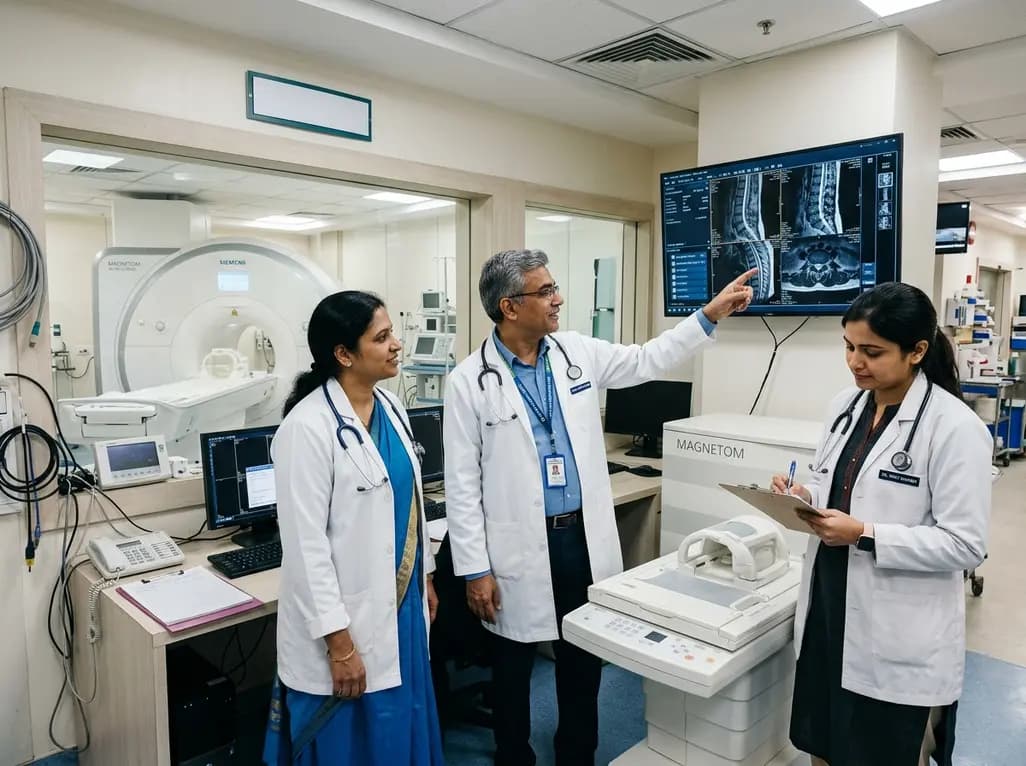
Under India's PLI initiative, domestic production of 57 critical medical devices has commenced, including MRI and CT scanners, cath labs, and heart valves. Global partnerships and local investments are expanding high-end technology, curbing import reliance, and strengthening clinical accessibility nationwide.
Today
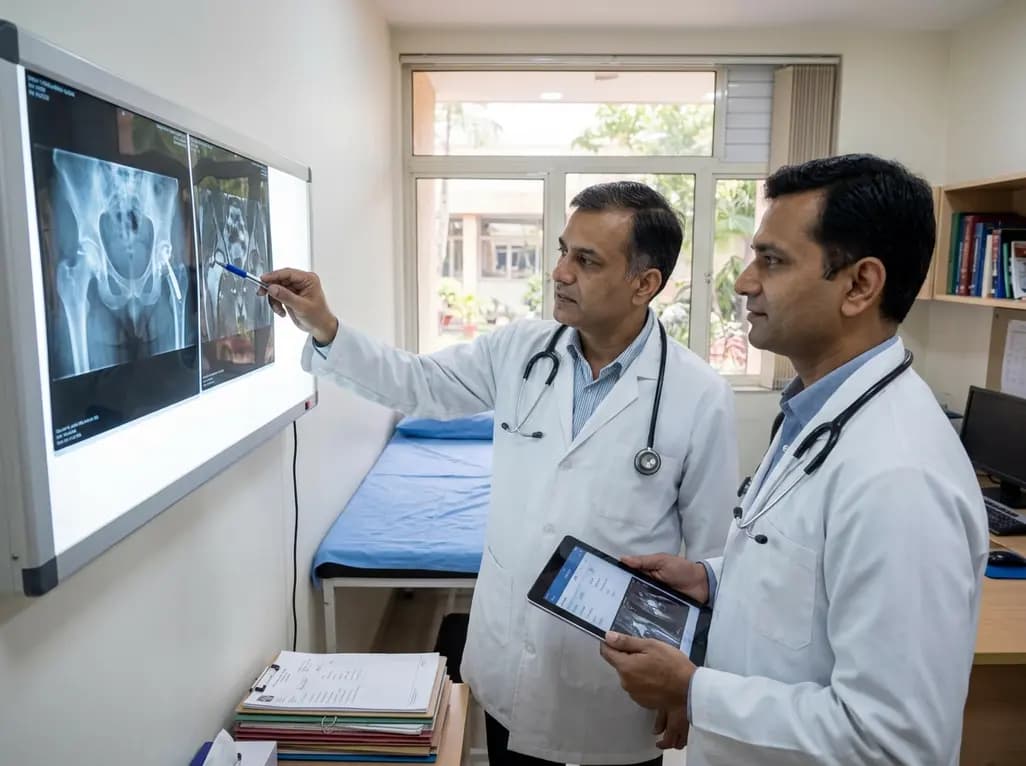
A longitudinal study reveals that patients undergoing staged bilateral hip arthroscopy experience progressive contralateral labral deterioration during surgical intervals. However, structural degradation does not compromise 2-year postoperative clinical outcomes or patient-reported satisfaction scores.
Today
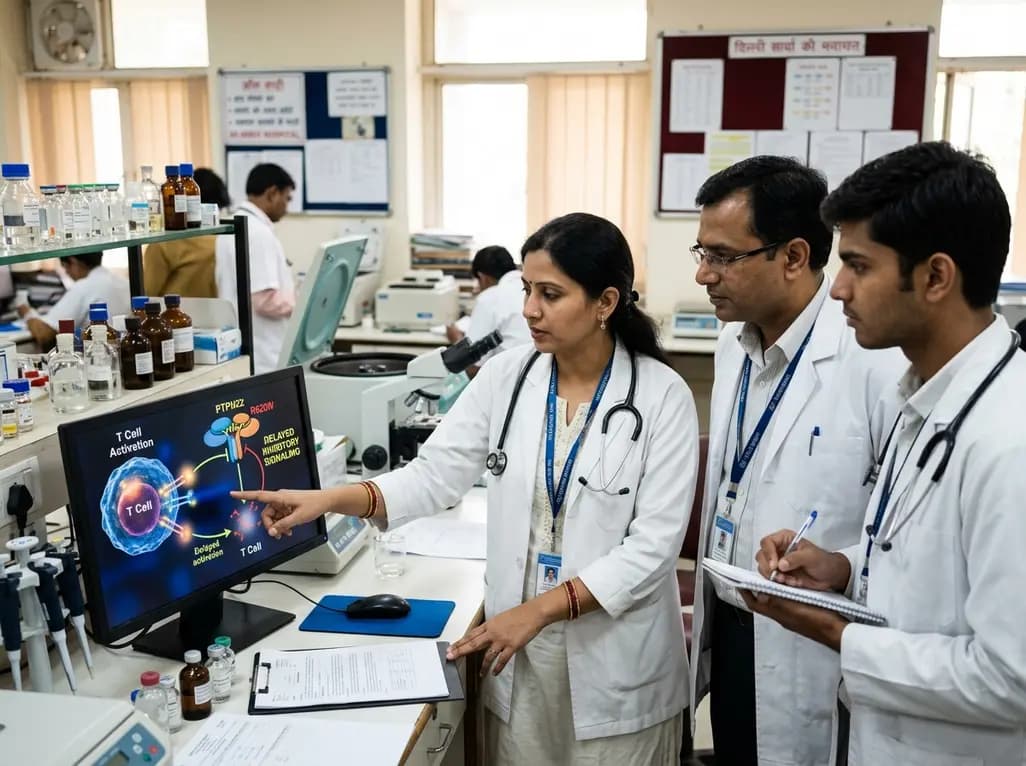
New immunological research reveals how PTPN22 forms a delayed inhibitory signaling complex to restrain T cell activation, explaining how the autoimmune-linked R620W variant disrupts feedback control and promotes persistent inflammation in conditions like rheumatoid arthritis and type 1 diabetes.
Today
