.webp&w=384&q=75)

Loading, please wait...
Loading, please wait...
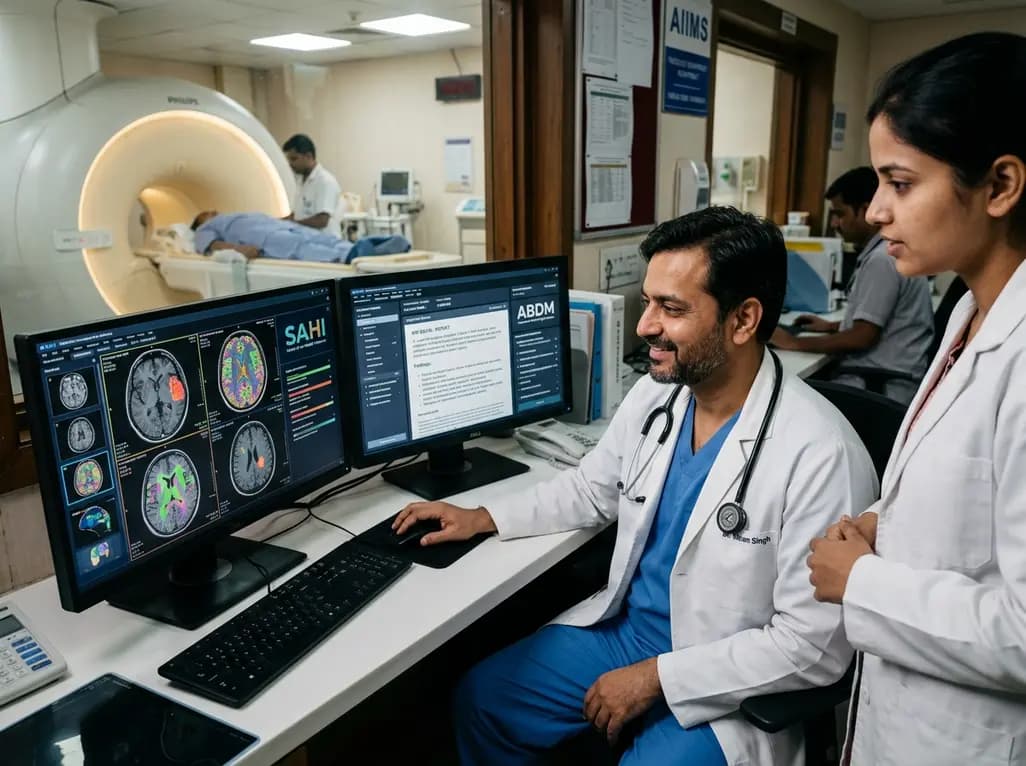
Artificial intelligence is redefining clinical practice and hospital operations across the world. In this evolving landscape, the adoption of AI in healthcare India has transitioned from speculative experimentation into measurable clinical utility. Healthcare professionals are routinely facing heavy outpatient rosters and administrative burdens. Consequently, digital technologies offer vital tools to optimize clinical decision-making, expand patient capacity, and enhance diagnostic speed. Recent survey data indicates that over seventy percent of Indian practitioners experience expanded patient consultation capacity after deploying automated digital tools. These innovations demonstrate how modern computational power addresses everyday systemic friction in clinics and hospitals.
Indian clinicians manage some of the highest patient volumes globally. Therefore, finding practical ways to balance clinical demand with practitioner endurance remains an urgent institutional priority. Advanced machine learning models now automate routine operational tasks. For example, intelligent triage systems, digital documentation assistants, and smart scheduling software save Indian clinicians upwards of three full working weeks annually. Consequently, clinicians regain vital time to conduct thorough clinical examinations and address complex pathological conditions.
Furthermore, automated data consolidation aggregates disparate patient records into concise diagnostic summaries. Instead of manually reviewing scattered physical files, physicians can immediately assess longitudinal trends, prior prescriptions, and baseline laboratory values. Because clinicians spend less time entering data, their consultation capacity expands naturally. Survey findings demonstrate that practitioners using assistive algorithms see ten additional patients every week. Thus, computational efficiency translates directly into greater public healthcare access without increasing professional exhaustion.
Accurate interpretation of diagnostic data requires intense concentration and rapid synthesis of visual findings. Today, the clinical adoption of AI in healthcare India empowers medical specialists by providing objective analytical assistance during complex imaging investigations. For instance, deep-learning reconstruction algorithms have fundamentally altered conventional magnetic resonance imaging protocols. Solutions like SmartSpeed accelerate scan acquisition up to three times faster while preserving critical anatomical resolution. Consequently, patient throughput increases, scan motion artifacts decline, and claustrophobic patients undergo significantly shorter examinations.
Moreover, advanced visualization platforms leverage predictive algorithms to flag urgent pathological anomalies rapidly. Radiologists evaluate subtle pulmonary nodules, stroke indicators, or vascular lesions with greater confidence and fewer diagnostic oversights. These computational tools act as vigilant secondary readers within picture archiving and communication systems. However, these systems do not replace diagnostic specialists. Rather, they highlight critical findings and structure quantitative measurements systematically. As a result, diagnostic teams deliver timely reports, allowing acute interventions to proceed without unnecessary delays.
Specialist medical expertise in India remains heavily concentrated within metropolitan tertiary healthcare centers. Conversely, rural districts and semi-urban localities routinely experience acute shortages of experienced radiologists, oncologists, and cardiologists. Assistive machine learning tools help bridge this geographical divide. By running validated diagnostic models on peripheral equipment, primary care centers can interpret screening radiographs and electrocardiograms locally. Consequently, non-specialist physicians detect early signs of diabetic retinopathy, cardiovascular compromise, or tuberculosis with elevated diagnostic sensitivity.
Furthermore, point-of-care ultrasound devices integrated with guidance algorithms assist peripheral nurses and medical officers in obtaining standard diagnostic planes. These tools empower frontline health workers to recognize obstetric complications or occult internal hemorrhage before transferring critical patients. Therefore, intelligent tele-radiology networks reduce unnecessary inter-hospital transfers and alleviate overcrowding in urban tertiary facilities. In addition, rural patients receive prompt triage closer to home, markedly improving emergency response times and survival outcomes.
Large-scale technological adoption in clinical medicine demands strict ethical oversight, robust data security, and verifiable diagnostic reliability. To navigate these requirements, the Government of India has established structured digital regulatory foundations. The Ayushman Bharat Digital Mission creates an interoperable national architecture. This framework links Ayushman Bharat Health Accounts, verified medical practitioner registries, and digital health facility databases securely. Consequently, patient health records move seamlessly between public dispensaries and private multi-specialty hospitals with explicit patient consent.
Simultaneously, the Strategy for Artificial Intelligence in Healthcare for India outlines unambiguous standards for ethical deployment and transparency. This national guidance framework ensures that emerging software tools undergo rigorous clinical validation before public release. In addition, the Benchmarking Open Data Platform for Health AI provides a privacy-preserving environment to test algorithms on diverse demographic datasets. Therefore, medical developers can validate model accuracy across regional demographics without compromising sensitive patient identities. This balanced regulatory environment fosters clinician confidence and protects patient rights nationwide.
Technology delivers sustainable value only when developers embed it directly into the regular clinical routine. If an algorithmic tool requires fragmented login credentials or cumbersome manual exports, busy clinicians will rapidly abandon it. Hence, modern hospital technology architectures prioritize friction-free interoperability. Machine learning models should operate silently within electronic health records, diagnostic laboratory portals, and clinical decision support systems. When diagnostic suggestions appear directly within existing interfaces, doctors adopt recommendations without operational friction.
Moreover, successful digital transition depends on building mutual trust between healthcare teams and automated systems. Clinicians must understand the basic analytical premises and algorithmic boundaries of clinical software. When developers maintain algorithmic transparency and avoid opaque computational decisions, practitioners adopt diagnostic recommendations more willingly. Meanwhile, patients also benefit from this workflow integration. Clinicians liberated from administrative screen time can re-establish meaningful eye contact and conduct compassionate bedside consultations. Ultimately, digital tools humanize healthcare delivery by restoring time for direct doctor-patient communication.
India is rapidly shifting from a digital consumer into a global creator of sophisticated medical technologies. International research hubs, including premier innovation campuses in Bengaluru and Pune, develop sophisticated diagnostic solutions locally. Indian software engineers and clinical researchers collaborate closely to design resilient medical devices, remote tele-ICU architectures, and automated pathology scanners. Because these systems undergo testing against diverse clinical phenotypes in high-volume Indian hospitals, they demonstrate exceptional technical resilience.
Consequently, therapeutic and diagnostic technologies conceived in Indian research laboratories are now exported to global healthcare markets. These frugal, high-throughput technologies serve healthcare networks across Asia, Africa, Europe, and North America. In conclusion, India possesses a unique convergence of technical talent, progressive digital governance, and immense clinical scale. By aligning engineering excellence with compassionate patient care, the nation is establishing new international benchmarks for digital health innovation.
Q1: How does artificial intelligence increase patient capacity in Indian hospitals?
Artificial intelligence automates time-consuming administrative duties, including clinical documentation, appointment scheduling, and historical chart reviews. By reducing paperwork, digital systems save clinicians up to three weeks of working time each year. Furthermore, intelligent tools streamline diagnostics, allowing doctors to interpret findings rapidly. As a result, healthcare professionals can see ten additional patients every week without sacrificing consultation quality or increasing clinical burnout.
Q2: What roles do the SAHI and BODH frameworks play in Indian digital health?
The Strategy for Artificial Intelligence in Healthcare for India establishes national guidelines ensuring ethical, safe, and transparent algorithmic deployment. Simultaneously, the Benchmarking Open Data Platform for Health AI acts as an evaluation platform where developers validate algorithms against diverse real-world datasets. Together, these frameworks prevent diagnostic bias, safeguard patient confidentiality, and ensure that commercial tools remain clinically reliable before entering everyday medical practice.
Q3: Does imaging acceleration through machine learning compromise magnetic resonance scan quality?
Modern machine learning algorithms do not compromise diagnostic image quality. Advanced deep-learning reconstruction systems remove ambient image noise and predict full k-space data from under-sampled acquisitions. This mathematical acceleration shortens scan durations up to three-fold while preserving fine tissue contrast and spatial resolution. Consequently, radiographers achieve pristine image quality with fewer patient motion artifacts and reduced diagnostic re-scans.
Disclaimer: This content is for informational and educational purposes only. It does not constitute medical advice or replace professional judgment. Refer to the latest local and national guidelines for clinical practice.
References

Read summarized clinical updates, watch expert medical content, and earn CME certifications right from your smartphone.
Open your smartphone camera to scan and install.





Discover the real-world impact of artificial intelligence on Indian healthcare. From cutting-edge MRI acceleration to national frameworks like SAHI and ABDM, technological innovations are expanding clinical capacity, streamlining diagnostic workflows, and helping clinicians deliver high-quality, equitable care.
Today
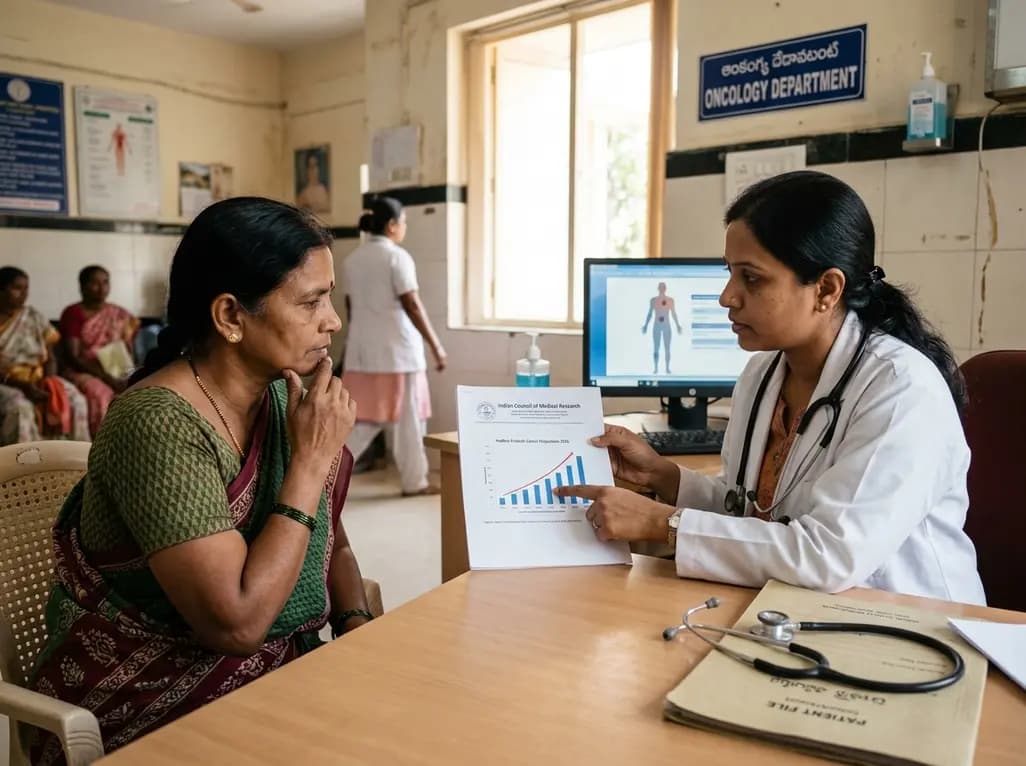
A new ICMR-NINE profile projects 65,000 new adult cancer cases in Andhra Pradesh for 2026, with women carrying the highest burden. The findings underscore an urgent need for oncological infrastructure, early detection initiatives, and public awareness campaigns addressing widespread tobacco and metabolic risk factors.
Today
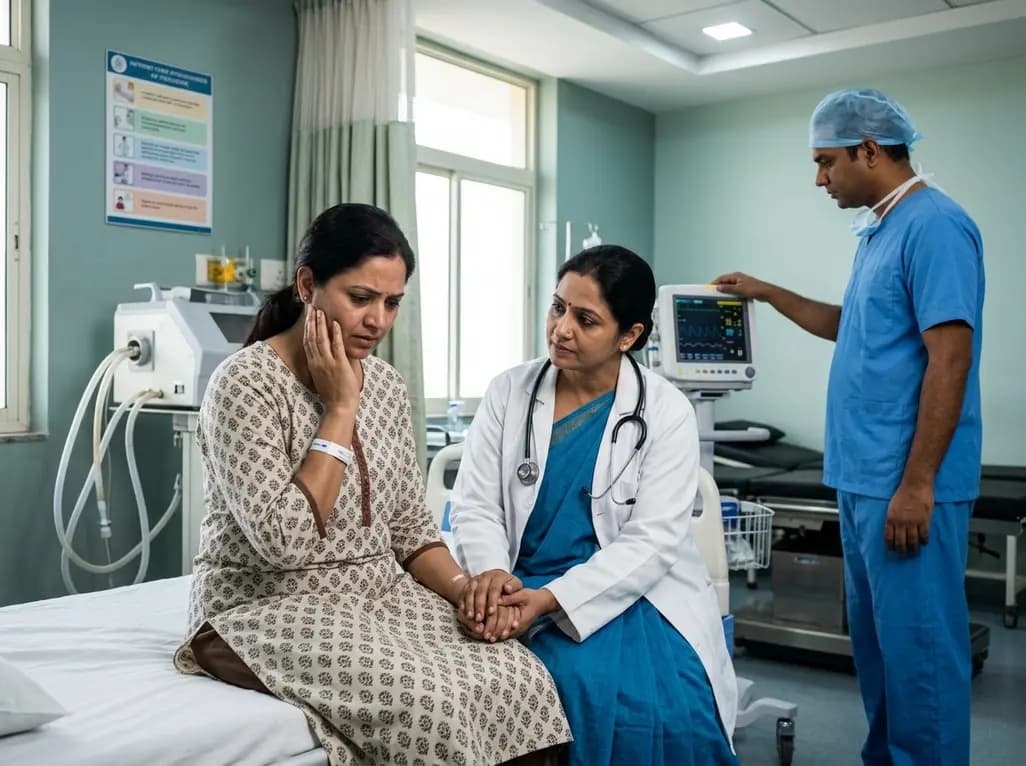
The FEBE study investigates the prevalence of post-traumatic stress disorder symptoms in women receiving high-dose-rate brachytherapy for cervical cancer, highlighting the critical role of procedural sedation and trauma-informed clinical care.
Today
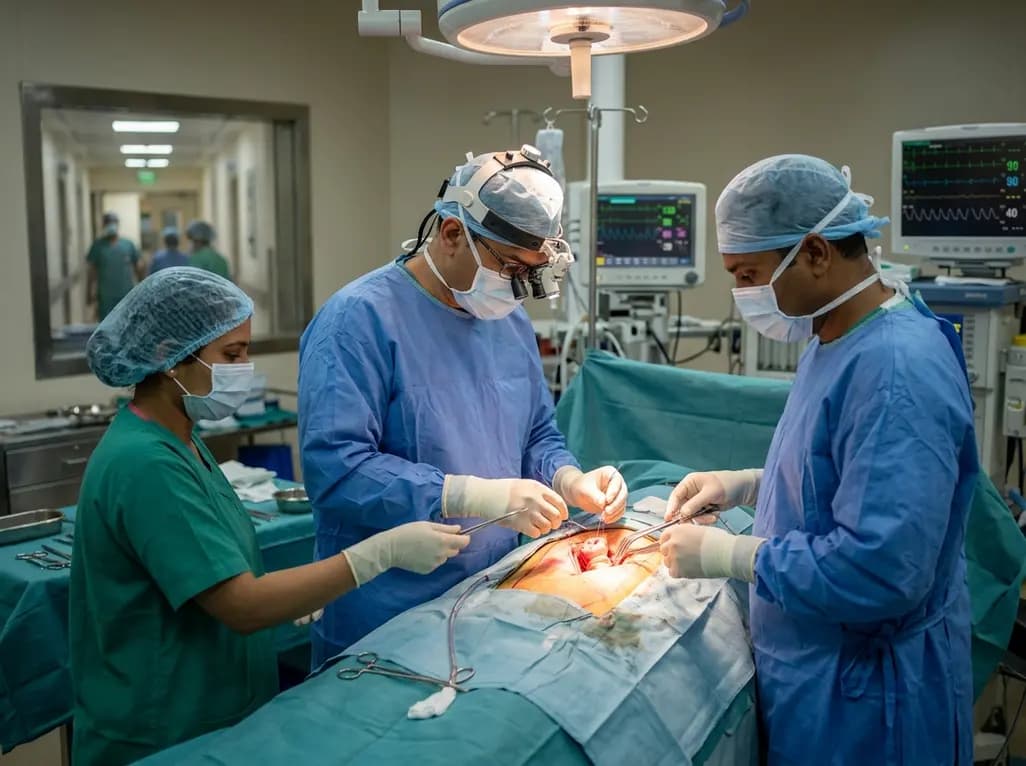
Aortic root aneurysms often develop silently, yet timely intervention provides a critical window to salvage the native aortic valve. Preserving the patient's own anatomy avoids lifelong anticoagulation, provided clinicians identify root dilatation before secondary leaflet distortion and ventricular failure occur.
Today
A Level I trauma center study shows a brief bedside mental health intervention boosts 30-day follow-up screening adherence by 84% in nonviolent injury patients. However, outcomes for violence survivors reveal critical care gaps, underscoring the urgent need for specialized community violence intervention programs.
Today

A preclinical study demonstrates that the SGLT2 inhibitor remogliflozin attenuates cyclophosphamide-associated peripheral neurotoxicity in rats. Remogliflozin restores antioxidant balance via Nrf2, suppresses NF-κB-driven neuroinflammation, activates PI3K/Akt survival signaling, and preserves structural myelin integrity.
Today
