.webp&w=384&q=75)

Loading, please wait...
Loading, please wait...
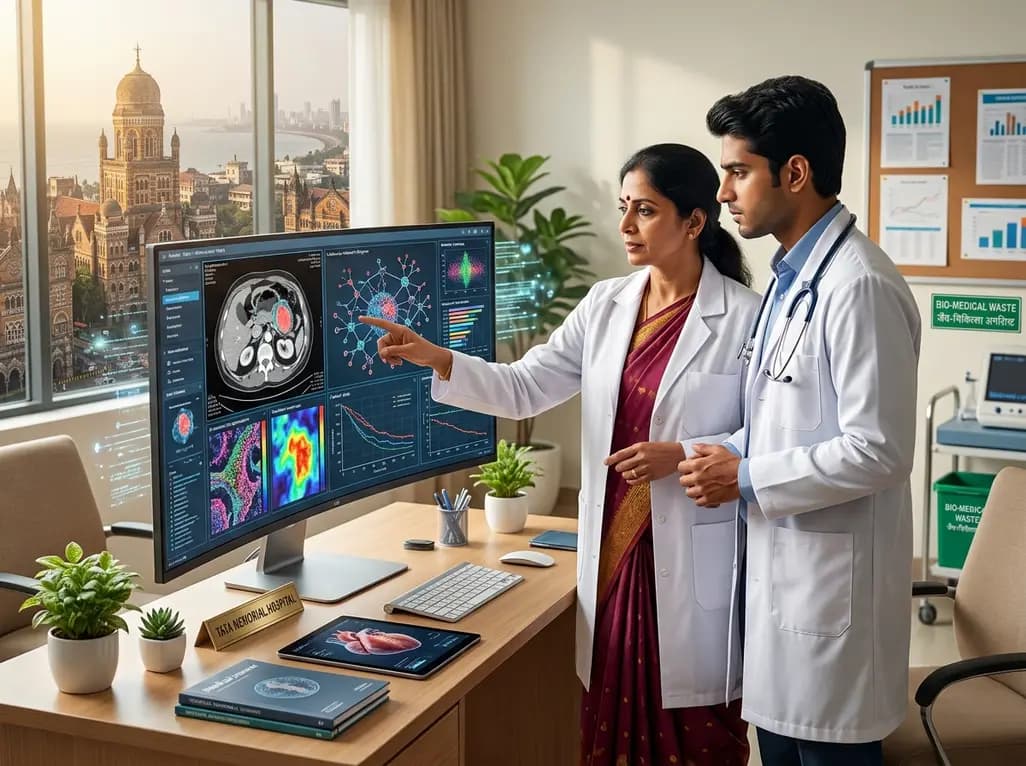
Cancer care is undergoing a profound paradigm shift. This change is driven by breakthroughs in computing. Today, the medical community is actively incorporating AI in cancer research to demystify complex biological systems. Instead of looking at oncological diseases as single genetic mutations, scientists now analyze them as multi-layered networks. At the Indraprastha Institute of Information Technology Delhi, researchers are pioneering this computational approach. By combining genomics, microfluidics, and machine learning, they aim to detect malignancies earlier. Consequently, these innovations are bridging the gap between clinical complexity and practical therapeutic decision-making.
Historically, oncology focused on studying isolated biomarkers or single genes to understand tumor progression. However, tumors are dynamic systems that involve intricate cellular interactions and thousands of genetic variables. To address this challenge, researchers now leverage AI in cancer research to evaluate vast multi-omic datasets simultaneously. Machine learning algorithms can identify subtle patterns that are virtually impossible for human eyes to spot. For instance, these computational models easily analyze cellular heterogeneity, gene expression profiles, and clinical records. By doing so, they convert unstructured biological noise into structured, actionable insights. Ultimately, this approach moves oncology away from reductionist models and toward a holistic understanding of tumor microenvironments. Furthermore, AI helps scientists map out how different cell lineages interact within a single tumor. Consequently, clinical researchers can predict disease behavior with far greater accuracy. This advanced capabilities allow specialists to design therapies that target the tumor's entire biological network rather than just a single mutating pathway.
Early detection remains the single most effective way to improve survival rates in oncology. Unfortunately, high-cost next-generation sequencing technologies limit widespread screening in developing nations like India. To solve this clinical challenge, Indian researchers developed an innovative eleven-gene blood test based on platelet RNA. This screening tool identifies tumor-educated platelets, which carry distinct molecular signatures altered by early-stage cancers. Specifically, the test is designed to run on standard RT-qPCR machines. Because these diagnostic machines were deployed widely across India during the pandemic, the infrastructure already exists. Consequently, hospitals can easily adopt this molecular screening method without massive capital expenditure. This approach democratizes early cancer screening. Moreover, it bypasses the need for high-end laboratory experts and expensive foreign genomic platforms. As a result, even tier-two and tier-three cities can offer sophisticated cancer screening. By leveraging existing molecular diagnostic infrastructure, India can potentially scale up early-stage detection. Therefore, patients receive life-saving diagnoses at a fraction of the traditional cost, paving the way for timely therapeutic interventions.
Triple-negative breast cancer represents one of the most aggressive and difficult-to-treat subtypes of breast malignancies. For clinical teams, finding extremely rare circulating tumor cells in the bloodstream is like finding a needle in a haystack. To tackle this, investigators are combining microfluidics, molecular biology, and machine learning. This hybrid technology physically isolates these rare cells from standard blood samples. Following isolation, artificial intelligence models analyze cellular morphology and genetic markers to confirm their identity. Thus, the technology offers a non-invasive, continuous method to track metastatic potential. Furthermore, monitoring these circulating cells allows oncologists to notice therapy resistance early. Consequently, doctors can adjust treatment plans before clinical relapse occurs. Currently, traditional biopsies only provide a single-point snapshot of a tumor. In contrast, this AI-driven liquid biopsy offers a real-time stream of diagnostic data. This approach represents a massive step forward in patient monitoring. It gives clinical teams an active window into how the disease behaves inside the body.
Selecting the right drug for a patient often involves a clinical trial-and-error process. To eliminate this uncertainty, researchers created GeneSilico, a startup building agentic digital twins. This technology creates a virtual representation of a patient's unique molecular profile, clinical history, and tumor biology. By integrating these factors with clinical guidelines and medical literature, the virtual twin models diverse treatment scenarios. Consequently, oncologists can simulate how a specific tumor will respond to various therapeutic regimens before administering them. This technology functions as an advanced scientific reasoning partner. It provides a robust evidence layer to back up clinical decisions. Notably, the goal is not to replace human clinicians. Instead, the model aims to reduce uncertainty and support oncologists with deep data. This approach ensures that treatment strategies rest on strong biological and scientific support. Ultimately, virtual modeling helps transition oncology from generic treatment standards to highly tailored, precision therapeutic plans.
While AI models show exceptional promise, they are not ready to act as independent decision-makers in hospitals. Specifically, translating these models from laboratory settings to active clinical environments requires rigorous scientific validation. Clinical trials must prove that AI-driven recommendations consistently improve patient survival and minimize toxicity. Furthermore, robust regulatory frameworks must oversee these medical software devices to guarantee patient safety. Therefore, researchers emphasize that AI should act as a supportive reasoning tool rather than an automated decision-maker. Indian healthcare systems possess a unique opportunity to lead this transition. The molecular testing labs established during the pandemic provide an ideal foundation for clinical translation. However, integrating AI into standard hospital workflows requires careful coordination among computational biologists, oncologists, and regulatory bodies. By establishing clear standards, the healthcare community can safely adopt these innovations. Consequently, we can ensure that AI-driven cancer care remains safe, effective, and ethically sound for all patient populations.
Q1: How does the platelet RNA blood test detect early-stage cancers?
The platelet RNA blood test identifies tumor-educated platelets, which absorb specific molecular signals from tumors. By analyzing an eleven-gene panel using cost-effective RT-qPCR machines, this test detects cancer-induced changes early, even at stage one or two. Consequently, this method offers a highly scalable and affordable alternative to expensive genome sequencing, utilizing existing diagnostic infrastructure.
Q2: What is an Agentic Digital Twin in oncology?
An Agentic Digital Twin is an AI-powered virtual model of a patient. It integrates their specific molecular profile, clinical history, tumor biology, and scientific literature to simulate treatment outcomes. This system helps oncologists evaluate different therapeutic options by predicting drug responses beforehand. Therefore, it reduces the need for trial-and-error medicine and supports personalized clinical decision-making.
Q3: Will artificial intelligence replace oncologists in clinical decision-making?
No, artificial intelligence is designed to support oncologists, not replace them. AI functions as a scientific reasoning partner by synthesizing vast biological datasets and medical literature to provide deep evidence layers. However, human doctors retain ultimate clinical responsibility. Ultimately, AI enhances accuracy and personalizes treatments, allowing clinicians to make highly informed, safer therapeutic choices.
Disclaimer: This content is for informational and educational purposes only. It does not constitute medical advice or replace professional judgment. Refer to the latest local and national guidelines for clinical practice.
References

Read summarized clinical updates, watch expert medical content, and earn CME certifications right from your smartphone.
Open your smartphone camera to scan and install.





Explore how artificial intelligence is reshaping oncology. From cost-effective platelet RNA blood tests to agentic digital twins, discover the groundbreaking innovations making cancer care more personalized, accessible, and evidence-based in India and beyond.
3 months ago

Explore vital recurrent stroke predictors in lacunar stroke patients managed with intensive blood pressure lowering. This analysis examines trial findings from SPS3 to uncover residual vascular risks, metabolic factors, and targeted secondary prevention strategies for high-risk neurological patients.
Today

Odisha has established India's first state-level clinical protocol specifically tailored for pregnant women with sickle cell disease. Developed with NHM and UNICEF, the framework provides structured antenatal screening, crisis mitigation, standardized referral pathways, and specialized interdisciplinary care.
Today

The Directorate General of Health Services directs Indian states to halt the hazardous reuse and reprocessing of single-use medical devices. Discover regulatory implications under the Drugs and Cosmetics Act, critical infection risks, legal liabilities, and operational changes required across clinical specialties.
Today
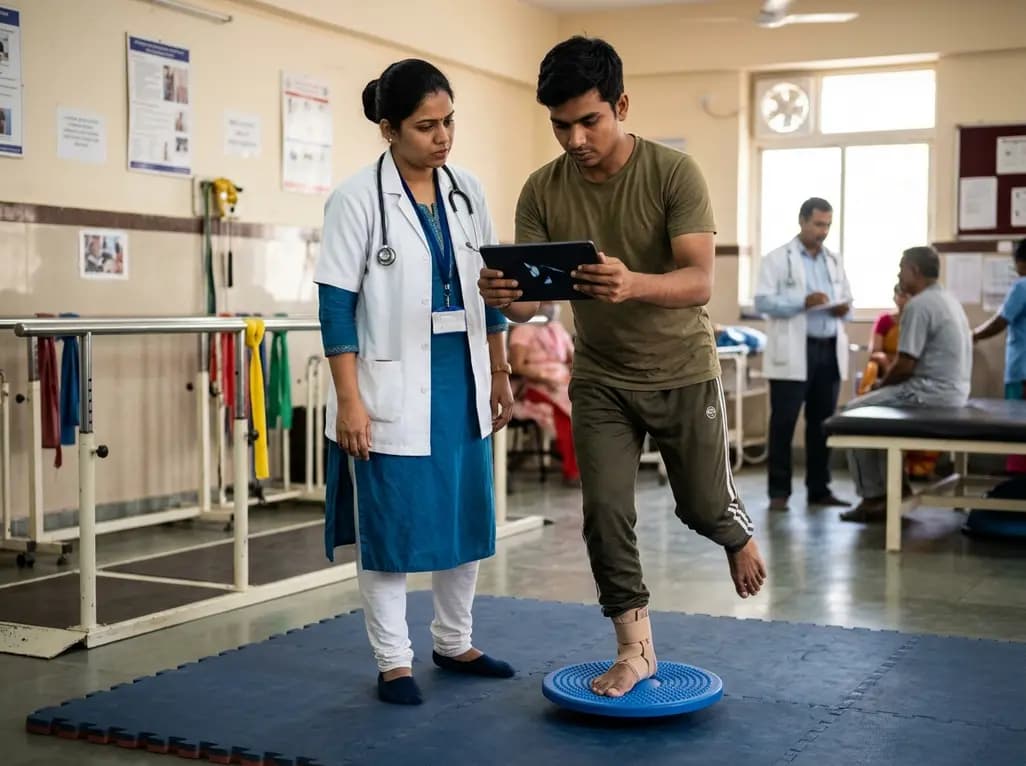
A randomized controlled trial demonstrates that an eight-week dual-task training intervention significantly improves static and dynamic postural control over standard balance exercises in individuals with chronic ankle instability, addressing critical neurocognitive deficits during athletic and daily activities.
Today

India is advancing preventive healthcare by integrating genomics, artificial intelligence, and quantum technologies. With the SANGAM programme sequencing one million Indian genomes, clinicians can unlock personalized therapies, detect cardiometabolic risks early, and curb the burden of diabetes and heart disease.
Today
