

Loading, please wait...
Loading, please wait...
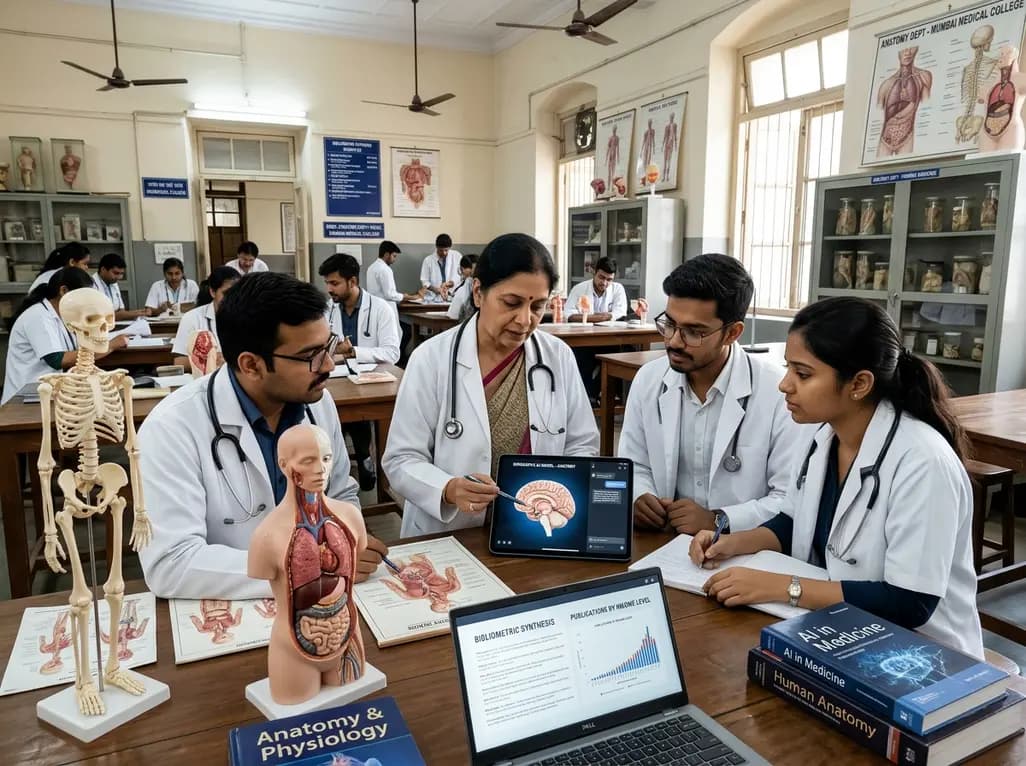
Modern medical training is experiencing a profound paradigm shift driven by technological innovation. Specifically, the integration of generative tools and AI in anatomy education presents unprecedented opportunities to reshape preclinical instruction worldwide. For decades, cadaver shortages and unequal access to high-end dissection laboratories have burdened medical colleges across developing nations. Furthermore, traditional visual teaching aids often require substantial financial investments. However, recent advances in large language models provide accessible avenues for interactive learning. Consequently, this rapid bibliometric synthesis investigates whether generative artificial intelligence can bridge historical educational divides. Therefore, medical educators in emerging economies must evaluate these innovations to foster global educational equity.
Historically, computer vision algorithms and virtual reality platforms dominated early experiments in anatomical training. These legacy systems required expensive graphic workstations, proprietary software licenses, and specialized hardware. Consequently, institutions in high-income countries maintained clear academic leadership in technological experimentation. However, the release of generative large language models radically altered this research trajectory. Global academic output surged dramatically as educators gained access to intuitive text-based conversational agents. Instead of relying solely on heavy graphics engines, instructors began deploying generative chatbots to explain complex three-dimensional structures. Furthermore, students quickly adopted these interfaces for self-directed quizzing, case-based exploration, and rapid anatomical summaries. Bibliometric data confirm that publication frequencies doubled in upper-middle-income nations following the public debut of conversational artificial intelligence. Therefore, generative tools have lowered technical barriers to entry across preclinical departments. Nonetheless, high-income research hubs continue to produce the majority of definitive validation studies. Medical faculties must therefore understand this evolving dynamic to implement digital resources effectively while supporting educational equity.
Resource-limited medical colleges frequently face severe digital infrastructure hurdles. For instance, low-bandwidth internet connectivity and limited high-performance computational clusters hinder deep learning model development locally. Fortunately, commercial application programming interfaces offer a practical workaround for institutions in developing countries. By connecting through standardized web interfaces, educators can harness advanced neural architectures without maintaining costly physical servers. Moreover, this cloud-based approach allows medical schools to construct tailored educational applications rapidly. For example, preclinical departments can create localized anatomical question banks, interactive clinical scenario generators, and automated tutorial systems at minimal cost. Additionally, these platforms simplify institutional adoption by reducing dependency on specialized on-site engineering personnel. As a result, faculty members can focus on instructional design rather than continuous hardware maintenance. Nevertheless, reliance on subscription-based commercial services introduces ongoing operating expenses and potential data governance challenges. Hence, academic leaders must carefully balance short-term cost advantages against long-term financial predictability when procuring external cloud solutions.
Although commercial solutions provide immediate convenience, open-source models present distinct advantages for long-term academic autonomy. Specifically, open-source language models allow local hosting, customized fine-tuning, and robust data security within university intranets. Furthermore, local control prevents sensitive institutional records from leaving domestic academic networks. However, standard commercial and open-source models frequently reflect dataset biases originating in high-income Western countries. In anatomical training, anatomical variations across diverse ethnic populations remain poorly documented in Western corpora. Consequently, uncritical use of global models may perpetuate Eurocentric anatomical assumptions among international trainees. To resolve this imbalance, medical institutions across the Global South must curate indigenous anatomical datasets. Additionally, academic centers should pursue regional collaborative initiatives to fine-tune open-weight architectures on ethnically diverse clinical cases. By validating these specialized systems locally, educators ensure that digital assistants accurately represent human anatomical diversity across clinical contexts. Therefore, domestic research initiatives play an indispensable role in safeguarding educational authenticity, demographic inclusivity, and clinical accuracy.
Adopting conversational software into formal medical curricula requires rigorous pedagogical alignment rather than ad-hoc student experimentation. Indeed, anatomical sciences demand spatial comprehension, manual dexterity, and critical clinical synthesis. Generative conversational agents excel at explaining functional relationships, embryological derivations, and clinical correlations. Nevertheless, textual models cannot replace direct cadaveric dissection, tactile tissue evaluation, or hands-on prosection analysis. Therefore, modern medical educators recommend a blended instructional model that pairs artificial intelligence with traditional cadaver laboratories. In this blended framework, intelligent chatbots act as personalized preclinical tutors before and after dissection sessions. For example, students can query complex neuroanatomical pathways or review fascial planes prior to entering the dissection hall. In addition, faculty can employ automated assistants to generate customized remediation exercises for struggling learners. Consequently, this strategic approach reinforces foundational knowledge without diminishing the irreplaceable humanistic experience of cadaveric study. Academic departments must establish formal institutional frameworks to guide ethical classroom utilization and promote responsible digital literacy.
Eliminating technological divides in anatomical education demands genuine cross-border academic solidarity. Currently, institutions in high-income regions control the preponderance of funding, intellectual property, and high-performance computational hardware. Meanwhile, medical universities in low- and middle-income countries possess rich clinical perspectives, diverse learner populations, and extensive educational experience. Consequently, equitable collaboration must replace traditional extractive research paradigms. Global academic alliances should facilitate shared access to benchmark datasets, peer-reviewed evaluation frameworks, and collaborative grant funding. Furthermore, international anatomical societies must establish inclusive working groups to co-create ethical standards for artificial intelligence in anatomy education. Such consortia ensure that developing institutions actively shape technological governance rather than passively consuming imported educational products. Moreover, open-access publication policies and subsidized licensing agreements will accelerate technology transfer to resource-constrained regions. Ultimately, sustainable progress depends on treating educational equity as an ethical obligation rather than a peripheral luxury. Global medicine thrives when every medical student accesses high-quality anatomical instruction regardless of geographical location.
Generative artificial intelligence provides interactive, round-the-clock tutoring support for undergraduate medical students tackling complex anatomical subjects. It quickly clarifies intricate relationships, outlines fascial planes, explains embryological development, and generates clinical vignette questions for self-directed assessment. Furthermore, students can request simplified analogies or customized remediation for difficult topics. However, learners must critically verify outputs against standard textbooks, because language models can occasionally generate plausible anatomical hallucinations.
Artificial intelligence tools cannot replace hands-on cadaveric dissection in undergraduate medical curricula. Cadaver dissection teaches vital tactile sensitivity, spatial appreciation of human variations, three-dimensional orientation, and professional respect for human mortality. Generative models and digital visualization platforms serve effectively as supplementary pedagogical aids rather than total substitutes. Therefore, medical faculties should adopt blended teaching models that combine conversational artificial intelligence with traditional anatomical dissection to maximize clinical competence and student empathy.
Medical colleges in developing countries face substantial structural and financial barriers during technology adoption. These obstacles include unreliable internet connectivity, restricted access to paid commercial software subscriptions, and limited institutional computing infrastructure. Additionally, existing large language models predominantly train on Western datasets, potentially misrepresenting ethnic variations in anatomical features. Therefore, academic institutions must invest in open-source architectures, build domestic technical expertise, and demand equitable cross-border collaborations to ensure safe and context-specific implementation.
Disclaimer: This content is for informational and educational purposes only... Refer to the latest local and national guidelines for clinical practice.
References

Read summarized clinical updates, watch expert medical content, and earn CME certifications right from your smartphone.
Open your smartphone camera to scan and install.





A rapid bibliometric synthesis reveals how generative AI and large language models are transforming anatomy education. While high-income nations maintain leadership, AI tools double publication odds in upper-middle-income countries, highlighting the urgent need for global equity and inclusive datasets.
Today

An international Delphi consensus study identifies the core components of nurse practitioner home visits for frail patients, establishing clear eligibility criteria, essential clinical competencies, care coordination roles, and flexible delivery modalities to support safe aging in place.
Today

Large genomic databases like gnomAD and All of Us offer crucial insights into the population prevalence of partial RHD genotypes. Identifying these variants helps clinicians mitigate anti-D alloimmunization risks in transfusion medicine and obstetric care across diverse ancestral populations.
Today
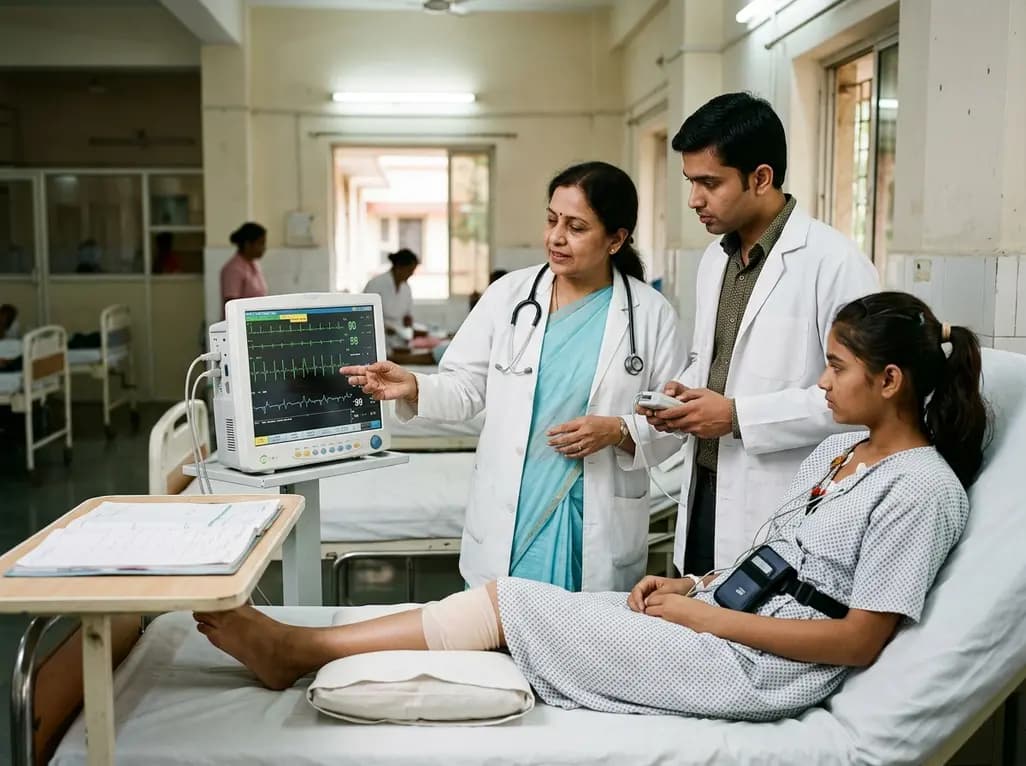
A 15-year-old patient presented with knee arthralgia and acute rheumatic fever, exhibiting complex arrhythmias including AV blocks and non-sustained ventricular tachycardia despite lacking severe valvulitis. This highlights the importance of extended Holter monitoring in pediatric rheumatic carditis.
Today
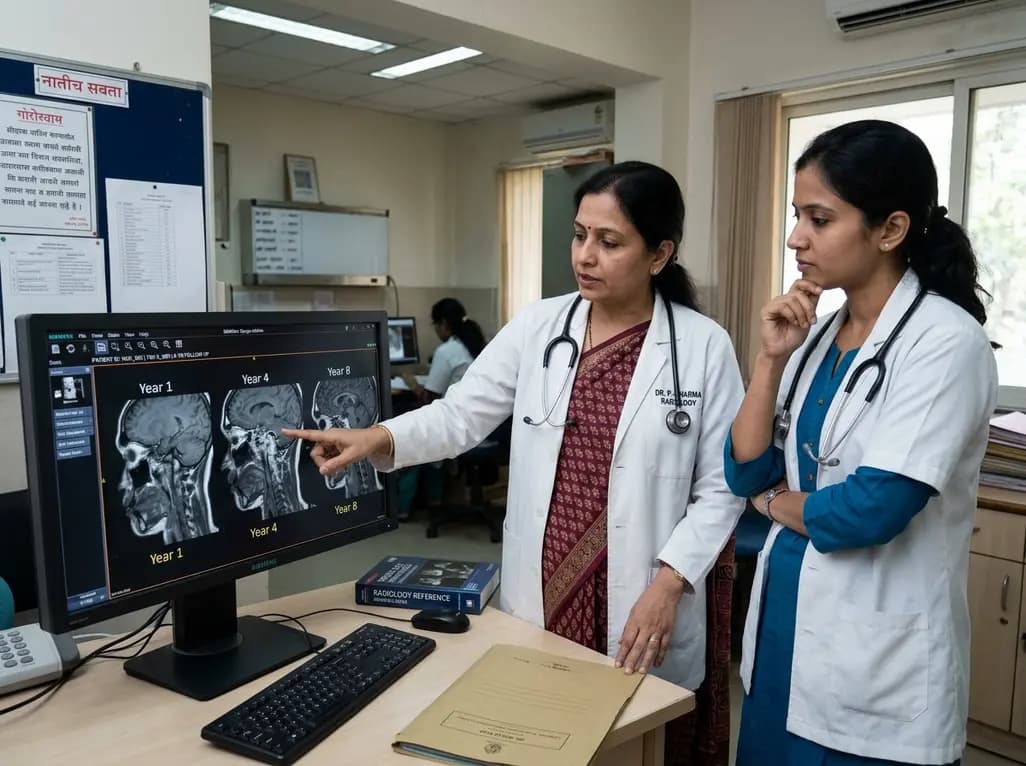
An eight-year longitudinal imaging follow-up reveals severe temporomandibular joint remodeling in nodulosis-arthropathy-osteolysis (NAO) syndrome. Despite extensive osseous destruction, the patient maintained functional jaw opening without TMJ interventions, highlighting the role of conservative management.
Today
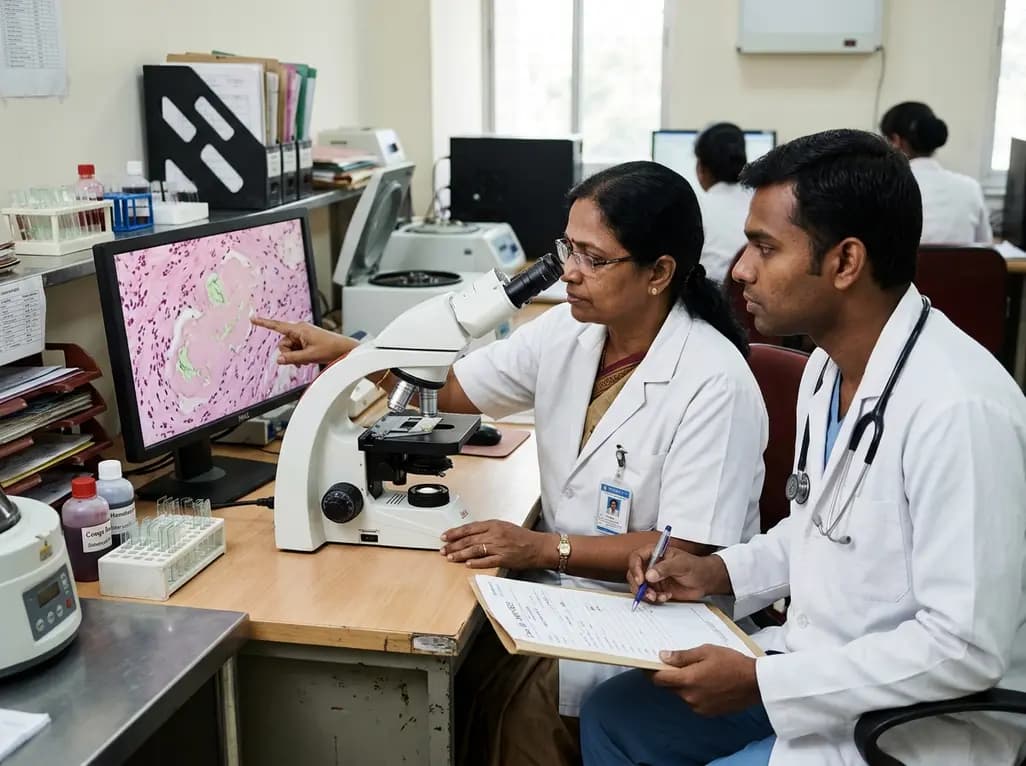
Discover essential clinical insights into AGLP1-type amyloidosis, a rare localized complication of glucagon-like peptide-1 analog injections. Learn how histopathology and mass spectrometry differentiate benign iatrogenic amyloidomas from systemic disease, preventing misdiagnosis and unwarranted therapies.
Today
