.webp&w=384&q=75)

Loading, please wait...
Loading, please wait...
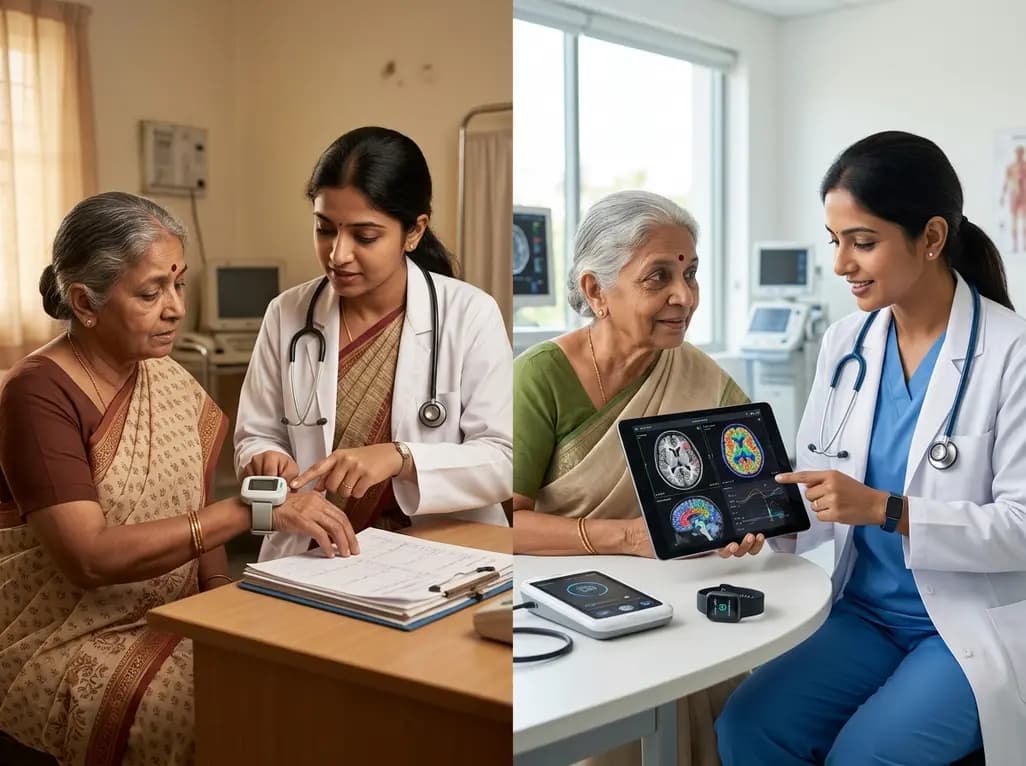
Clinicians globally face an unprecedented challenge with the rising prevalence of dementia. Over the past two decades, AI-enabled Alzheimer's care has evolved from basic ambient monitoring to sophisticated, data-driven precision diagnostics. This trajectory marks a significant shift in geriatric care methodologies. Consequently, staying updated on these technological advancements is essential for Indian practitioners managing an aging population.
Technological advancements in this field have occurred in three distinct phases. Initially, research focused on smart home environments and simple activity detection. Subsequently, the focus shifted toward social robots and continuous home monitoring. Currently, the field is advancing toward explainable AI (XAI) and biomarker-driven risk assessments. These modern tools allow for earlier interventions and highly personalized treatment pathways.
In the Indian context, where approximately 8.8 million individuals live with dementia, these innovations are particularly vital. Furthermore, the transition toward neuro-precision diagnostics helps bridge the gap between initial screening and therapeutic intervention. Notably, keywords such as tau proteins and specific interventions have emerged as the leading research hotspots heading into 2025.
The integration of multimodal AI and ethical frameworks represents the next major research frontier. Explainable AI specifically addresses the "black box" problem. It provides transparency that fosters clinical trust among neurologists and geriatricians. Therefore, physicians can interpret AI-driven neuroimaging and biomarker data with much greater confidence. These developments facilitate high-quality "aging-in-place" for patients, which remains a top priority for healthcare systems worldwide.
In addition to diagnostic precision, the shift toward data-driven therapeutics offers a roadmap for managing disease progression. Specifically, the use of AI to analyze electronic health records and retinal imaging shows promise for predicting cognitive decline years in advance. This proactive approach allows families to plan care more effectively before severe symptoms manifest.
Ambient assistance refers to smart home technologies that monitor activities of daily living (ADLs). These systems help detect falls and changes in routine. They support patients who wish to live independently for longer by providing a safety net without constant human supervision.
Explainable AI (XAI) provides human-understandable justifications for its diagnostic conclusions. By highlighting specific neuroimaging features or biomarker patterns, XAI helps clinicians validate and trust automated assessments. This transparency is crucial for high-stakes medical decision-making.
Yes, recent advancements include the launch of AI-integrated blood biomarker tests in Indian diagnostic labs. These tests identify biological changes, such as p-tau levels, long before severe cognitive symptoms become evident. This enables earlier intervention and better care planning.
Disclaimer: This content is for informational and educational purposes only. It does not constitute medical advice or a substitute for professional healthcare consultation. Refer to the latest local and national guidelines for clinical practice.
References
1. Du B et al. From Ambient Assistance to Data-Driven Precision in AI-Enabled Alzheimer's Care (2004-2025): A Bibliometric Perspective. Gerontologist. 2026 Jun 15. doi: undefined. PMID: 42295865.
2. Bajeli-Datt K. AI-driven blood test offers early Alzheimer's diagnosis as 8.8 million Indians live with dementia. The New Indian Express. Jan 19, 2026.
3. Martin SA et al. Explainable artificial intelligence for neuroimaging-based dementia diagnosis and prognosis. Diagnostics. 2025 Mar 4; 15(5): 612. doi: 10.3390/diagnostics15050612.
"
Read summarized clinical updates, watch expert medical content, and earn CME certifications right from your smartphone.
Open your smartphone camera to scan and install.





A bibliometric analysis reveals that AI in Alzheimer's care is shifting from environmental monitoring to precision diagnostics. Explore how explainable AI and biomarkers are reshaping dementia management for the next decade, offering new hope for early intervention and aging-in-place.
4 months ago

A recent study demonstrates that spinal oxygen sensors do not require mitochondrial electron transport to trigger sympathetic excitation during acute hypoxia, revealing new insights into how mitochondrial oxidative stress modulates autonomic tone in cardiovascular and neurological diseases.
Today

Demanding exhaustive hormonal profiling can inadvertently discourage clinical studies involving females. Methodological standards must align with the specific scientific question to expand, not restrict, equitable evidence for women.
Today

The Directorate General of Health Services directs Indian states to halt the hazardous reuse and reprocessing of single-use medical devices. Discover regulatory implications under the Drugs and Cosmetics Act, critical infection risks, legal liabilities, and operational changes required across clinical specialties.
Today
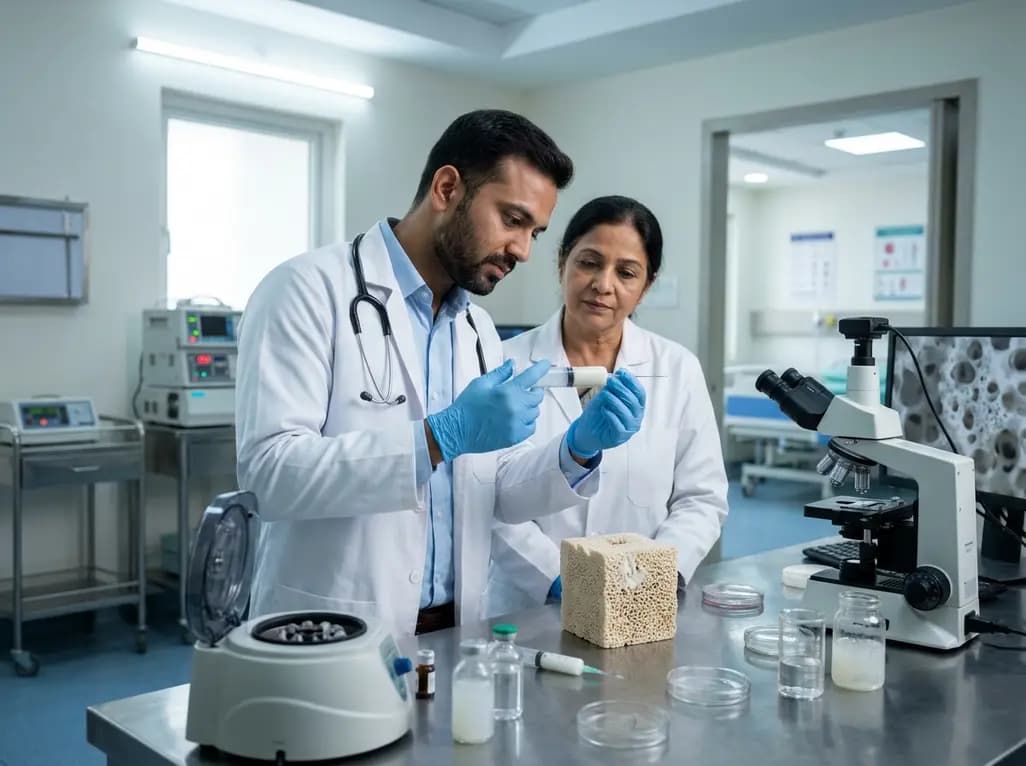
A novel calcium polyphosphate coacervate enables injectable bone implants with in situ hierarchical porosity via phase separation and gas foaming, significantly enhancing cell proliferation, energy metabolism, and osteogenic differentiation for minimally invasive bone defect repair.
Today

Following regulatory scrutiny from FSSAI regarding promotional representations and lean muscle preservation claims, Dr. Reddy's Laboratories and Nestlé Health Science are currently reviewing the branding and marketing strategy for their joint nutritional supplement Celevida GLP+.
Today
