.webp&w=384&q=75)

Loading, please wait...
Loading, please wait...

Recently, artificial intelligence has begun optimizing Laparoscopic Common Bile Duct Repair strategies to improve patient outcomes. Furthermore, this advancement helps surgeons navigate the complex choice between primary duct closure (PDC) and T-tube drainage (TTD). Researchers retrospectively analyzed data from 117 patients to develop an intelligent decision-making model. Consequently, this tool identifies the most suitable repair technique based on specific patient biomarkers and clinical history.
The study highlights how five key features influence surgical success. Specifically, these include patient age, white blood cell count, and C-reactive protein levels. Moreover, total protein and albumin levels play a significant role in predicting the necessity of T-tube drainage. However, the Random Forest classifier demonstrated the most robust performance among various algorithms. Notably, it achieved an impressive area under the ROC curve (AUC) of 0.83 and an accuracy of 0.72.
Clinicians often struggle with intraoperative decisions regarding bile duct closure. Therefore, personalized surgical recommendations through machine learning offer a promising solution for precision treatment. In addition, this model provides a data-driven approach to minimize complications like bile leakage or strictures. Thus, integrating such technology into the operating room could standardize care for biliary diseases across specialized centers. Future clinical trials should focus on validating these models in real-time surgical environments to ensure their reliability.
Surgeons typically prioritize T-tube drainage for older patients or those showing signs of severe inflammation. Key predictive biomarkers include elevated white blood cells, high C-reactive protein, and lower albumin levels.
The Random Forest classifier, combined with Recursive Feature Elimination (RFE), demonstrated the highest predictive performance. It achieved an AUC of 0.83, significantly outperforming other standard machine learning classifiers.
Disclaimer: This content is for informational and educational purposes only. It does not constitute medical advice or establish a doctor-patient relationship. Surgeons and healthcare providers should exercise their professional judgment and refer to the latest local and national guidelines for clinical practice.
References
Wang X et al. Construction of an Intelligent Decision-Making Model for Laparoscopic Common Bile Duct Repair. J Laparoendosc Adv Surg Tech A. 2026 Mar 29. doi: 10.1177/10926429261427263. PMID: 41906197.
Zhang Y et al. Comparison of primary duct closure versus T-tube drainage in laparoscopic common bile duct exploration: a propensity score matching analysis. PubMed. 2025 Apr 15. PMID: 38584210.
Gurusamy KS et al. T-tube drainage versus primary closure after laparoscopic common bile duct exploration. Cochrane Database Syst Rev. 2013 Jun 21;2013(6):CD005640.

Read summarized clinical updates, watch expert medical content, and earn CME certifications right from your smartphone.
Open your smartphone camera to scan and install.





Researchers developed a machine learning model to help surgeons choose between primary duct closure and T-tube drainage during bile duct repair....
6 months ago
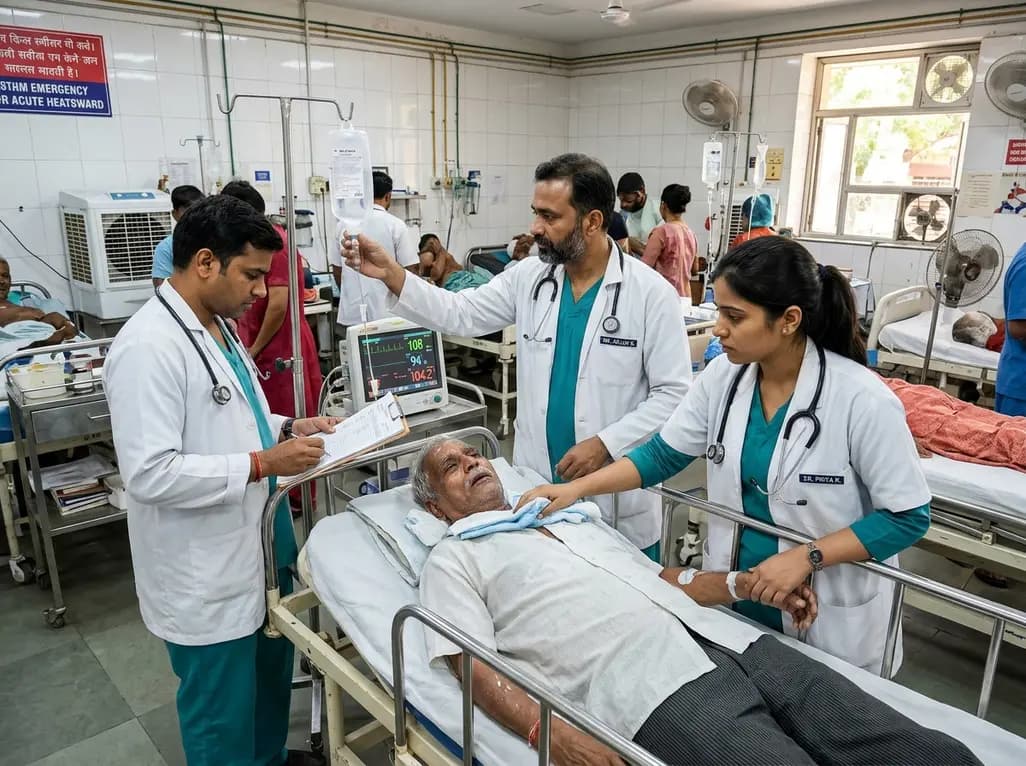
Recent epidemiological data reveals a dramatic surge in summer heat mortality driven by human-induced climate warming. This analysis explores the pathophysiological impacts on cardiac and renal systems, diagnostic dilemmas in death certification, and essential emergency cooling protocols for acute clinical care.
Today

Odisha has established India's first state-level clinical protocol specifically tailored for pregnant women with sickle cell disease. Developed with NHM and UNICEF, the framework provides structured antenatal screening, crisis mitigation, standardized referral pathways, and specialized interdisciplinary care.
Today

India is advancing preventive healthcare by integrating genomics, artificial intelligence, and quantum technologies. With the SANGAM programme sequencing one million Indian genomes, clinicians can unlock personalized therapies, detect cardiometabolic risks early, and curb the burden of diabetes and heart disease.
Today

A randomized controlled trial demonstrates that an eight-week dual-task training intervention significantly improves static and dynamic postural control over standard balance exercises in individuals with chronic ankle instability, addressing critical neurocognitive deficits during athletic and daily activities.
Today

A retrospective cohort study of 7,716 ICU patients from the MIMIC-IV database demonstrates that Gradient Boosting Decision Trees significantly outperform traditional SOFA scores in predicting in-hospital mortality among patients with sepsis and diabetes, with SHAP analysis providing clinical interpretability.
Today
