.webp&w=384&q=75)

Loading, please wait...
Loading, please wait...

Integrating AI in community health initiatives marks a new era for public health research. Researchers recently conducted an exploratory study in Cartagena, Colombia, to test generative AI tools within a youth-led action framework. This project utilized structured feedback and image transformation to empower young citizen scientists. Consequently, these tools enhanced deliberative processes and supported environmental health improvements. Furthermore, the model prioritizes collective deliberation over autonomous decision-making to ensure community voices remain central.
The researchers selected a specific \"3-3-5\" format for structured AI feedback. This format identifies three strengths, three weaknesses, and five reflective questions for any proposed community intervention. Because of this structure, participants could refine their plans with higher specificity and critical depth. Facilitators mediated the interactions to protect adolescent agency and prevent AI from becoming an authoritative voice. Therefore, the AI acted as a learning partner rather than a replacement for human judgment. This approach allowed youth to maintain ownership while benefiting from advanced data synthesis.
The study compared DALL-E with Adobe Photoshop AI for modifying place-based images to reflect proposed changes. While DALL-E struggled with local realism, Photoshop AI produced visually plausible prototypes. These visualizations are vital for communicating environmental goals to local stakeholders and decision-makers. However, highly realistic images can create a \"feasibility gap\" if the depicted infrastructure exceeds actual operational or financial limits. If the visualizations appear too technical, stakeholders might mistake them for final designs. Thus, using AI in community health requires careful framing of images as aspirational prototypes rather than engineering blueprints.
First, successful integration requires facilitator-mediated prompts to maintain group consensus. Second, real-time reviews of AI outputs ensure transparency and immediate correction of inaccuracies. Finally, domain-informed oversight helps align AI recommendations with local regulations and feasibility constraints. This structured workflow helps participatory researchers manage risks like output variability and privacy. Ultimately, the study demonstrates that generative AI can strengthen the bridge between youth-led data collection and impactful community advocacy.
AI supports these projects by providing structured feedback for critical reflection and generating visual prototypes of proposed environmental changes. These tools help participants refine their ideas and communicate more effectively with local stakeholders.
Key risks include output variability, potential displacement of community voice, and feasibility gaps. These gaps occur when AI-generated visualizations suggest solutions that are not operationally or financially workable in a specific local context.
Disclaimer: This content is for informational and educational purposes only. It does not constitute medical advice or a substitute for professional healthcare guidance. Refer to the latest local and national guidelines for clinical practice.
References

Read summarized clinical updates, watch expert medical content, and earn CME certifications right from your smartphone.
Open your smartphone camera to scan and install.





A study explores using generative AI tools like GPT and Photoshop AI to support youth-led environmental health interventions through structured feedback....
5 months ago

Recent epidemiological data reveals a dramatic surge in summer heat mortality driven by human-induced climate warming. This analysis explores the pathophysiological impacts on cardiac and renal systems, diagnostic dilemmas in death certification, and essential emergency cooling protocols for acute clinical care.
Today
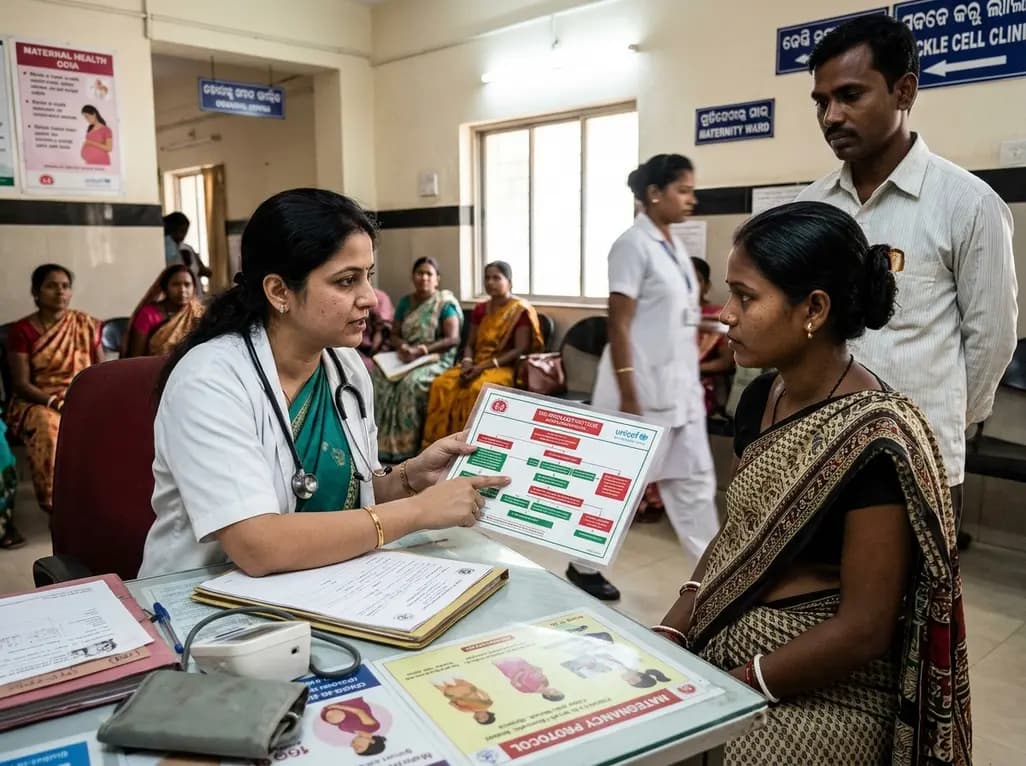
Odisha has established India's first state-level clinical protocol specifically tailored for pregnant women with sickle cell disease. Developed with NHM and UNICEF, the framework provides structured antenatal screening, crisis mitigation, standardized referral pathways, and specialized interdisciplinary care.
Today

India is advancing preventive healthcare by integrating genomics, artificial intelligence, and quantum technologies. With the SANGAM programme sequencing one million Indian genomes, clinicians can unlock personalized therapies, detect cardiometabolic risks early, and curb the burden of diabetes and heart disease.
Today
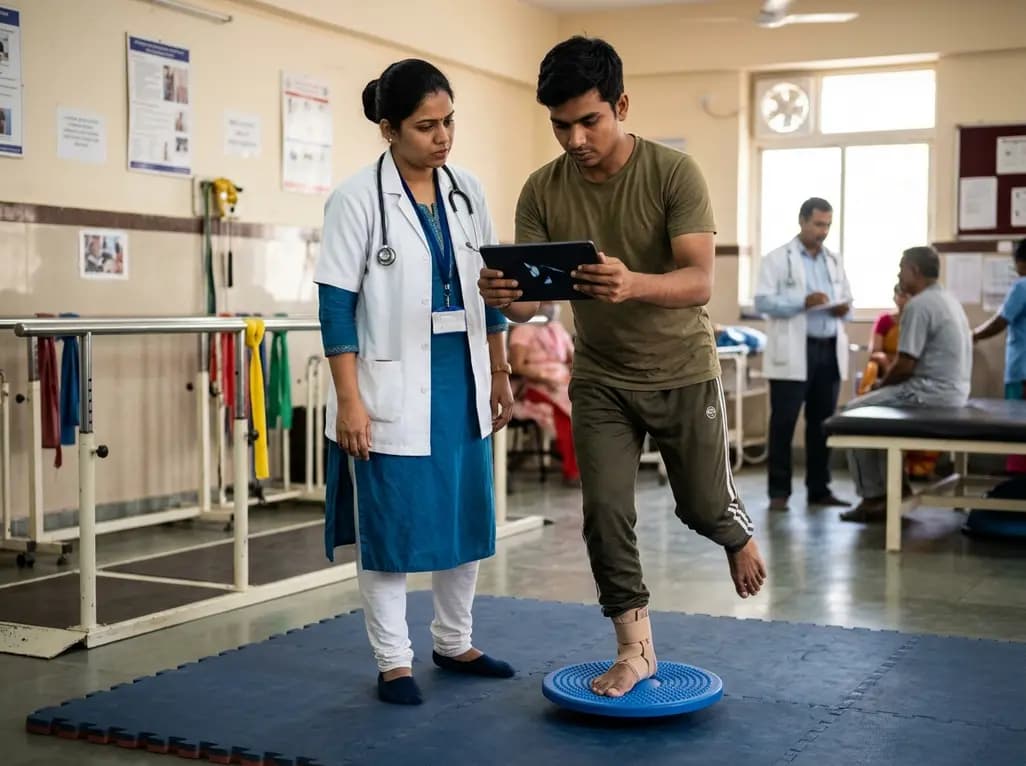
A randomized controlled trial demonstrates that an eight-week dual-task training intervention significantly improves static and dynamic postural control over standard balance exercises in individuals with chronic ankle instability, addressing critical neurocognitive deficits during athletic and daily activities.
Today

A retrospective cohort study of 7,716 ICU patients from the MIMIC-IV database demonstrates that Gradient Boosting Decision Trees significantly outperform traditional SOFA scores in predicting in-hospital mortality among patients with sepsis and diabetes, with SHAP analysis providing clinical interpretability.
Today
