

Loading, please wait...
Loading, please wait...

Modern family practitioners manage escalating clinical complexity and heavy administrative burdens every day. Consequently, digital health innovators increasingly promote AI clinical decision support systems to improve diagnostic accuracy and streamline clinic tasks. A comprehensive systematic review published in the Journal of Medical Internet Research thoroughly evaluated real-world implementations across ambulatory environments. The authors examined whether these automated algorithmic assistants truly enhance clinical performance compared to standard care or conventional software.
However, the investigators discovered notable contradictions between technological enthusiasm and verifiable clinical evidence. They analyzed eleven distinct studies comprising both experimental and quasi-experimental trials across diverse primary care locations. While developers assert that these digital assistants transform routine consultations, methodological quality assessments revealed critical vulnerabilities. Specifically, all experimental trials demonstrated a high risk of bias, whereas non-randomized studies exhibited serious or critical methodological concerns. Furthermore, existing investigations originated exclusively from high-income nations, limiting direct generalizability to resource-constrained global health contexts. Therefore, primary care physicians must approach aggressive implementation claims with measured professional skepticism until researchers establish firmer safety and efficacy foundations.
Clinical decision systems deliver the most consistent advantages when developers apply them to highly structured and protocolized environments. For example, machine algorithms effectively support routine preventive screening, standard referral coordination, and alert filtering. In these repetitive clinical scenarios, digital algorithms streamline documentation and alert clinicians to missed preventive milestones. Consequently, practices utilizing these dedicated algorithms frequently experience reduced administrative bottlenecks and more reliable adherence to standardized preventive regimens.
Moreover, automated tools reliably optimize alert burdens when engineers integrate them seamlessly within existing electronic medical records. Rather than interrupting clinicians with non-urgent warnings, targeted algorithms suppress irrelevant notifications and prioritize high-value preventive alerts. Thus, general practitioners encounter fewer cognitive interruptions during standard patient consultations. Similarly, automated triage modules accelerate early specialist referrals for well-defined parameters, such as diabetic retinopathy screening or standard cardiology referrals. Nevertheless, these observed advantages primarily reflect logistical and operational efficiencies rather than superior clinical judgment. Clinicians must recognize that administrative time savings do not automatically produce improved long-term patient health.
Although operational efficiencies emerge in protocolized workflows, patient-level clinical benefits remain distinctly inconsistent and limited. Primary care consultations rarely follow rigid, single-disease formulas because patients frequently present with multimorbid chronic illnesses. When algorithms confront diagnostic ambiguity, heterogeneous conditions, or preference-sensitive therapeutic dilemmas, their clinical utility drops substantially. In addition, current computational models frequently fail to capture psychosocial determinants that heavily influence shared therapeutic decisions.
Furthermore, several analyzed trials detected negligible differences in meaningful physiological targets or overall morbidity between intervention and control cohorts. Isolated improvements in service delivery or healthcare utilization occurred sporadically, but these findings lacked reproducibility across study sites. Because real-world family medicine requires holistic evaluation, over-reliance on rigid predictive calculations can lead to fragmented care plans. Therefore, general physicians cannot assume that an algorithmic recommendation inherently benefits individual patient health without active bedside verification. Medical teams must continue prioritizing contextual clinical assessment over automated algorithmic suggestions whenever managing complex chronic pathologies.
Patient safety represents the ultimate benchmark for any medical innovation, yet safety evaluation remains alarmingly sparse in current studies. Remarkably, only two included studies formally prespecified safety outcomes in their research protocols. Most reported adverse event data consisted solely of self-reported side effects or intermittent software crashes. Consequently, true algorithmic harm—such as delayed critical diagnoses or inappropriate pharmacotherapy—remains largely unmonitored in published primary care literature.
Equally concerning is the complete absence of data regarding real-world clinician interaction with digital decision recommendations. None of the reviewed investigations documented how frequently physicians agreed with, overrode, or blindly followed automated advice. This oversight creates substantial clinical risk because uncritical adherence or alert dismissal directly impacts treatment safety. Moreover, automation bias can tempt overworked clinicians to delegate complex diagnostic deliberations to digital software. Until independent surveillance mechanisms track algorithmic misclassifications and clinician override frequencies, medical directors cannot confidently ensure patient safety during widespread community deployments.
Widespread digital adoption faces substantial systemic barriers that healthcare organizations must address before procurement. Specifically, researchers observed brief follow-up periods across all clinical trials, leaving long-term clinical durability and algorithm drift unmeasured. Additionally, deploying advanced software into busy ambulatory centers demands substantial technical infrastructure, staff training, and ongoing technical audits. Without adequate interoperability, automated platforms generate friction rather than efficiency for front-line primary health practitioners.
Therefore, family medicine departments should adopt a prudent, phased strategy when considering automated decision tools. Clinicians must demand transparent, peer-reviewed prospective validation before incorporating artificial intelligence into daily consultations. Furthermore, practice leaders should restrict initial deployments to tightly circumscribed tasks such as preventive registries or standardized appointment triage. Most importantly, health organizations must establish institutional reporting channels to record software malfunctions, diagnostic discrepancies, and user override actions. By maintaining rigorous professional oversight, primary care clinicians can protect patient safety while thoughtfully exploring digital health technologies.
AI clinical decision support systems primarily streamline routine administrative tasks and standardized care workflows in busy outpatient clinics. These digital systems help optimize electronic health record alerts, track preventive screening schedules, and facilitate appropriate outpatient referrals. However, their beneficial impact centers almost entirely on administrative and process efficiency rather than autonomous clinical diagnosis. Clinicians must still evaluate every algorithmic suggestion carefully to prevent workflow interruptions and maintain patient rapport during consultations.
Current published trials evaluate technological functionality rather than rigorous clinical safety endpoints in everyday practice. Most existing studies track software technical malfunctions or self-reported usability issues instead of prospectively capturing misdiagnoses and therapeutic errors. Furthermore, researchers rarely evaluate clinician override frequencies or automation bias during routine encounters. Consequently, healthcare organizations lack robust evidence detailing how often algorithmic recommendations might directly compromise patient safety during ambulatory consultations.
Primary care physicians should demand independently validated, prospective evidence before integrating automated decision software into patient care. Clinical teams must restrict early adoption to highly protocolized, low-risk preventive workflows such as screening coordination and vaccination reminders. Additionally, medical practices must implement clear institutional tracking for software override rates and diagnostic disagreements. Clinicians should maintain strict bedside vigilance and never substitute algorithmic outputs for thorough clinical examination and diagnostic reasoning.
Disclaimer: This content is for informational and educational purposes only and does not substitute professional clinical judgment. Healthcare professionals must evaluate diagnostic and management options independently based on individual patient presentation. Refer to the latest local and national guidelines for clinical practice.
References
Naye F et al. AI-Based Clinical Decision Support Systems in Primary Care: Systematic Review of Clinical Implementation. J Med Internet Res. 2026 Oct 19. doi: 10.2196/96882. PMID: 42896153.
Green B, et al. Real-World Effectiveness of AI-Enabled Clinical Decision Support in Primary Care: Systematic Review. J Med Internet Res. 2026;28:e55120.
Coiera E, et al. The safety and quality of decision support systems. Yearb Med Inform. 2021;30(1):120-128.

Read summarized clinical updates, watch expert medical content, and earn CME certifications right from your smartphone.
Open your smartphone camera to scan and install.





A systematic review indicates that AI-based clinical decision support systems in primary care streamline protocolized workflows and alert management, but evidence regarding patient outcomes, safety monitoring, and clinician oversight remains critically limited.
Today

New research reveals that HPV16 E7 exosomes significantly upregulate PD-L1 on tumor-infiltrating lymphocytes in cervical cancer, driving local immune suppression and correlating with poorer patient survival. These findings expose key mechanisms of immune evasion with direct relevance to checkpoint blockade therapies.
Today
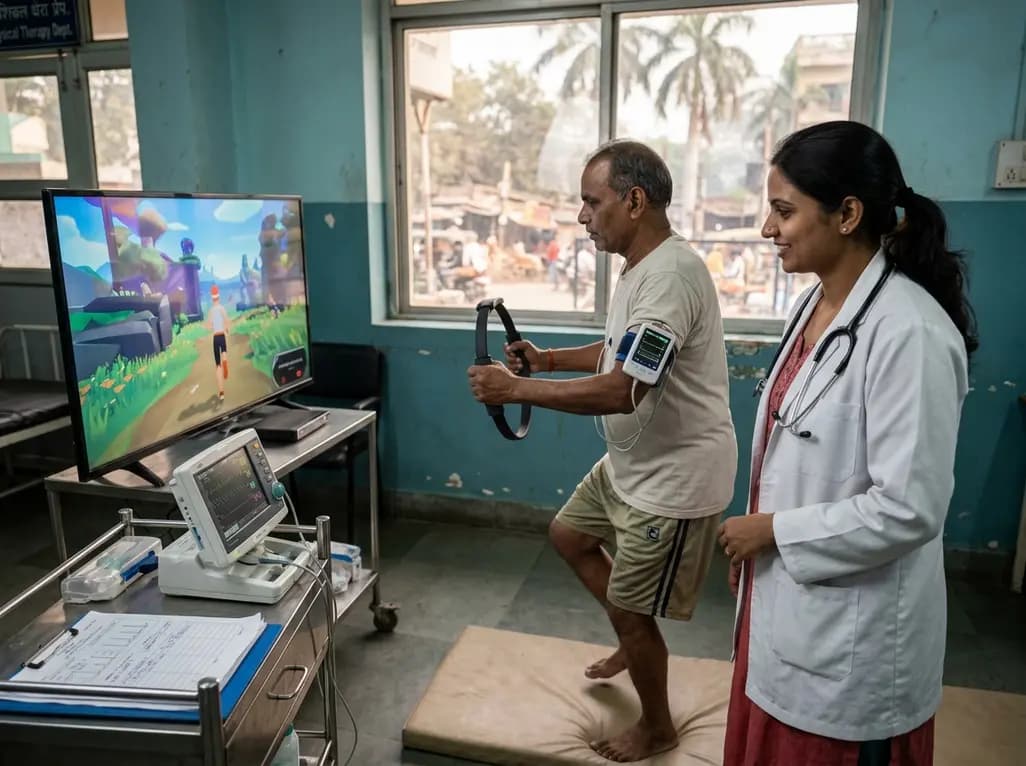
A clinical study evaluated Ring Fit Adventure in adults with chronic conditions, revealing that exergaming achieves moderate-to-vigorous exercise intensity while maintaining hemodynamic stability, high enjoyment, and zero adverse events.
Today

Discover how pain coping strategies moderate the impact of physical and psychosocial stress on musculoskeletal disorders in healthcare workers, highlighting biopsychosocial interventions and ergonomic solutions.
Today

A study evaluates a cardiometabolic HFpEF model combining metabolic stress with chronic mineralocorticoid excess. The findings reveal profound diastolic stiffness, endothelial dysfunction, and pulmonary hypertension, illuminating key pathophysiological mechanisms for targeted cardiopulmonary therapies.
Today
