.webp&w=384&q=75)

Loading, please wait...
Loading, please wait...

Modern research increasingly relies on digital solutions to streamline complex workflows. A recent study highlights how AI chatbots in biobanking can significantly improve the participant experience by providing real-time guidance. These tools help individuals navigate research sites efficiently. Specifically, they explain various measurements and the broader purpose of the biobank during the data collection phase.
Researchers conducted an iterative testing process with 32 participants to evaluate a specialized chatbot. Initially, the team deployed a base version to guide users through the physical research site. After the first group provided feedback, the developers refined the interface and the conversational logic. Consequently, the second testing group reported a much higher perceived value. Furthermore, this demonstrates that user-centric design is essential. Developers must implement AI chatbots in biobanking by carefully considering the specific needs and concerns of study participants.
In addition, the chatbot functions as a dedicated virtual assistant. It answers questions about research procedures and facility locations at any time. By automating these routine inquiries, the system effectively reduces the administrative burden on site staff. Moreover, it provides consistent and accurate information to every participant. This consistency enhances the reliability of the recruitment and onboarding process. Following the successful results of this case study, the facility successfully deployed the chatbot for permanent use.
The integration of AI into clinical research sites represents a growing trend toward digital transformation in medicine. These systems can handle complex tasks such as explaining informed consent. Alternatively, they may monitor participant satisfaction in real-time. As AI agents become more sophisticated, they will likely transition into comprehensive research partners. Therefore, this shift ensures that biobanks remain accessible and patient-centric. Ultimately, such technology fosters higher participation rates in critical medical studies across India and the globe.
Chatbots provide 24/7 assistance, helping participants navigate the site and answering common questions about measurements and research goals without needing immediate human intervention.
Iterative testing allows developers to identify specific points of user confusion. Refining the AI's responses based on this feedback significantly increases the tool's perceived value and functional effectiveness.
No, they serve as supportive tools to automate routine guidance and information sharing. This allows human staff members to focus on more complex clinical tasks and personalized participant care.
Disclaimer: This content is for informational and educational purposes only. It does not constitute medical advice or professional consultation. Refer to the latest local and national guidelines for clinical practice.
References

Read summarized clinical updates, watch expert medical content, and earn CME certifications right from your smartphone.
Open your smartphone camera to scan and install.





Study shows that user feedback is crucial for improving AI chatbot value in biobanking research sites, leading to successful deployment for participant guid...
6 months ago

Recent epidemiological data reveals a dramatic surge in summer heat mortality driven by human-induced climate warming. This analysis explores the pathophysiological impacts on cardiac and renal systems, diagnostic dilemmas in death certification, and essential emergency cooling protocols for acute clinical care.
Today
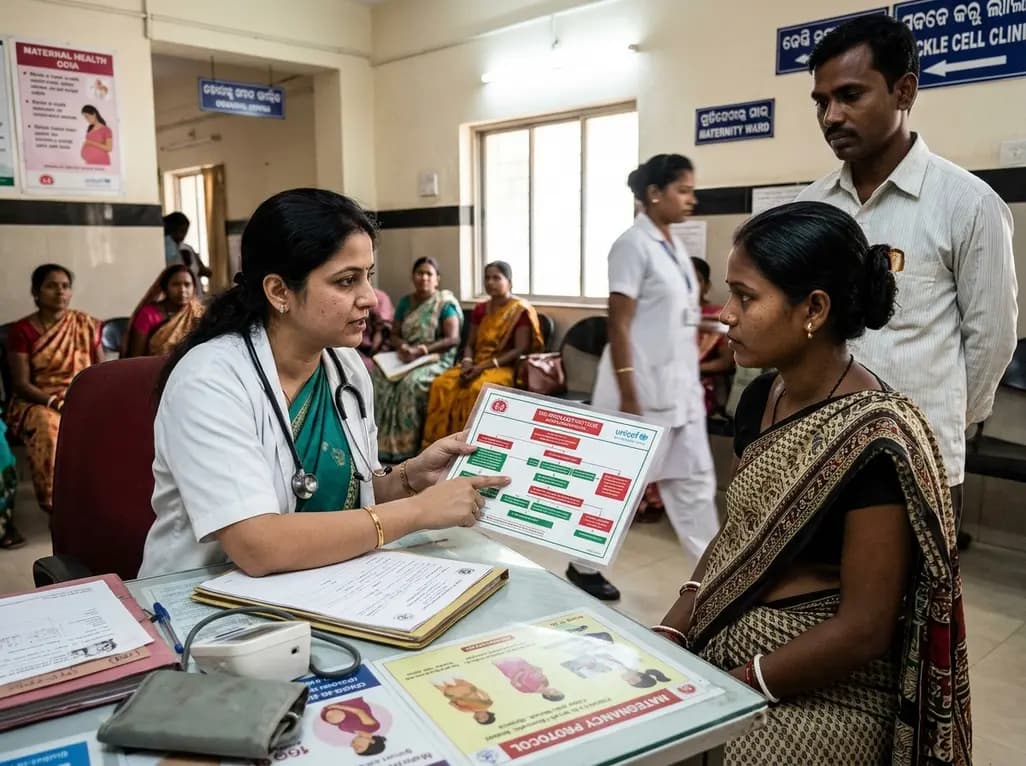
Odisha has established India's first state-level clinical protocol specifically tailored for pregnant women with sickle cell disease. Developed with NHM and UNICEF, the framework provides structured antenatal screening, crisis mitigation, standardized referral pathways, and specialized interdisciplinary care.
Today

India is advancing preventive healthcare by integrating genomics, artificial intelligence, and quantum technologies. With the SANGAM programme sequencing one million Indian genomes, clinicians can unlock personalized therapies, detect cardiometabolic risks early, and curb the burden of diabetes and heart disease.
Today

A randomized controlled trial demonstrates that an eight-week dual-task training intervention significantly improves static and dynamic postural control over standard balance exercises in individuals with chronic ankle instability, addressing critical neurocognitive deficits during athletic and daily activities.
Today

A retrospective cohort study of 7,716 ICU patients from the MIMIC-IV database demonstrates that Gradient Boosting Decision Trees significantly outperform traditional SOFA scores in predicting in-hospital mortality among patients with sepsis and diabetes, with SHAP analysis providing clinical interpretability.
Today
