.webp&w=384&q=75)

Loading, please wait...
Loading, please wait...

Metabolite metadata enrichment represents a critical bottleneck in modern metabolomics research. Researchers often encounter significant hurdles due to the limitations of static databases and incomplete metabolite coverage. To overcome these challenges, experts have introduced MetaboliteAnnotator, an R Shiny-based application designed for AI metabolite name harmonization and metadata enrichment. This tool streamlines the labor-intensive process of manual verification by implementing a sophisticated hierarchical matching procedure.
MetaboliteAnnotator functions by integrating multiple layers of data retrieval and processing. Initially, it pre-processes input metabolite names and matches them against a curated local resource containing approximately 640,000 entries. Furthermore, the application employs PubChem-based real-time retrieval and AI-assisted matching for ambiguous compounds. This ensures that even complex or non-standardized names receive accurate identifiers like InChIKey and PubChem CID. Consequently, clinicians and researchers can access real-time integration from databases such as KEGG, CTD, Reactome, and ChEBI.
During rigorous testing across MetaboLights datasets, MetaboliteAnnotator demonstrated superior performance compared to established tools like MetaboAnalyst 6.0 and MetaboliteIDmapping. Specifically, it achieved name hit rates of 93.2% in positive mode and 93.5% in negative mode. These results highlight its effectiveness in resolving biological data that previous systems might miss. In addition to high hit rates, the tool identifies endogenous versus exogenous origins and provides metabolite-gene associations. This level of detail is vital for downstream biological interpretation and precision medicine applications.
For medical professionals involved in clinical research, the ability to map metabolites to specific phenotypes and pathways is invaluable. MetaboliteAnnotator facilitates this by providing standardized metadata that connects metabolic profiles to genetic and clinical outcomes. As AI-driven insights continue to shape patient stratification and drug development in 2026, tools that harmonize complex multi-omics data will become essential for localized clinical trials and diagnostic research in India.
The tool utilizes an AI-assisted matching procedure that evaluates ambiguous compounds against real-time data from PubChem and curated local resources to ensure the most accurate identifier is assigned.
MetaboliteAnnotator provides standardized identifiers, pathway mappings, endogenous/exogenous categorization, and metabolite-gene/phenotype associations to aid in biological interpretation.
Yes, the application integrates real-time data from major resources including KEGG, Reactome, ChEBI, and the Comparative Toxicogenomics Database (CTD).
Disclaimer: This content is for informational and educational purposes only. It is not intended as medical advice or a substitute for professional clinical judgment. Indian medical practitioners should verify all bioinformatics results within the context of validated clinical frameworks. Refer to the latest local and national guidelines for clinical practice.
References
1. Lu ZH et al. MetaboliteAnnotator: AI-Assisted Name Harmonization and Metadata Enrichment Tool for Metabolomics. J Proteome Res. 2026 Feb 15. doi: 10.1021/acs.jproteome.5c00477. PMID: 41691569.
2. Xia J et al. MetaboAnalyst 6.0: towards a unified platform for metabolomics data processing, analysis and interpretation. Nucleic Acids Res. 2024;52(W1):W345-W353.
3. GlobalData. 2026 Clinical Research Report: The Role of AI in Precision and Personalized Medicine. Clinical Trials Arena. 2025.

Read summarized clinical updates, watch expert medical content, and earn CME certifications right from your smartphone.
Open your smartphone camera to scan and install.





MetaboliteAnnotator is an AI-assisted R Shiny tool achieving >93% hit rates in metabolite name harmonization, aiding clinical research and interpretation....
8 months ago

An ICMR study reveals that nearly 25% of tribal adults in Odisha suffer from renal decline. Driven by untreated hypertension, diabetes, and lifestyle risks, this hidden burden highlights the critical need for point-of-care diagnostics, proactive screening, and targeted non-communicable disease interventions.
Today
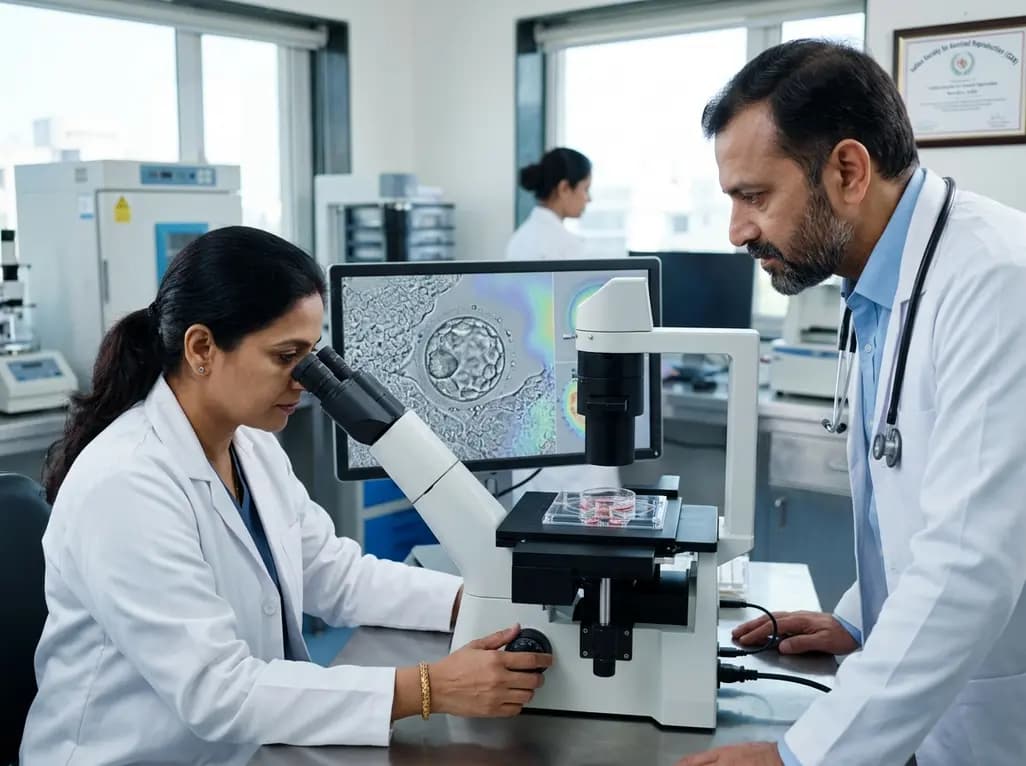
Recent research reveals distinct protein secretion profiles and morphometric shifts between euploid and aneuploid human blastocysts cultured in an advanced 3D endometrial platform, opening new avenues for non-invasive embryo assessment.
Today
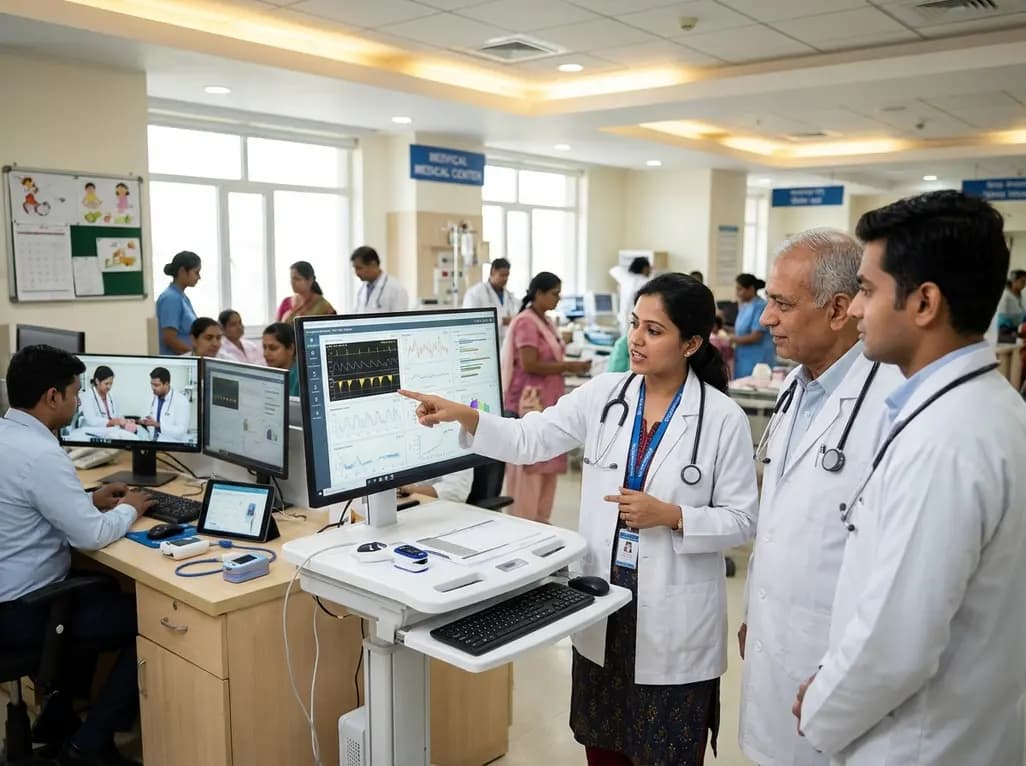
A landmark study details how an enterprise pediatric remote patient management model expanded from a single cardiology pilot to 16 diverse specialty programs by combining centralized digital operations with specialty clinical leadership.
Yesterday

Peripheral nerve injuries present clinical challenges due to regenerative mismatches between sensory and motor neurons. This review explores cutting-edge tissue-engineered nerve grafts designed as central-peripheral signal relays to overcome denervation atrophy and restore functional motor-sensory recovery.
Today

Protein O-GlcNAcylation couples cellular nutrient status to vital neuronal functions. This review explores how disrupted O-GlcNAc cycling drives both neurodevelopmental delays and neurodegenerative cascades, positioning metabolic post-translational modifications as therapeutic targets in clinical neurology.
Today
