

Loading, please wait...
Loading, please wait...

Exposure to severe developmental trauma fundamentally shapes behavioral regulation and interpersonal relationship patterns. In institutional juvenile settings, young people frequently present with complex histories of severe family disruption, maltreatment, and socioeconomic deprivation. Recent forensic psychiatric investigations highlight how cumulative adverse childhood experiences influence emotional resilience, relational repair, and internal distress among incarcerated adolescent girls. Understanding these developmental dynamics allows clinicians and correctional professionals to evaluate rehabilitation needs more accurately. Furthermore, examining interpersonal reconciliation alongside enduring psychological wounds provides essential guidance for psychiatrists, pediatricians, and family physicians caring for vulnerable youth.
Epidemiological research consistently demonstrates that adolescents in juvenile correctional settings endure disproportionately high rates of developmental adversity. In this context, researchers evaluated female offenders serving extended residential placements to characterize their trauma histories. Clinicians measured both standard household dysfunctions and expanded community-level exposures, such as neighborhood violence and peer victimization. Consequently, the investigation revealed that nearly all participating girls reported exposure to at least one traumatic event. More than two-thirds of the cohort reported multiple severe adversities across four or more distinct functional domains.
These alarming figures illustrate the profound vulnerability characterizing institutionalized female offenders. Chronic trauma exposure during critical developmental windows frequently disrupts emotional regulation and executive functioning. In addition, persistent family conflict undermines secure attachment relationships, leaving young individuals without healthy coping mechanisms. Clinicians working with delinquent youth must therefore recognize that antisocial behaviors often emerge as maladaptive responses to developmental trauma. Identifying trauma histories through routine standardized screening allows healthcare providers to implement tailored therapeutic interventions early in custodial care.
Forgiveness toward parents or caregivers represents a complex psychological milestone, particularly when those caregivers served as primary sources of maltreatment. In this study, hierarchical cluster analysis identified three distinct groups based on adversity exposure: low, high, and highest adversity cohorts. Interestingly, researchers observed a pronounced nonlinear association between adversity severity and forgiveness scores. Specifically, self-reported forgiveness toward caregivers peaked among adolescents in the high-adversity cluster but declined sharply in the highest-adversity group.
This inverted U-shaped pattern reveals critical dynamics underlying adolescent attachment and emotional endurance. Young females experiencing moderate-to-high adversity often maintain a strong emotional yearning to repair relational bonds with their caregivers. They actively utilize forgiveness as an adaptive strategy to preserve parental ties despite historical mistreatment. However, when cumulative trauma surpasses a critical threshold, emotional exhaustion and pervasive betrayal trauma overwhelm this reparative capacity. Consequently, the psychological ability to forgive diminishes, reflecting severe attachment disintegration. Clinicians must respect these interpersonal thresholds when guiding therapeutic reconciliation processes.
The study also assessed whether psychological distress, including symptoms of depression, anxiety, and anger, mapped directly onto trauma burden. Surprisingly, statistical analysis revealed no linear correlation between the total number of adversity types and current symptom severity scores. Average distress markers across the entire juvenile cohort significantly exceeded general population norms, regardless of individual adversity cluster categorizations. Therefore, high baseline psychological suffering permeated the institutional environment universally.
Several clinical mechanisms explain this unexpected finding. First, the acute distress induced by physical incarceration, social isolation, and loss of liberty may overshadow individual variations in past trauma. Second, standard symptom rating inventories may lack the diagnostic nuance required to capture complex post-traumatic stress adaptations. Adolescents frequently externalize emotional pain through chronic irritability or affective numbing rather than classic depressive symptoms. Furthermore, institutional life introduces ongoing environmental stressors that maintain persistent autonomic arousal. Healthcare professionals must therefore assess emotional functioning comprehensively, looking beyond simple self-report questionnaires during custodial evaluations.
These empirical insights demand a paradigm shift in how juvenile justice and adolescent healthcare facilities manage youth mental health. Correctional institutions frequently adopt punitive discipline models that unintentionally trigger post-traumatic stress responses in traumatized adolescents. Instead, healthcare administrators must integrate trauma-informed care frameworks across all supervisory and medical domains. Providing staff training on trauma triggers, de-escalation techniques, and emotional regulation helps prevent institutional re-traumatization.
Furthermore, psychotherapeutic interventions should address complex trauma and attachment disruptions concurrently. Clinicians must recognize that therapeutic pressure to forgive abusive caregivers can cause significant harm if applied prematurely. Forgiveness requires substantial emotional safety, personal autonomy, and validated boundaries. Therapists should focus initially on stabilization, emotional literacy, and distress tolerance before exploring relational repair. In addition, multidisciplinary teams comprising psychiatrists, clinical psychologists, and social workers must collaborate closely to ensure comprehensive rehabilitative support for every incarcerated adolescent.
Addressing the developmental consequences of childhood maltreatment requires collaborative action bridging forensic environments and community mental health services. In many global settings, youth justice facilities struggle with resource constraints, psychiatric provider shortages, and fragmented transitional care. Consequently, institutionalized adolescents frequently re-enter chaotic domestic environments without adequate psychiatric or social support. Establishing seamless continuity of care between juvenile facilities and primary community clinics remains imperative to prevent recidivism and chronic psychiatric disability.
Healthcare systems must also prioritize upstream preventative strategies within vulnerable communities. Family-based interventions, parental substance abuse rehabilitation, and domestic violence support services directly mitigate the severe adversities driving adolescent delinquency. Pediatricians and family physicians serve as vital frontline observers capable of detecting early family dysfunction during routine clinical visits. By intervening before childhood adversity cascades into serious legal involvement, clinicians safeguard long-term adolescent neurodevelopment and societal well-being.
Adverse childhood experiences affect forgiveness through a non-linear attachment dynamic. Adolescents exposed to moderate adversity often exhibit elevated forgiveness to preserve essential caregiver bonds. However, when trauma exposure exceeds a critical threshold, pervasive emotional exhaustion and severe attachment breakdown occur. Consequently, adolescents in the highest adversity categories demonstrate a marked decline in their capacity or willingness to forgive abusive parental figures.
Psychological distress scores were universally elevated across the entire institutionalized cohort, exceeding standard general population thresholds. The acute crisis of physical incarceration, restricted personal autonomy, and peer separation creates profound baseline emotional strain that masks specific individual differences. Furthermore, conventional mental health screening tools may lack the diagnostic granularity needed to differentiate acute environmental custody stress from underlying complex developmental trauma.
Clinicians must avoid pressuring traumatized youth into premature caregiver forgiveness or family reconciliation. Instead, mental health teams should implement structured trauma-informed care prioritizing emotional regulation, cognitive safety, and boundary formation. Treatment protocols must address high background psychological distress while acknowledging individual interpersonal readiness. Multidisciplinary coordination between psychiatrists, psychologists, and social workers ensures comprehensive psychiatric stabilization throughout juvenile rehabilitation.
Disclaimer: This content is for informational and educational purposes only. It is not intended to provide medical advice, diagnosis, or treatment. Always seek the advice of your physician or other qualified health provider with any questions you may have regarding a medical condition. Refer to the latest local and national guidelines for clinical practice.
References
Ji W et al. Not a Straight Path? Rethinking the Role of Childhood Adversity in Forgiveness and Psychological Distress Among Young Female Offenders in a Secure Juvenile Residential Facility in Korea. Crim Behav Ment Health. 2026 Nov 20. doi: 10.1002/cbm.70058. PMID: 43064666.
Arunachaleeswaran P et al. Prevalence of Childhood Adversity and Its Association with Depression, Anxiety, and Psychotic-like Experiences Among Young Indian Adults: A Cross-sectional Study. Indian J Psychol Med. 2026 Aug 18. doi: 10.1177/02537176261474726.
Dierkhising CB et al. Trauma histories among justice-involved youth: findings from the National Child Traumatic Stress Network. Eur J Psychotraumatol. 2013 Jul 16;4:20274. doi: 10.3402/ejpt.v4i0.20274.

Read summarized clinical updates, watch expert medical content, and earn CME certifications right from your smartphone.
Open your smartphone camera to scan and install.





Investigating how adverse childhood experiences influence caregiver forgiveness and distress in juvenile offenders reveals complex trauma-recovery dynamics.
Today

Understanding the distinction between viral detection and disease measurement is crucial. COVID-19 highlights how viral presence, host immunity, and thromboinflammation differ, urging clinicians to look beyond isolated molecular tests toward comprehensive multi-system pathophysiological monitoring.
Today
Groundbreaking experimental research demonstrates that CX3CR1 deficiency significantly attenuates endometriotic lesion growth by suppressing pro-repair M2 macrophage polarization. This discovery identifies the CX3CL1-CX3CR1 chemokine axis as a promising non-hormonal target for managing chronic endometriosis.
Today

Mayo Clinic trials and real-world datasets show GLP-1 receptor agonists improve left ventricular remodeling, reduce intracardiac filling pressures, decrease hospitalizations by 34%, and lower geriatric fall risks in patients with obesity and heart failure, delivering notable clinical and economic benefits.
Today
A meta-analysis of 19 studies reveals that 69% of ophthalmologists suffer from work-related musculoskeletal disorders. Slit lamps, microscopes, and high surgical loads cause severe cervical and lumbar strain, underscoring the urgent need for ergonomic workstations, micro-breaks, and institutional reforms.
Today
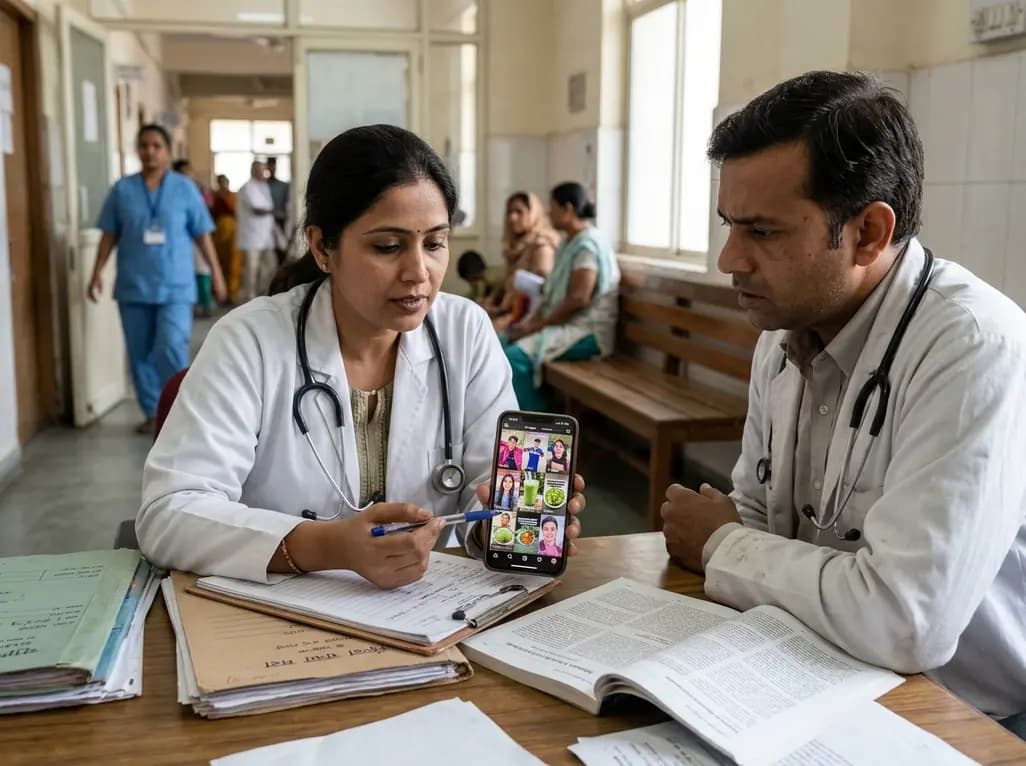
An analysis of 1,000 posts by macro- and mega-influencers on Instagram and TikTok revealed that 78.5% contained nutrition misinformation, while only 24% of creators held valid credentials. This article examines the clinical risks of viral dietary fads and provides actionable guidance for healthcare professionals.
Today
