.webp&w=384&q=75)

Loading, please wait...
Loading, please wait...

Adolescent pregnancy remains a significant public health challenge in Malawi, often leading to adverse maternal and neonatal outcomes. To address these issues, healthcare providers must refine adolescent pregnancy care practices to better serve this vulnerable population. A recent study by Toda M et al. explores midwife insights in Northern Malawi. It reveals how empathetic engagement and holistic support transform maternity experiences for young mothers.
The study highlights three core themes: positive engagement, holistic care, and the pursuit of equitable antenatal care (ANC). Midwives emphasize that building trust is the foundation of effective service delivery. Consequently, they often use individualized health education to meet the specific developmental and emotional needs of adolescents. This approach helps bridge the gap between clinical requirements and the lived experiences of young patients. Additionally, it addresses the socio-cultural realities that often deter teenagers from seeking medical help.
Furthermore, midwives advocate for a shift toward specialized youth-friendly training. For example, many providers currently face systemic inadequacies, such as a lack of dedicated ANC sites for younger patients. By implementing peer support networks, health systems can foster a more inclusive environment. Moreover, collaborating with multidisciplinary professionals and families ensures that the care provided remains psychosocially supportive.
Despite the dedication of midwives, several hurdles persist. In fact, socio-cultural factors and infrastructure gaps often hinder the delivery of quality care. Therefore, strengthening the health system infrastructure is vital for improving long-term maternal and newborn outcomes. Midwives suggest that dedicated training in youth-friendly services can significantly empower providers to navigate these complex clinical challenges effectively.
Midwives often encounter systemic inadequacies, such as limited resources and a lack of specialized facilities. Additionally, socio-cultural stigmas and a lack of family support can complicate the delivery of effective maternity care for adolescents.
Holistic care addresses the physical health of the mother and infant alongside their emotional and social needs. This comprehensive approach is necessary because adolescents face unique risks of social exclusion and developmental stress during pregnancy.
Disclaimer: This content is for informational and educational purposes only. It does not constitute professional medical advice, diagnosis, or treatment. Always seek the advice of your physician or other qualified healthcare provider with any questions you may have regarding a medical condition. Refer to the latest local and national guidelines for clinical practice.
References

Read summarized clinical updates, watch expert medical content, and earn CME certifications right from your smartphone.
Open your smartphone camera to scan and install.





This study explores midwives' perspectives in Malawi, emphasizing holistic, youth-friendly care and systemic improvements to enhance adolescent maternal hea...
4 months ago
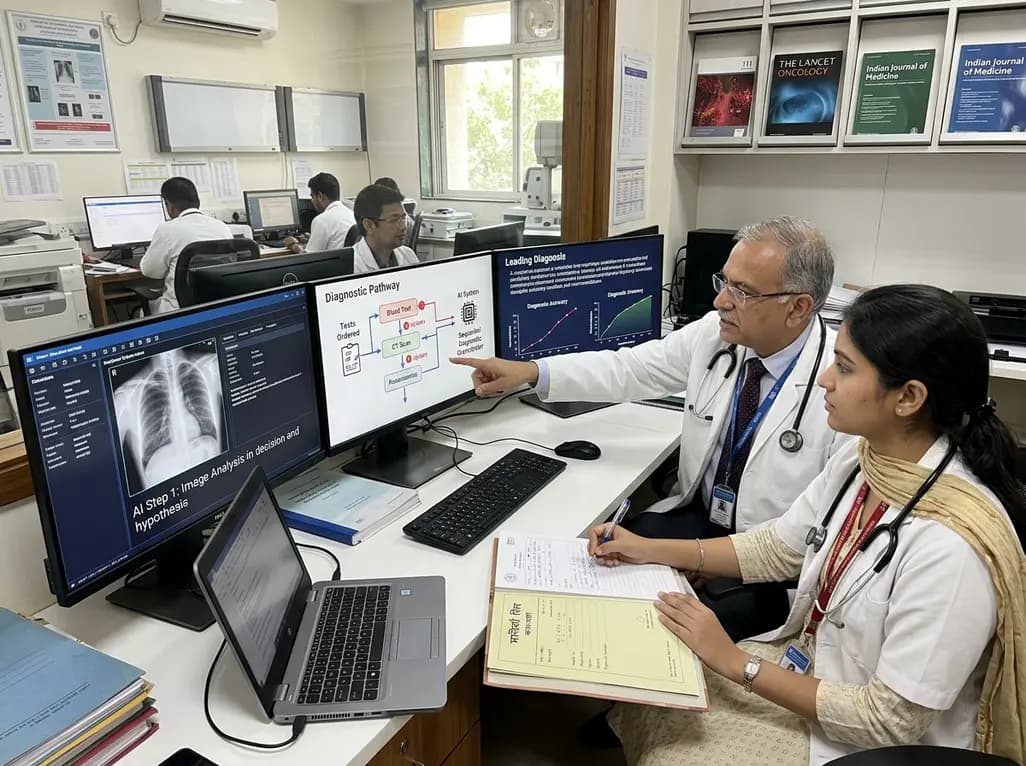
A breakthrough peer-reviewed study demonstrates that a sequential AI diagnosis system can mirror real-world clinical reasoning. By ordering stepwise tests and updating hypotheses dynamically, this multi-agent orchestrator achieved superior diagnostic accuracy while reducing investigative costs.
Today

A prenatal case highlights severe glutaric acidemia type II presenting as bilateral hyperechoic cystic kidneys at 18 weeks. Whole-exome sequencing revealed a novel homozygous ETFDH frameshift variant, demonstrating the power of rapid genetic testing in fetal renal anomalies.
Today

Review how tailored exercise programs benefit frail older patients with heart failure. Explore pathophysiological mechanisms, individualized training prescriptions, and strategies to overcome adherence barriers in clinical practice.
Yesterday

This comparative study evaluates posterior labral tears with and without glenohumeral instability, highlighting distinct demographic patterns, MRI underestimation in stable shoulders, and successful arthroscopic repair outcomes.
Yesterday

A clinical study demonstrates that early intervention with tocilizumab, either as monotherapy or bridged with corticosteroids, achieves significant proptosis reduction and resolves active inflammation in treatment-naive thyroid eye disease.
Yesterday
