.webp&w=384&q=75)

Loading, please wait...
Loading, please wait...

Adolescent contraceptive use remains a fundamental determinant of reproductive health and socio-economic well-being worldwide. Unprotected sexual debut exposes adolescent girls to severe risks, including unintended pregnancies, unsafe abortions, and sexually transmitted infections. Consequently, understanding the complex factors influencing contraceptive adoption at first intercourse is vital for designing effective public health strategies. In many rural communities, adolescent sexual debut occurs impulsively without prior planning. Therefore, young women frequently enter first sexual experiences without barrier methods or modern hormonal protection. When unplanned pregnancies occur during adolescence, young girls often suffer educational disruption, societal stigma, and psychological distress. In addition, adolescent physiology increases the likelihood of obstetric complications, such as pregnancy-induced hypertension and obstructed labor. Healthcare providers must recognize that sexual debut represents a critical intervention window. By identifying barriers that prevent protection during first sex, clinicians can establish supportive educational frameworks. Furthermore, positive early reproductive experiences foster lifelong engagement with family planning services. Ultimately, medical practitioners must bridge this vulnerability through compassionate, nonjudgmental guidance.
A cross-sectional investigation conducted across nine villages in South Africa's Ratlou local municipality assessed contraceptive practices among 290 adolescent girls. Overall, the researchers observed that only 41.0% of adolescent girls utilized contraception during their first sexual intercourse. This low utilization rate highlights an alarming prevention gap in rural adolescent healthcare. Furthermore, multivariable binary logistic regression modeling identified several key variables that significantly reduced the odds of contraceptive use at debut. Specifically, adolescent girls with secondary education showed reduced odds of contraceptive use at debut (AOR: 0.40). Similarly, adolescents living in households where the head was employed exhibited decreased odds of method adoption (AOR: 0.47). Geographic residence also proved highly influential in shaping sexual health practices. For instance, adolescents living in Kraaipan village experienced substantially lower odds of contraceptive protection during first sex (AOR: 0.18). These statistical findings demonstrate that adolescent reproductive behaviors depend heavily on localized socioeconomic and environmental contexts. Consequently, clinicians must appreciate that broad national health statistics frequently obscure deep community-level vulnerabilities.
The counterintuitive correlation between secondary educational level and lower contraceptive use requires careful clinical interpretation. While education generally enhances health knowledge, secondary schools in rural settings often lack comprehensive, stigma-free reproductive education. Moreover, secondary school students often fear public disclosure and shame if community members spot them procuring contraceptives. Household employment characteristics also revealed subtle family dynamics. Specifically, adolescents with employed household heads had lower odds of contraceptive adoption. In resource-limited rural environments, working heads of household frequently spend long hours away from home. Consequently, adolescents may experience reduced parental supervision and fewer opportunities for supportive dialogue about sexuality. Conversely, unemployed guardians often remain present at home, providing closer day-to-day oversight. However, societal taboos around adolescent sexuality continuously discourage families from discussing birth control openly. As a result, adolescents enter intimate relationships without necessary guidance. Healthcare providers must recognize that adolescents from working households may face distinct communication voids. Clinicians should proactively initiate private conversations about reproductive choices during routine healthcare encounters.
The investigation also demonstrated vital behavioral associations between age at debut and contraceptive behavior. Notably, girls initiating sex at ages 14 to 16 showed markedly lower odds of contraceptive use (AOR: 0.16). Similarly, those initiating sexual intercourse between ages 17 and 19 exhibited reduced odds compared to older peers (AOR: 0.39). Younger adolescents frequently lack accurate knowledge regarding ovulation, fertility cycles, and pregnancy risks. Furthermore, adolescent cognitive development involves an invulnerability bias, causing youth to underestimate pregnancy likelihood. In addition, interpersonal power imbalances often prevent young girls from negotiating male condom use effectively with older partners. The study uncovered another compelling paradox regarding dual method contraception. Specifically, participants reporting ever using dual methods had substantially lower odds of contraceptive use at debut (AOR: 0.21). This pattern indicates that dual protection adoption commonly represents a reactive behavior following an unprotected debut or pregnancy scare. Initially, adolescents engage in unprotected sex or rely on withdrawal. Only after facing real reproductive risks do they seek comprehensive dual protection. Therefore, clinicians must deliver anticipatory education before debut occurs.
Healthcare providers in primary care, family medicine, and adolescent clinics occupy a central position in reforming contraceptive delivery. First, clinicians must normalize confidential sexual history taking during standard consultations with teenagers. Doctors should establish strict confidentiality protocols, assuring adolescent patients that personal disclosures remain entirely private. In India, public programs such as the Rashtriya Kishor Swasthya Karyakram demonstrate the power of specialized Adolescent Friendly Health Clinics. Primary care doctors should replicate these adolescent-responsive principles by offering welcoming, nonjudgmental clinical environments. Furthermore, clinicians should counsel adolescents using a tiered efficacy approach. While barrier methods prevent sexually transmitted infections, typical user failure rates for pregnancy remain high. Therefore, recommending dual protection—combining condoms with oral pills, injectables, or long-acting reversible contraceptives—provides maximum safety. Additionally, providers should prescribe emergency contraception in advance of need. Beyond clinic walls, health systems must collaborate with schools and community leaders to deliver comprehensive sexuality education. In particular, programs should empower adolescent girls with communication skills and engage boys to promote gender equity.
Unprotected sexual debut exposes adolescents to high risks of unintended pregnancy, unsafe abortion, and sexually transmitted infections. Because young adolescents often lack anatomical knowledge and emergency contraception access, an unplanned debut frequently leads to adverse reproductive outcomes. Furthermore, adolescent pregnancies carry increased risks of maternal complications such as preeclampsia and premature labor. Using effective contraception at debut establishes lifelong protective behaviors and preserves educational and socioeconomic opportunities for young girls.
Clinicians must provide clear assurances of confidentiality before discussing sexual and reproductive health with adolescents. Practitioners should spend dedicated time alone with the adolescent patient during routine visits, explaining the exact boundaries of medical privacy. Unless there is imminent danger of serious self-harm or abuse, reproductive consultations must remain private. Creating a nonjudgmental, welcoming environment reduces apprehension, encourages honest disclosure, and fosters proactive contraceptive planning without fear of parental discovery.
Dual protection involves simultaneously utilizing a barrier method, such as male or female condoms, alongside a highly effective hormonal or intrauterine method. While hormonal contraceptives provide superior efficacy in preventing unintended pregnancy, they offer zero protection against sexually transmitted infections, including HIV. Conversely, condoms prevent infection transmission but have noticeable typical-use failure rates for pregnancy prevention. Therefore, combining both modalities offers maximum comprehensive protection against both adverse health risks for sexually active youth.
Disclaimer: This content is for informational and educational purposes only... Refer to the latest local and national guidelines for clinical practice.
References

Read summarized clinical updates, watch expert medical content, and earn CME certifications right from your smartphone.
Open your smartphone camera to scan and install.





A study of adolescent girls evaluated predictors of contraceptive use at sexual debut, revealing vital insights on education, household dynamics, and access barriers. Review clinical takeaways to strengthen youth-friendly counseling and proactive adolescent reproductive care.
Today

A network meta-analysis of 10 RCTs comprising 37,923 patients reveals that SGLT2 inhibitors offer the broadest cardiorenal protection in diabetic kidney disease. Dapagliflozin reduced kidney outcomes more than semaglutide, while finerenone increased hyperkalaemia and treatment discontinuation rates.
Today

Surgical robotics is redefining modern operating theaters by replacing extensive open incisions with micro-dexterity and stereoscopic 3D vision. Multi-specialty surgeons highlight how robotic platforms mitigate tissue trauma, enhance functional organ preservation, and shorten postoperative hospital recovery.
Today

The Delhi Cabinet has cleared an advanced seven-storey critical care expansion at Guru Tegh Bahadur Hospital under PMSSY Phase-IV. Costing Rs 244.87 crore, the new wing features 250 beds, specialized intensive care units, modern operation theatres, and round-the-clock emergency diagnostics for East Delhi.
Today
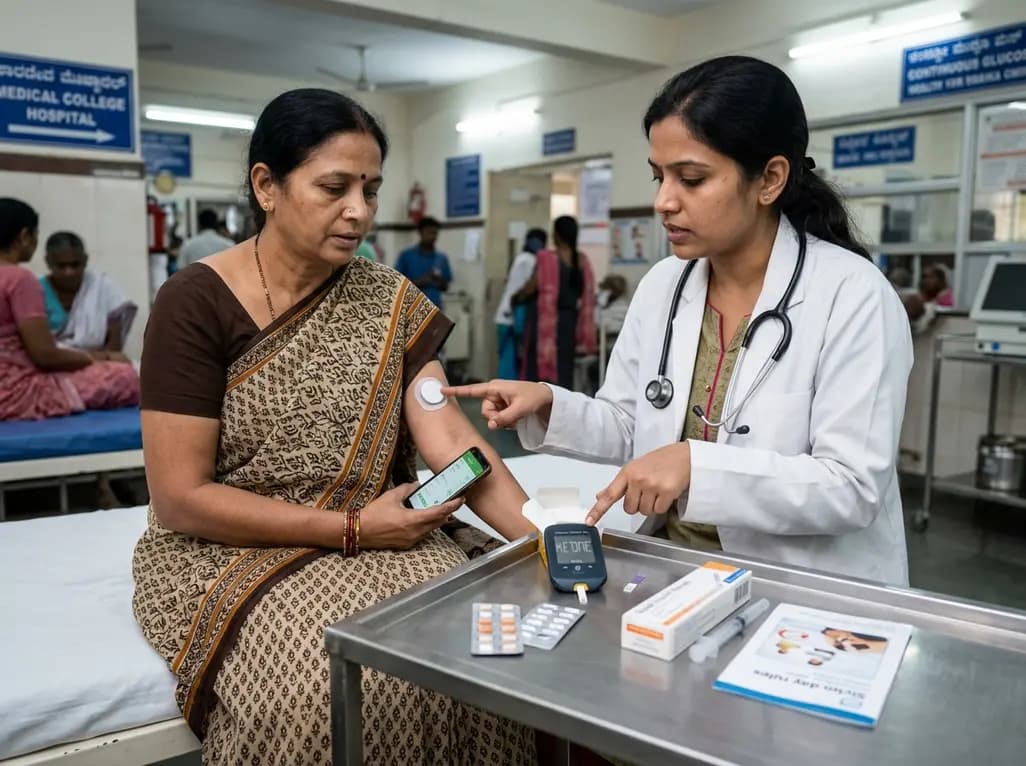
A landmark case demonstrates that favorable continuous glucose monitoring metrics cannot rule out SGLT2 inhibitor-associated euglycemic diabetic ketoacidosis. Clinicians must educate patients on symptom-based sick-day rules, uninterrupted basal insulin therapy, and proactive blood ketone testing.
Today
