.webp&w=384&q=75)

Loading, please wait...
Loading, please wait...
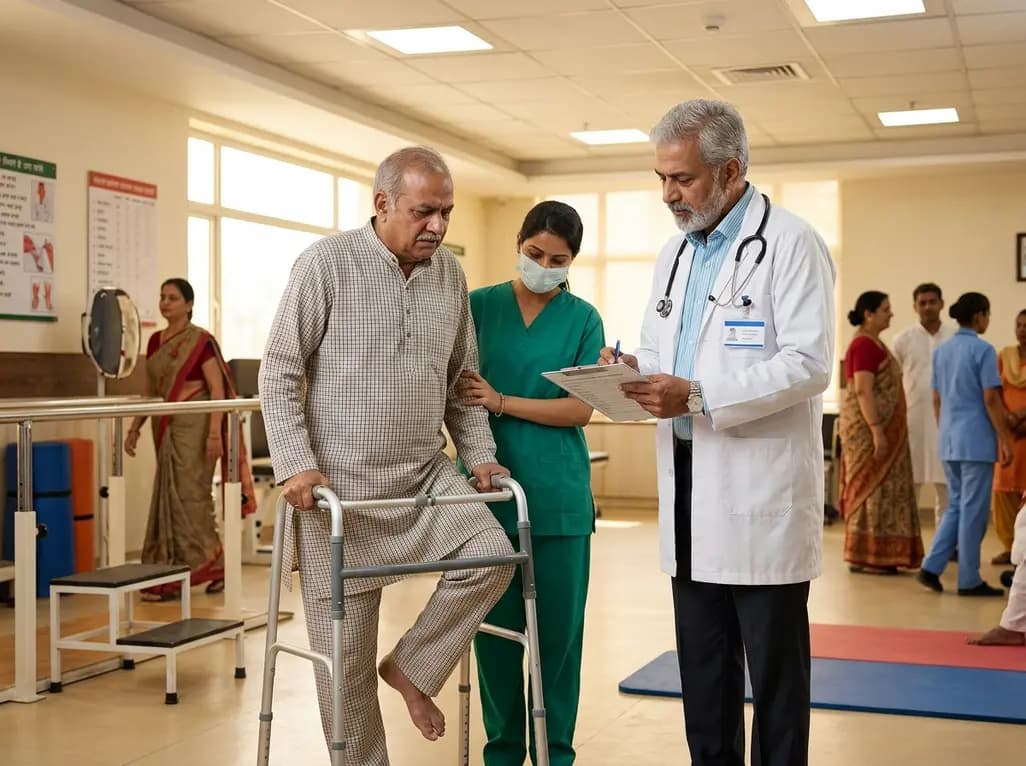
Effective Balance Confidence Assessment is a cornerstone of modern geriatric and neurological care, particularly in India's rapidly aging population. Clinicians frequently encounter patients who express a profound fear of falling, which often leads to self-imposed activity restriction. This psychological phenomenon, known as low balance confidence, is a distinct construct from physical balance impairment. However, it is equally predictive of future falls and functional decline. Consequently, accurately measuring a patient's self-efficacy in maintaining stability during daily tasks is essential for comprehensive risk management. Traditionally, tools like the 16-item Activities-specific Balance Confidence (ABC) Scale have served this purpose well. These instruments allow healthcare providers to quantify subjective stability across various environmental contexts. Furthermore, identifying these psychological barriers enables the development of targeted rehabilitation programs. By addressing both the physical and mental aspects of mobility, doctors can significantly improve a patient's quality of life. As healthcare settings become increasingly high-paced, the need for streamlined yet psychometrically sound assessment tools has never been more urgent. Researchers are now focusing on shorter versions of these scales to ensure that balance confidence is routinely evaluated without burdening the clinical workflow or the patient's stamina.
The original Activities-specific Balance Confidence Scale consists of 16 items that require patients to rate their perceived stability while performing specific activities. While this provides a detailed profile, the length of the survey can be a significant barrier in busy outpatient clinics or acute care settings. Therefore, the development of a 6-item short version (ABC-6) represents a logical evolution in clinical measurement. This shorter iteration focuses on the most discriminative tasks, such as standing on tiptoes or walking on icy surfaces, which effectively challenge a person's sense of security. Several international studies have already indicated that the ABC-6 maintains strong correlations with its longer predecessor. Moreover, the reduced time requirement makes it highly attractive for primary care physicians and geriatricians who must screen large numbers of patients. In India, where patient volumes are often high, adopting such efficient tools can facilitate earlier intervention for those at high risk of injury. The transition to the ABC-6 does not appear to compromise the depth of clinical insight. Instead, it prioritizes the most impactful data points to provide a quick yet accurate snapshot of a patient's functional self-confidence. This evolution ensures that psychological screening for fall risk becomes a standard part of every geriatric consultation.
A recent study published in Orv Hetil. 2026 detailed the systematic validation of the Hungarian short version of the ABC scale. The investigation was structured in two distinct phases to ensure methodological rigor. During the first phase, researchers recruited 167 participants who completed the full 16-item version. Data for the six specific items were subsequently extracted and analyzed to test for convergent validity against the Berg Balance Scale. This phase established that the selected items were indeed representative of the broader construct. In the second phase, 63 participants with neurological or musculoskeletal conditions completed the 6-item short version directly. In addition to the ABC-6, patients provided data on their fall history, perceived pain levels, and completed the Falls Efficacy Scale - International. This multi-layered approach allowed the research team to evaluate internal consistency using Cronbach's alpha and McDonald's omega. Furthermore, test-retest reliability was meticulously assessed via the intraclass correlation coefficient. By comparing the scores of fallers versus non-fallers, the study aimed to confirm the scale's discriminative ability. This comprehensive validation process ensures that the tool is not just fast, but also scientifically reliable for diverse clinical populations requiring accurate fall risk assessment.
The results of the Hungarian validation study provided strong evidence for the clinical utility of the ABC-6. Researchers found that the scale demonstrated high internal consistency, which suggests that the six items work harmoniously to measure balance confidence. Additionally, the test-retest reliability was excellent, indicating that the scores remain stable over time when the patient's condition is unchanged. One of the most significant findings was the absence of floor or ceiling effects. This means the scale is sensitive enough to detect differences across a wide range of disability levels. Furthermore, the ABC-6 effectively discriminated between individuals with and without a history of falls. Those who had fallen in the previous year consistently scored lower on the scale, reflecting their reduced confidence. The study also observed strong to moderate correlations with the Falls Efficacy Scale - International and the physical Berg Balance Scale. Interestingly, the researchers noted that perceived pain levels did not significantly influence the balance confidence scores. This finding is crucial as it suggests the scale specifically measures stability-related self-efficacy rather than general physical discomfort. Consequently, clinicians can trust the ABC-6 to provide a clean measurement of the patient's psychological readiness for movement.
The ABC-6 is particularly valuable for patients managing chronic neurological and musculoskeletal conditions, such as stroke, Parkinson's disease, or severe osteoarthritis. In these populations, a loss of confidence often precedes physical decline, creating a cycle of inactivity and further weakness. Therefore, integrating a rapid Balance Confidence Assessment into routine follow-ups allows for early detection of this psychological shift. The average completion time for the ABC-6 was recorded at under four minutes, making it remarkably feasible for bedside use. Because the scale is sensitive to changes in perceived stability, it can also serve as an effective outcome measure for rehabilitation interventions. For instance, a physical therapist can use the ABC-6 to track progress after a balance-training program. In the Indian context, where family caregivers play a major role in elderly care, the simplicity of the ABC-6 allows for clear communication regarding a patient's functional status. Moreover, the scale's reliability across different conditions means that multispecialty clinics can use a unified tool for fall risk screening. Ultimately, the ABC-6 bridges the gap between complex research instruments and the practical needs of daily clinical practice, ensuring that no patient's fear of falling goes unrecognized.
As the global medical community moves toward value-based care, the efficiency of diagnostic tools becomes paramount. The successful validation of the Hungarian ABC-6 adds to a growing body of evidence supporting shortened assessment protocols. For healthcare systems in India, adopting such validated instruments can streamline the triage process for geriatric and orthopedic patients. Furthermore, the minimal detectable change calculated in recent studies provides a clear benchmark for clinicians to identify clinically significant improvements or regressions. Implementing the ABC-6 requires minimal training, as the items are intuitive and reflect common daily activities. Consequently, nurses, physiotherapists, and general practitioners can all contribute to the screening process. This multidisciplinary approach is essential for reducing the high incidence of fall-related fractures and hospitalizations among the elderly. Moreover, by identifying low confidence early, medical teams can prescribe preventive measures like home modifications or specialized exercise therapy. The integration of the ABC-6 into electronic health records could further enhance data tracking and long-term patient monitoring. In conclusion, the 6-item Activities-specific Balance Confidence Scale stands as a brief, reliable, and valid instrument that empowers clinicians to provide proactive and personalized care for those at risk of falling.
The ABC-6 is highly accurate and maintains a strong correlation (often exceeding 0.90) with the original 16-item scale. While the ABC-16 provides a more granular look at sixteen different daily scenarios, the ABC-6 specifically isolates the most challenging tasks that best predict a patient's overall balance confidence. Psychometric studies consistently show that the shorter version retains excellent internal consistency and discriminative validity, making it a reliable surrogate for the longer instrument in most clinical settings.
Yes, the ABC-6 has been specifically validated for use in neurological populations, including those with Parkinson’s disease and stroke. In these patients, the scale is particularly useful because it captures the 'fear of falling' which is often disproportionate to physical impairment. It helps clinicians identify individuals who are avoiding activity due to psychological reasons, allowing for more targeted interventions that combine physical therapy with cognitive strategies to rebuild movement confidence safely and effectively.
A low score on the ABC scale, typically defined as below 67%, is strongly associated with an increased risk of future falls and a significant reduction in community mobility. Clinically, a low score suggests that the patient lacks the self-efficacy to perform daily tasks safely. This often leads to a sedentary lifestyle, muscle atrophy, and social isolation. Identifying these patients early allows for the implementation of fall prevention strategies, balance training, and environmental modifications to mitigate injury risks.
Disclaimer: This content is for informational and educational purposes only and does not constitute medical advice or a professional relationship. Always seek the advice of a physician or other qualified health provider with any questions regarding a medical condition. The ABC-6 should be used as part of a comprehensive clinical assessment. Refer to the latest local and national guidelines for clinical practice.
References
Ruszin-Perecz B et al. [The Hungarian short version and psychometric properties of the Activities-specific Balance Confidence Scale for assessing fall risk]. Orv Hetil. 2026 Jul 05. doi: 10.1556/650.2026.33526. PMID: 42402136.
Schott N. Reliability and validity of the German short version of the Activities specific Balance Confidence (ABC-D6) scale in older adults. Arch Gerontol Geriatr. 2014 Sep-Oct;59(2):272-9. doi: 10.1016/j.archger.2014.05.003.
Kumar S, et al. Relationship between fear of falling, balance impairment and functional mobility in community dwelling elderly. Indian Journal of Physical Medicine and Rehabilitation. 2008; 19(2):48–52.
Filiatrault J, et al. Psychometric properties of the Activities-specific Balance Confidence scale. Age Ageing. 2007;36(5):540-546.

Read summarized clinical updates, watch expert medical content, and earn CME certifications right from your smartphone.
Open your smartphone camera to scan and install.





A significant study validates the 6-item Hungarian short version of the Activities-specific Balance Confidence (ABC) Scale. This tool provides a highly reliable, rapid method for assessing fall risk in patients with neurological and musculoskeletal conditions, taking under four minutes to complete.
3 months ago

Novel diimide and hydrazone scaffolds, particularly compound #C4, synergistically reactivate latent HIV-1 when combined with JQ1 or PKC activators. Demonstrating donor-matched proviral transcription ex vivo and non-canonical signaling, these findings advance shock and kill strategies toward reservoir eradication.
Today

A comparative cohort study evaluates vNOTES vs TLH hysterectomy for benign conditions, demonstrating shorter operative duration, faster return to daily activities, and equivalent female sexual function scores without increased dyspareunia.
Today

Review how tailored exercise programs benefit frail older patients with heart failure. Explore pathophysiological mechanisms, individualized training prescriptions, and strategies to overcome adherence barriers in clinical practice.
Yesterday

This comparative study evaluates posterior labral tears with and without glenohumeral instability, highlighting distinct demographic patterns, MRI underestimation in stable shoulders, and successful arthroscopic repair outcomes.
Yesterday

A clinical study demonstrates that early intervention with tocilizumab, either as monotherapy or bridged with corticosteroids, achieves significant proptosis reduction and resolves active inflammation in treatment-naive thyroid eye disease.
Today
