.webp&w=384&q=75)

Loading, please wait...
Loading, please wait...

Total hip arthroplasty (THA) remains a highly effective intervention for patients with end-stage hip disorders. However, achieving long-term success requires more than just successful surgery; it involves restoring functional movement. Research indicates that both the surgical approach and the acetabular abduction angle THA significantly impact patient recovery and gait patterns. A recent study investigated how these factors interact to influence gait symmetry and the risk of adverse reactions.
The study evaluated 120 patients undergoing unilateral THA, comparing the posterolateral approach (PLA) and the direct anterior approach (DAA). Results suggest that the DAA group often experiences faster early recovery and improved gait mechanics compared to the PLA group. Specifically, DAA allows for muscle preservation, which directly enhances the restoration of a natural walking cycle. Nevertheless, the success of either approach depends heavily on the precise positioning of the prosthesis.
Surgeons typically aim for an ideal acetabular abduction angle THA between 40° and 50°. Patients who fall outside this "safe zone" are categorized as having a non-ideal angle. According to the research, maintaining this ideal range is crucial for minimizing gait asymmetry. Furthermore, non-ideal angles were linked to a higher frequency of adverse reactions, including increased wear and instability. Consequently, intraoperative precision remains the cornerstone of reducing postoperative complications.
While the DAA showed advantages in early gait symmetry, the abduction angle proved to be a critical variable across both surgical techniques. Surgeons should utilize intraoperative imaging or navigation tools to ensure the cup is placed within the 40°-50° range. This focus on alignment helps optimize weight-bearing symmetry and reduces the likelihood of revision surgery. Ultimately, combining a muscle-sparing approach with accurate component placement yields the best functional outcomes for the patient.
The ideal acetabular abduction angle for a total hip arthroplasty is generally considered to be between 40° and 50°. Placement within this range helps ensure joint stability and reduces the risk of excessive polyethylene wear.
The direct anterior approach (DAA) is associated with faster early gait recovery and better symmetry because it avoids cutting major muscles. In contrast, the posterolateral approach (PLA) may lead to temporary muscle weakness that affects gait in the immediate postoperative period.
Yes, an abduction angle outside the 40°-50° range can lead to increased gait asymmetry, a higher risk of dislocation, and accelerated wear of the prosthetic components.
Disclaimer: This content is for informational and educational purposes only. It does not constitute medical advice or establish a doctor-patient relationship. Refer to the latest local and national guidelines for clinical practice.
References
Xian S et al. Association of postoperative acetabular abduction angle with gait asymmetry and adverse reactions following total hip arthroplasty across different surgical approaches. Expert Rev Med Devices. 2026 May 13. doi: 10.1080/17434440.2026.2675019. PMID: 42129579.
Zamora-Muñoz PM et al. Direct anterior versus small incision lateral approach in total hip arthroplasty: postoperative radiological and complication rate differences. Gac Med Mex. 2021.
Meermans G et al. The direct anterior approach in total hip arthroplasty: a systematic review of the literature. Bone Joint J. 2017.

Read summarized clinical updates, watch expert medical content, and earn CME certifications right from your smartphone.
Open your smartphone camera to scan and install.





A study explores how acetabular abduction angle and surgical approaches (DAA vs. PLA) influence gait symmetry and complications after total hip arthroplasty...
5 months ago

Recent epidemiological data reveals a dramatic surge in summer heat mortality driven by human-induced climate warming. This analysis explores the pathophysiological impacts on cardiac and renal systems, diagnostic dilemmas in death certification, and essential emergency cooling protocols for acute clinical care.
Today

Odisha has established India's first state-level clinical protocol specifically tailored for pregnant women with sickle cell disease. Developed with NHM and UNICEF, the framework provides structured antenatal screening, crisis mitigation, standardized referral pathways, and specialized interdisciplinary care.
Today

India is advancing preventive healthcare by integrating genomics, artificial intelligence, and quantum technologies. With the SANGAM programme sequencing one million Indian genomes, clinicians can unlock personalized therapies, detect cardiometabolic risks early, and curb the burden of diabetes and heart disease.
Today
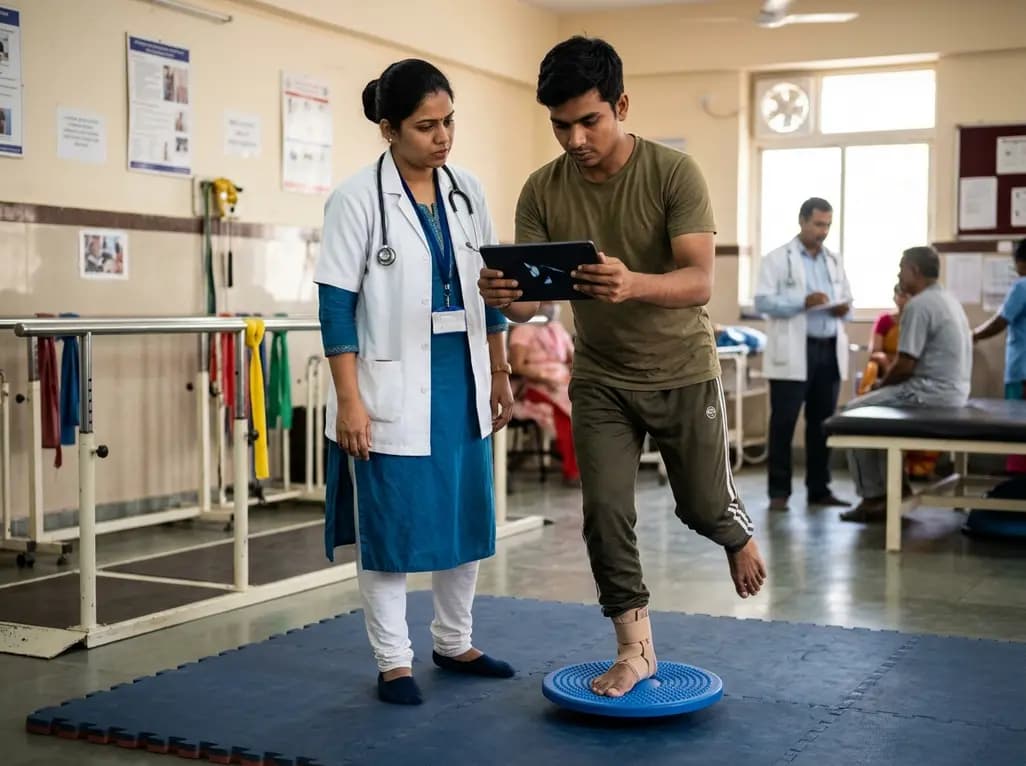
A randomized controlled trial demonstrates that an eight-week dual-task training intervention significantly improves static and dynamic postural control over standard balance exercises in individuals with chronic ankle instability, addressing critical neurocognitive deficits during athletic and daily activities.
Today

A retrospective cohort study of 7,716 ICU patients from the MIMIC-IV database demonstrates that Gradient Boosting Decision Trees significantly outperform traditional SOFA scores in predicting in-hospital mortality among patients with sepsis and diabetes, with SHAP analysis providing clinical interpretability.
Today
