.webp&w=384&q=75)

Loading, please wait...
Loading, please wait...

Human γδ T cells represent a unique lymphocyte population that bridges innate and adaptive immunity. Recently, researchers developed a 38-marker panel using full-spectrum flow cytometry to profile these cells across human tissues. This advancement allows for the identification of rare, tissue-adapted subsets that traditional methods often miss. Consequently, this tool provides a more detailed understanding of immune responses in health and disease.
The primary advantage of this 38-marker panel lies in its high resolution. While traditional flow cytometry usually hits a ceiling at 28 markers, full-spectrum flow cytometry captures the entire emission signature of each fluorochrome. Therefore, scientists can simultaneously analyze activation, exhaustion, and homing markers on γδ T cell subsets. Moreover, this capability is essential for studying complex lymphoid tissues where cell diversity is high.
This new panel significantly impacts clinical research in India and globally. For instance, γδ T cells play a pivotal role in cancer immunotherapy and sepsis management. By using this standardized 38-marker approach, clinicians can better monitor patient responses to treatment. Furthermore, the robust identification of rare subsets may lead to the discovery of new biomarkers for autoimmune disorders.
In addition, the panel's integration with international guidelines ensures high reliability and reproducibility. Specifically, the use of 38 markers allows for a deep dive into the heterogeneity of Vδ1 and Vδ2 subsets. As a result, laboratories can now achieve higher data quality from limited clinical samples. Ultimately, this technological leap bridges the gap between basic immunology and clinical diagnostics.
It allows for the simultaneous detection of a large number of markers. Because γδ T cells are rare and highly diverse, this high-dimensional analysis is necessary to identify specific functional subsets accurately.
This panel expands the number of markers to 38, enabling the study of maturation, homing, and activation in a single tube. Additionally, it identifies tissue-adapted subsets that were previously difficult to distinguish from peripheral blood populations.
Disclaimer: This content is for informational and educational purposes only. It does not constitute medical advice or a professional endorsement. Readers should consult with qualified healthcare professionals for specific medical concerns. Refer to the latest local and national guidelines for clinical practice.
References
Hamed M et al. 38-Marker Full-Spectrum Flow Cytometry Panel for the Comprehensive Profiling of γδ T Cells in Human Blood and Lymphoid Tissues. Eur J Immunol. 2026 Mar undefined. doi: 10.1002/eji.70155. PMID: 41764398.
Barros-Martins J et al. OMIP-084: 28-color full spectrum flow cytometry panel for the comprehensive analysis of human γδ T cells. Cytometry A. 2022; 101(10):856-861.
Eberl M. Highlights of 2024: γδ T cells and bad blood. Immunol Cell Biol. 2025; 103(6):513-517.

Read summarized clinical updates, watch expert medical content, and earn CME certifications right from your smartphone.
Open your smartphone camera to scan and install.





A new 38-marker full-spectrum flow cytometry panel enables comprehensive high-resolution profiling of human γδ T cells across blood and lymphoid tissues....
7 months ago

Health authorities in Kenya have confirmed two fatalities among nine cases of Ebola linked to regional transmission. Clinicians worldwide must maintain heightened vigilance, screen international travelers promptly, enforce strict infection prevention, and deliver immediate supportive care for suspected cases.
Today
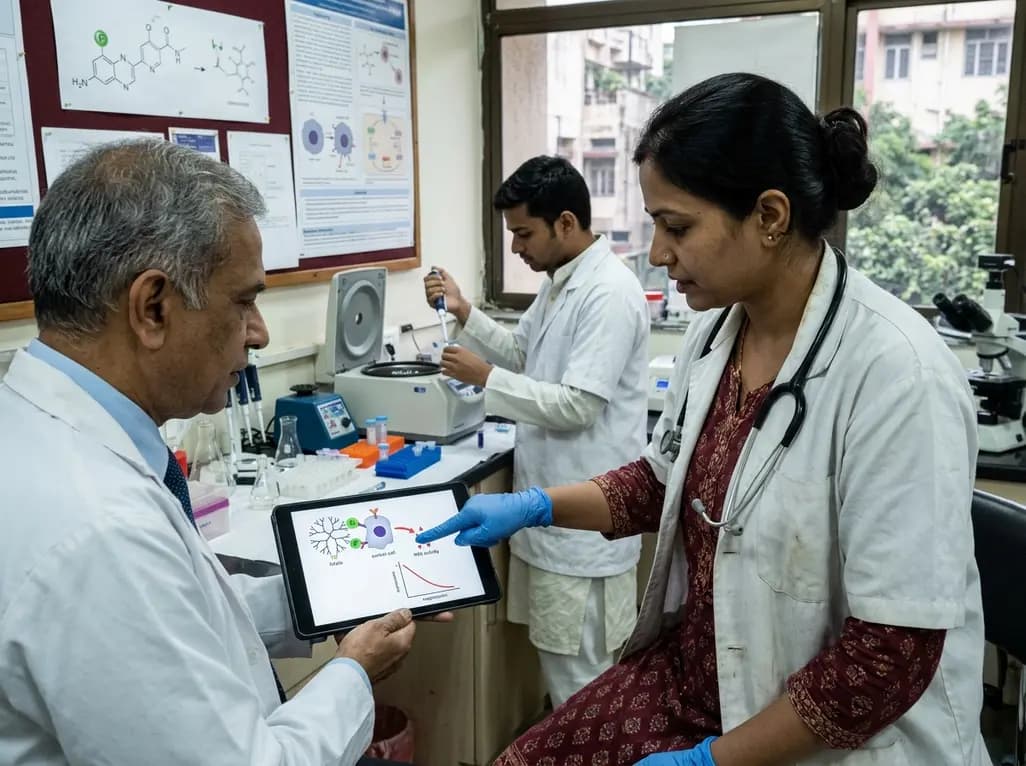
A novel folate-conjugated tecto-dendrimer nanoplatform successfully delivers siRNA to achieve targeted HK2 silencing, disrupting ovarian cancer glycolysis and suppressing lactate output.
Today
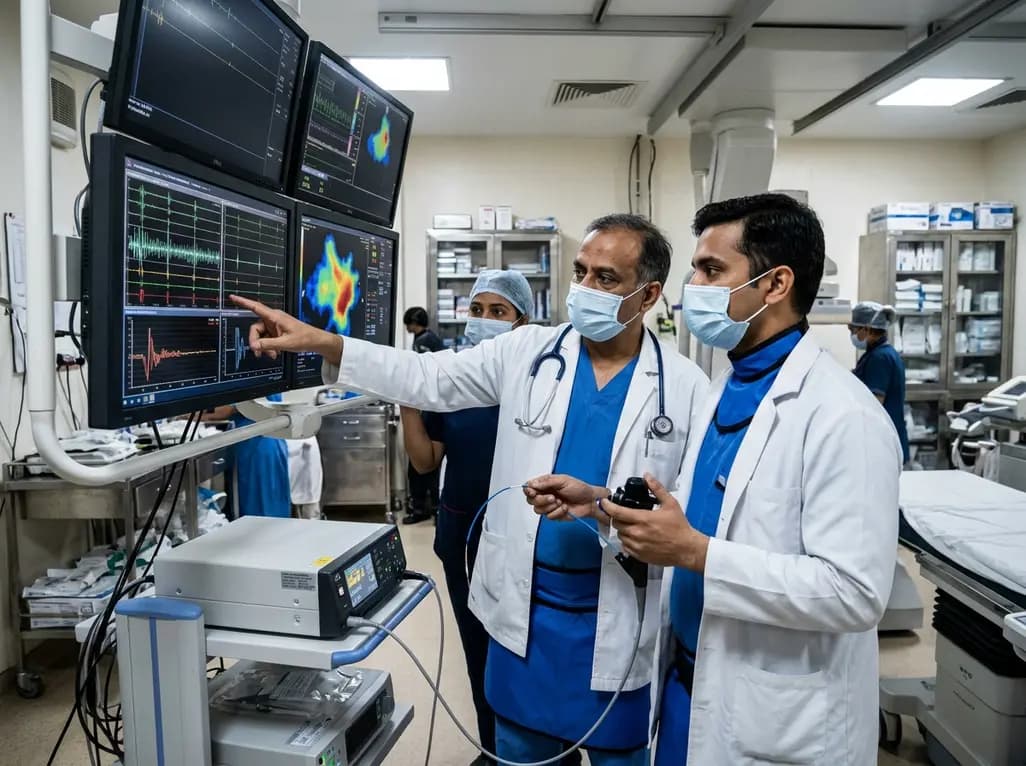
A comparative non-contact study reveals that high-power radiofrequency delivery with the QDOT MICRO catheter induces an artifactual contact force rise. Electrophysiologists must understand this power-dependent thermal and electrical phenomenon to avoid inadvertent catheter withdrawal and ineffective ablation.
Today

A novel proof-of-concept study presents a six-degree-of-freedom articulated manikin neck equipped with linear potentiometers. The system provides real-time kinematic motion feedback during cervical immobilisation, delivering sub-degree tracking accuracy to improve pre-hospital trauma training and patient safety.
Today

Novel glucose-responsive mPEG-PSA nanocarriers deliver insulin aspart on demand, achieving dual postprandial and basal glycemic control without hypoglycemia in diabetic models. This biomaterial breakthrough offers promising clinical implications for physiologic diabetes management.
Today
