

Loading, please wait...
Loading, please wait...
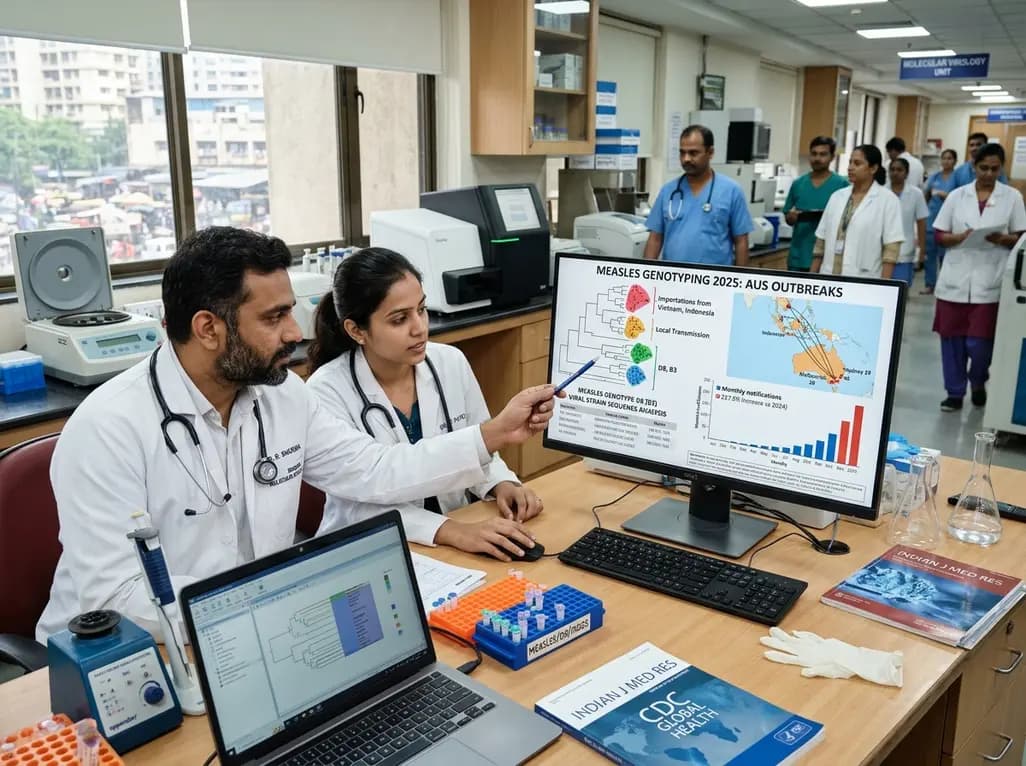
Measles genotyping surveillance plays a critical role in tracking viral transmission pathways, identifying international importations, and maintaining regional elimination status. Public health authorities worldwide face heightened challenges as global immunization gaps widen and international travel resumes regular frequency. In 2025, Australia documented a significant resurgence in measles notifications, recording 181 confirmed cases. This figure represented a sharp 217.5% increase compared to notifications reported during 2024. Despite this steep numerical surge, robust molecular data demonstrated that these notifications stemmed strictly from imported index cases and subsequent localized secondary transmissions. Consequently, the national health authorities confirmed that Australia successfully retained its verified elimination status for both measles and rubella.
Furthermore, molecular epidemiology provides crucial verification when public health officials evaluate whether persistent local transmission chains exist. The absence of continuous endemic circulation over twelve months remains the primary global benchmark for disease elimination. Therefore, detailed genomic characterization allows disease detectives to distinguish between prolonged domestic transmission and multiple independent import events. In highly vaccinated populations, clinicians must remain vigilant because imported strains can still cause focal outbreaks among susceptible individuals.
During 2025, epidemiological investigations identified 31 confirmed outbreaks across Australian jurisdictions. These events comprised 13 outbreaks caused by measles genotype B3 and 17 outbreaks caused by genotype D8. Interestingly, viral genotype dynamics shifted markedly throughout the surveillance year. Genotype B3 predominated during the first six months of 2025, and contact tracers linked most of these cases to travellers returning from Vietnam. Conversely, genotype D8 became the predominant strain during the second half of the year, driven primarily by repeated viral importations from Indonesia.
Because regional travel connects communities across borders rapidly, imported viral lineages often reflect broader international transmission hotspots. Both Vietnam and Indonesia experienced heightened measles activity during this period, which fueled importation risks for neighbouring countries. However, rapid contact tracing and high population immunity successfully curtailed sustained community spread within Australian borders. Health authorities contained each localized cluster before extensive secondary chains developed. Thus, the surveillance findings show that rising case counts do not necessarily indicate endemic re-establishment when robust containment measures operate effectively.
For decades, international surveillance protocols relied on sequencing the 450-nucleotide carboxyl-terminal region of the nucleoprotein gene, known as N450. However, global vaccination programs have dramatically reduced measles genetic diversity over the past three decades. Currently, only two wild-type lineages—genotypes B3 and D8—circulate across the globe. Consequently, unrelated transmission events often share identical N450 distinct sequence identifiers (DSids). This biological limitation frequently obscures true epidemiological pathways during complex outbreak investigations.
To overcome this challenge, the 2025 surveillance report demonstrated the superior discriminatory power of whole genome sequencing (WGS). Specifically, whole-genome analysis showed that viruses sharing the exact same N450 sequence differed by up to 33 single nucleotide polymorphisms (SNPs) within genotype B3. Similarly, genotype D8 viruses sharing an identical N450 sequence differed by up to 36 SNPs across the entire viral genome. In sharp contrast, viral genomes recovered from epidemiologically confirmed, linked cases differed by no more than four SNPs. Therefore, WGS provides the high-resolution genetic granularity necessary to separate independent importations from linked transmission chains.
In addition to wild-type cases, laboratory surveillance identified 21 vaccine-associated genotype A detections in Australia during 2025. Live attenuated measles vaccines contain virus belonging exclusively to genotype A. When pediatric patients receive standard measles-containing vaccines, such as MMR or MMRV, a small percentage develop mild fever and a rash five to twelve days later. Because these clinical manifestations mimic wild-type measles infection, prompt laboratory differentiation is essential for patient management and public health reporting.
Fortunately, molecular assays can rapidly discriminate vaccine strains from wild pathogens. Clinicians routinely submit throat swabs and urine specimens for reverse transcription polymerase chain reaction (RT-PCR) testing. Specific PCR tests target distinct mutations that separate vaccine strains from wild genotypes B3 and D8. Moreover, genotype A strains do not transmit secondary infections to immune contacts, nor do they signify vaccine failure. Identifying genotype A eliminates the need for exhaustive contact tracing, school exclusions, or post-exposure prophylaxis for exposed individuals. Consequently, routine molecular identification of vaccine-associated reactions protects public health systems from unnecessary containment operations.
While measles notifications increased during 2025, rubella activity remained exceptionally low across Australia. National reference laboratories performed diagnostic PCR testing on 157 clinical specimens submitted for rubella assessment, and zero samples yielded detectable viral RNA. Across the entire nation, public health registries notified only two confirmed rubella cases for the year. Furthermore, neither notified patient had clinical material available for molecular characterization or genotyping.
These findings provide compelling evidence that Australia maintains sustained interruption of endemic rubella transmission. High uptake of the two-dose MMR vaccination schedule among children and susceptible adult women continues to prevent rubella circulation. As a result, congenital rubella syndrome remains virtually absent in the domestic population. Nevertheless, authorities must maintain continuous laboratory vigilance because rubella continues to circulate in several endemic regions worldwide. Routine laboratory screening of suspicious fever-rash presentations ensures early detection should imported rubella cases arrive across borders. Clinicians should ensure high coverage with MMR vaccination to preserve these public health achievements.
Whole genome sequencing examines the entire viral genome rather than just a small 450-nucleotide fragment. Because circulating wild-type measles diversity has narrowed down to genotypes B3 and D8 globally, separate transmission events often share identical N450 sequences. Whole genome sequencing detects up to 36 single nucleotide polymorphisms across different strains. Consequently, it provides the fine-scale resolution necessary to separate independent imported infections from genuine local outbreak clusters.
Clinicians distinguish vaccine strains from wild viruses using specialized reverse transcription polymerase chain reaction assays. Live attenuated vaccines contain genotype A viruses, whereas circulating wild viruses belong to genotypes B3 or D8. Pediatric patients frequently develop mild fever and rash 5 to 12 days after MMR immunization. Molecular assays confirm the genotype A vaccine strain within hours, thereby preventing unnecessary quarantine measures and labor-intensive contact tracing operations.
Verification of elimination requires documented interruption of continuous endemic viral transmission for at least 12 months in the presence of a high-performing surveillance system. Molecular epidemiology plays an indispensable role by proving that notified cases represent isolated importations or short, self-limiting transmission chains rather than ongoing domestic circulation. Comprehensive laboratory testing, high vaccination coverage, and detailed genomic tracking together substantiate national elimination status before international health authorities.
Disclaimer: This content is for informational and educational purposes only... Refer to the latest local and national guidelines for clinical practice.
References

Read summarized clinical updates, watch expert medical content, and earn CME certifications right from your smartphone.
Open your smartphone camera to scan and install.





Australia maintained measles and rubella elimination in 2025 despite a 217.5% rise in notifications, driven by importations from Vietnam and Indonesia. Whole genome sequencing proved vital in resolving outbreaks.
Today

The 2025 Australian meningococcal surveillance report shows a 13% decline in invasive meningococcal disease notifications to 118 cases. Genogroup B accounted for 82.2% of typed infections, predominantly impacting infants and young adults, highlighting critical vaccination and rapid diagnostic imperatives.
Today

Doctors at AIIMS New Delhi have achieved a historic milestone by performing India's first open prenatal myelomeningocele repair on a 25-week unborn fetus. This landmark multidisciplinary procedure provides vital neuroprotective benefits, lowers hydrocephalus risks, and transforms maternal-fetal medicine nationwide.
Today

The ACE-PAS registry evaluated 21,612 patients fitted with the ASSURE wearable cardioverter defibrillator. The study demonstrated a 100% ventricular arrhythmia conversion rate, an inappropriate shock incidence of 0.0065 per patient-month, and high daily compliance of 23.1 hours, confirming real-world safety.
Today

A clinical overview of resveratrol supplementation in mitigating exercise-induced muscle damage. This narrative review explores physiological mechanisms, reductions in soreness markers like creatine kinase, dosage strategies, and bioavailability enhancements for sports medicine and nutrition practitioners.
Today

Childhood insulinoma is a rare cause of recurrent hyperinsulinemic hypoglycemia that often eludes early diagnosis. Advanced GLP-1 receptor-targeted PET/CT imaging using 68Ga-exendin-4 complements anatomic MRI to localize occult pancreatic lesions, facilitating focused, curative surgical enucleation.
Today
