

Loading, please wait...
Loading, please wait...

Spontaneous preterm delivery presents significant therapeutic hurdles for obstetricians and neonatologists worldwide. Recently, landmark investigations have uncovered critical biological mechanisms behind preterm birth triggers, offering fresh diagnostic perspectives. Simultaneously, emerging clinical data highlight how consumption methods of cannabis influence perioperative propofol requirements during routine endoscopic procedures. This review explores both translational immunology in pregnancy and modern anesthetic considerations for substance-exposed patients.
Understanding the precise etiology of spontaneous preterm labor has long challenged maternal-fetal medicine specialists. Recently, researchers from the University of California, San Francisco published a pivotal investigation in Nature Immunology. Specifically, the study evaluated blood samples from a cohort exceeding two thousand pregnant individuals. The investigators identified unique autoantibodies that appeared significantly earlier and in greater quantities among women who delivered prior to thirty-seven weeks of gestation. Notably, these circulating immune proteins specifically target interleukin-1 receptor antagonist, commonly known as IL-1RA. Under normal physiological circumstances, IL-1RA functions as an essential maternal brake against destructive inflammatory cascades. However, neutralizing autoantibodies impair this protective shield during critical gestational windows. Consequently, placental tissues experience structural compromise and premature inflammatory signaling. Animal models reinforced these clinical observations in striking fashion. Specifically, timed-pregnant mice injected with anti-IL-1RA antibodies demonstrated dramatic spikes in inflammatory cytokines alongside noticeable placental damage. Thus, these findings demonstrate that maternal autoimmune activity represents a direct catalyst for preterm labor in a distinct subset of patients. Clinicians can view this autoantibody signature as a promising early biomarker for preterm risk stratification.
The discovery highlights the fundamental role of cytokine balance within the gestational compartment. Normally, interleukin-1 receptor antagonist binds tightly to the interleukin-1 receptor without triggering downstream cellular activation. Therefore, endogenous IL-1RA acts as an effective competitive inhibitor against interleukin-1 beta. Interleukin-1 beta represents a potent proinflammatory cytokine that actively triggers human labor cascades. When pathological autoantibodies deplete bioavailable IL-1RA, interleukin-1 beta binds to decidual and myometrial receptors without impediment. Consequently, this unchecked ligand-receptor engagement accelerates local prostaglandin synthesis throughout the uterine cavity. Furthermore, elevated interleukin-1 beta stimulates matrix metalloproteinases, which degrade the extracellular matrix of fetal membranes and the uterine cervix. This enzymatic cascade promotes premature cervical ripening alongside spontaneous membrane rupture. In addition, the inflammatory cascade promotes calcium influx into uterine smooth muscle cells, triggering rhythmic myometrial contractions. Pathologists regularly encounter comparable inflammatory lesions and vascular disruptions in preterm human placentas. Therefore, maternal humoral autoimmunity can directly disrupt immunotolerance at the maternal-fetal interface. Recognizing this cytokine imbalance provides clinicians with a clear mechanistic framework for understanding unexplained preterm contractions. Ultimately, addressing this inflammatory cascade represents a vital step toward preserving full-term gestations.
Identifying autoantibodies against IL-1RA immediately opens targeted therapeutic pathways for high-risk pregnancies. Currently, clinicians possess an approved recombinant human IL-1 receptor antagonist known as anakinra, marketed as Kineret. Rheumatologists have safely utilized this biologic agent for decades to manage rheumatoid arthritis and systemic autoinflammatory conditions. Consequently, researchers propose that supplemental IL-1RA could overcome endogenous antibody neutralization in susceptible pregnant patients. By saturating circulating autoantibodies, therapeutic anakinra may restore biological braking mechanisms over interleukin-1 beta. As a result, this intervention can halt inflammatory cascades before myometrial contractions commence. However, maternal-fetal medicine specialists urge prudent interpretation of these early results. The researchers emphasized that anti-IL-1RA antibodies account for only a specific fraction of spontaneous preterm births. Multiple distinct pathways, including ascending microbial infections and cervical insufficiency, contribute substantially to prematurity rates. Furthermore, reproductive toxicologists must thoroughly evaluate placental transfer, fetal pharmacokinetics, and maternal safety profiles before establishing clinical protocols. Nonetheless, this paradigm shift from empiric tocolysis toward precision immunology provides profound hope for preventing neonatal morbidity. Obstetric researchers must now prioritize prospective clinical trials validating this targeted intervention.
While obstetricians evaluate inflammatory pathways, procedural teams face unique anesthetic challenges involving modern cannabis consumption. Specifically, investigators presented new findings at the American Society of Anesthesiologists annual conference in San Diego. The clinical investigation analyzed propofol requirements during two hundred eighty gastrointestinal endoscopies across two hundred sixty-four patients. Interestingly, when investigators grouped all cannabis consumers together, overall initial propofol dosages mirrored those of non-users. However, separating patients by their specific mode of administration unveiled striking clinical discrepancies. Patients who regularly inhaled cannabis through smoking or vaping required an average initial propofol dose of 168.5 milligrams. In contrast, non-users required an average of 138.7 milligrams to achieve equivalent sedation depth. Most remarkably, patients consuming oral cannabis edibles required only 114.2 milligrams of propofol. Although the edible cohort remained relatively small, the pharmacokinetic differences appear clinically meaningful. Pharmacologists attribute these variations to distinct metabolic pathways and organ interactions. Inhaled tetrahydrocannabinol rapidly enters systemic arterial circulation through the pulmonary bed. Conversely, oral cannabinoids undergo extensive first-pass hepatic metabolism into eleven-hydroxy-THC. Consequently, the route of administration profoundly dictates drug interactions during procedural sedation.
The discrepancy between inhaled and edible cannabis proved most pronounced during upper gastrointestinal endoscopy procedures. Notably, upper endoscopies require instruments to traverse the pharynx and upper respiratory tract directly. Chronic inhalation of cannabis smoke or aerosolized vapor causes chronic airway irritation and epithelial inflammation. Therefore, these patients frequently exhibit upper airway hyperreactivity, vocal cord sensitivity, and heightened cough reflexes. Consequently, endoscopists and anesthesiologists must administer higher propofol doses to suppress laryngeal reflexes during scope insertion. In contrast, colonoscopy procedures bypass the airway entirely, demonstrating no meaningful difference in anesthetic requirements. These findings provide immediate practical guidance for perioperative physicians and proceduralists. Previously, pre-anesthetic questionnaires merely inquired whether a patient used cannabis. However, modern clinical practice demands far more granular history taking. Specifically, anesthesiologists must ask about the administration method, frequency of use, potency, and timing of the last dose. Furthermore, procedural teams must prepare for airway complications, including laryngospasm and coughing, when managing regular cannabis smokers. Tailoring anesthetic regimens according to the route of substance exposure ensures optimal patient safety and procedural success.
Q1: How do anti-IL-1RA antibodies trigger spontaneous preterm birth?
Anti-IL-1RA antibodies trigger labor by neutralizing the body's natural anti-inflammatory defense during pregnancy. Under normal conditions, IL-1RA blocks interleukin-1 beta, a potent cytokine known to induce uterine contractions and cervical ripening. When autoantibodies eliminate IL-1RA, interleukin-1 beta levels surge unchecked. Consequently, this uncontrolled inflammatory cascade accelerates prostaglandin synthesis, damages placental architecture, and initiates premature myometrial contractions, leading directly to preterm delivery before thirty-seven weeks of gestation.
Q2: Can existing arthritis medications help prevent preterm delivery?
Researchers believe that synthetic IL-1RA, known as anakinra or Kineret, may effectively prevent preterm delivery in select patients. Clinicians currently prescribe this medication to manage systemic inflammation in rheumatoid arthritis. By supplementing endogenous receptor antagonists, anakinra could theoretically overwhelm neutralizing autoantibodies and suppress interleukin-1 beta. However, obstetricians emphasize that clinical trials must thoroughly assess fetal safety, placental transfer, and pharmacokinetics before approving this biologic therapy for pregnant mothers.
Q3: Why do inhaled cannabis users require higher propofol doses than edible users?
Inhaled cannabis users require higher propofol doses primarily due to respiratory tract irritation from smoking or vaping. During upper endoscopy, an inflamed airway exhibits hyperreactivity and pronounced gag reflexes, requiring deeper anesthesia for scope insertion. In contrast, oral edibles bypass pulmonary tissues and undergo extensive hepatic metabolism. Therefore, edible users do not experience local airway sensitivity, allowing procedural sedation to proceed smoothly with standard or lower sedative amounts.
Disclaimer: This content is for informational and educational purposes only. It does not constitute medical advice or replace professional judgment. Refer to the latest local and national guidelines for clinical practice.
References

Read summarized clinical updates, watch expert medical content, and earn CME certifications right from your smartphone.
Open your smartphone camera to scan and install.





Recent clinical studies reveal maternal autoantibodies targeting IL-1RA as potential triggers for preterm labor, opening avenues for targeted cytokine therapies. Concurrently, new perioperative findings show inhaled cannabis increases propofol requirements during upper endoscopy compared to oral edible consumption.
Today

Review how tailored exercise programs benefit frail older patients with heart failure. Explore pathophysiological mechanisms, individualized training prescriptions, and strategies to overcome adherence barriers in clinical practice.
Today

Leucine Rich Bio has introduced South Asia's first comprehensive vaginal microbiome test, BugSpeaks. By profiling microbial dysbiosis, pathogens, and antimicrobial resistance, this next-generation diagnostic platform provides clinicians with deeper insights into recurrent infections, fertility, and reproductive health.
Today
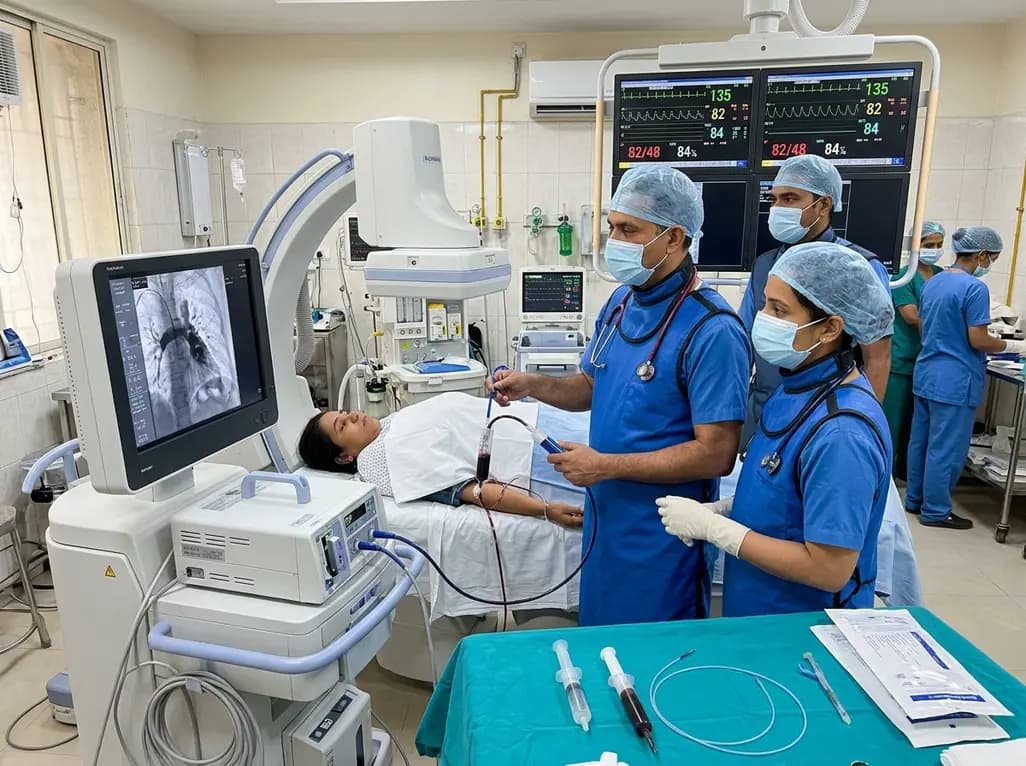
In high-risk pulmonary embolism complicated by severe anemia and active uterine bleeding, systemic thrombolysis is contraindicated. Large-bore aspiration thrombectomy provides rapid hemodynamic rescue without fibrinolysis, supported by inferior vena cava filter placement and multidisciplinary critical care.
Today

This comparative study evaluates posterior labral tears with and without glenohumeral instability, highlighting distinct demographic patterns, MRI underestimation in stable shoulders, and successful arthroscopic repair outcomes.
Today

A clinical study demonstrates that early intervention with tocilizumab, either as monotherapy or bridged with corticosteroids, achieves significant proptosis reduction and resolves active inflammation in treatment-naive thyroid eye disease.
Today
