.webp&w=384&q=75)

Loading, please wait...
Loading, please wait...

Q1: Why are Indians shifting to ₹1 crore health covers?
The shift is primarily due to rising medical costs, greater health awareness, and recent GST-related pricing changes that make high-sum insurance more affordable for the average consumer.
Q2: How much does a ₹1 crore health cover typically cost for a 35-year-old?
For a 35-year-old male without systemic comorbidities, the annual premium for a ₹1 crore cover generally ranges between ₹18,000 and ₹25,000 depending on the provider.
Q3: What is the impact of GST changes on health insurance premiums?
The GST-related pricing impact has nudged customers to opt for higher coverage. Effectively, the reduction in tax load allows customers to get 20-30% higher coverage for the same out-of-pocket expenditure.
Disclaimer: This content is for informational and educational purposes only. It does not constitute medical advice or replace professional judgment. Refer to the latest local and national guidelines for clinical practice.
References

Read summarized clinical updates, watch expert medical content, and earn CME certifications right from your smartphone.
Open your smartphone camera to scan and install.





Explore why Indians are shifting to ₹1 crore health covers driven by GST-related pricing changes, rising medical costs, and enhanced policy affordability....
5 months ago

A recent study demonstrates that spinal oxygen sensors do not require mitochondrial electron transport to trigger sympathetic excitation during acute hypoxia, revealing new insights into how mitochondrial oxidative stress modulates autonomic tone in cardiovascular and neurological diseases.
Today

Demanding exhaustive hormonal profiling can inadvertently discourage clinical studies involving females. Methodological standards must align with the specific scientific question to expand, not restrict, equitable evidence for women.
Today

The Directorate General of Health Services directs Indian states to halt the hazardous reuse and reprocessing of single-use medical devices. Discover regulatory implications under the Drugs and Cosmetics Act, critical infection risks, legal liabilities, and operational changes required across clinical specialties.
Today

A novel calcium polyphosphate coacervate enables injectable bone implants with in situ hierarchical porosity via phase separation and gas foaming, significantly enhancing cell proliferation, energy metabolism, and osteogenic differentiation for minimally invasive bone defect repair.
Today
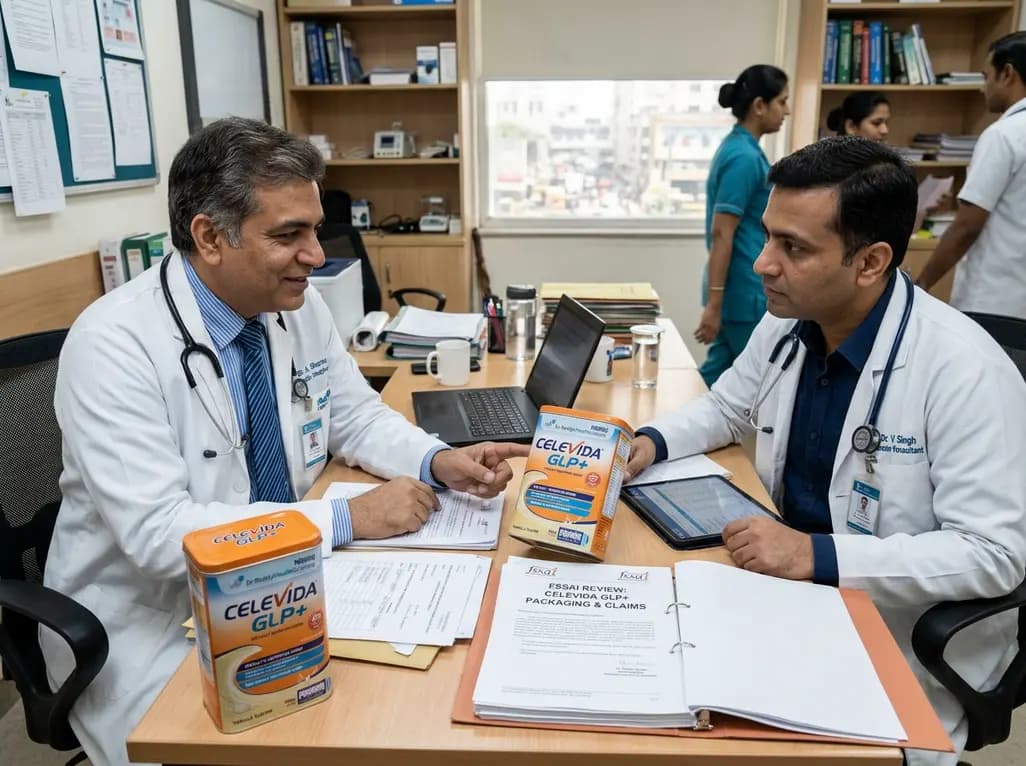
Following regulatory scrutiny from FSSAI regarding promotional representations and lean muscle preservation claims, Dr. Reddy's Laboratories and Nestlé Health Science are currently reviewing the branding and marketing strategy for their joint nutritional supplement Celevida GLP+.
Today
