.webp&w=384&q=75)

Loading, please wait...
Loading, please wait...

The PRISM individual-patient-data meta-analysis combined the ProCESS, ARISE and ProMISe trials to examine whether early goal-directed therapy (EGDT) improved outcomes in adults with septic shock compared with contemporary usual care. These large multicentre trials had already failed to show a benefit for the original Rivers-style EGDT approach, but the pooled analysis allowed investigators to assess the evidence at patient level and explore whether particular subgroups benefited. The combined results found no meaningful mortality advantage for EGDT over usual care and no convincing interaction suggesting that a specific patient subgroup consistently derived benefit. The paper is important because it places the modern sepsis trials in context: patients in contemporary emergency and ICU systems already receive rapid antibiotics, fluids, vasopressors and frequent reassessment, making a rigid protocol less likely to add value. The lesson for practice is not to abandon structured resuscitation, but to focus on timely care and physiologic targets while allowing clinicians to individualise therapy. The meta-analysis also illustrates how evidence can change when a single-centre protocol is tested across diverse health systems. For intensivists, it supports a flexible resuscitation strategy rather than automatic pursuit of every component of a historic EGDT algorithm.

Read summarized clinical updates, watch expert medical content, and earn CME certifications right from your smartphone.
Open your smartphone camera to scan and install.





The PRISM individual-patient-data meta-analysis combined the ProCESS, ARISE and ProMISe trials to examine whether early goal-directed therapy (EGDT) improved outcomes in adults with septic shock compared with contemporary usual care. These large multicentre trials had already failed to show a benefit for the original Rivers-style EGDT approach, but the pooled analysis allowed investigators to assess the evidence at patient level and explore whether particular subgroups benefited. The combined results found no meaningful mortality advantage for EGDT over usual care and no convincing interaction suggesting that a specific patient subgroup consistently derived benefit. The paper is important because it places the modern sepsis trials in context: patients in contemporary emergency and ICU systems already receive rapid antibiotics, fluids, vasopressors and frequent reassessment, making a rigid protocol less likely to add value. The lesson for practice is not to abandon structured resuscitation, but to focus on timely care and physiologic targets while allowing clinicians to individualise therapy. The meta-analysis also illustrates how evidence can change when a single-centre protocol is tested across diverse health systems. For intensivists, it supports a flexible resuscitation strategy rather than automatic pursuit of every component of a historic EGDT algorithm.
4 weeks back

Discover how catalytic nanozymes redefine autoimmune disease therapy by establishing a physiological redox set-point to restore immune tolerance without broad immunosuppression.
Last week
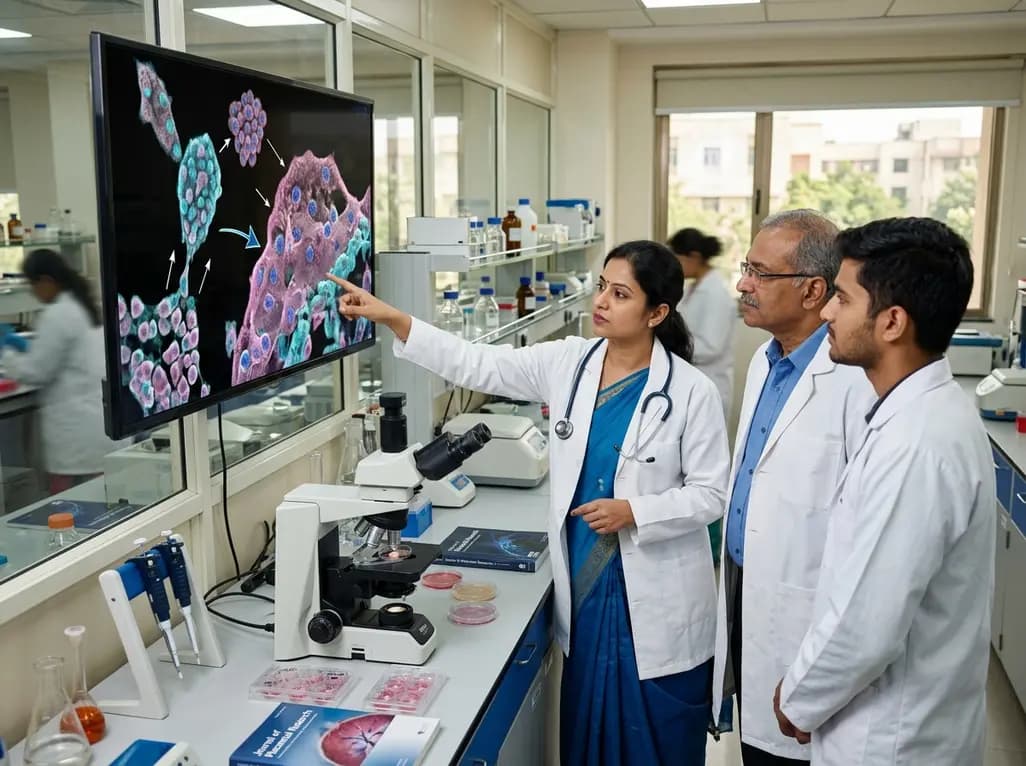
Recent research reveals that downregulating YAP1/TAZ-TEAD via Hippo signaling triggers spontaneous human trophoblast syncytialization in 3D cultures, illuminating placental biology and preeclampsia.
3 weeks back

A landmark comparative study evaluates atrial electrophysiology across humans, swine, and rodents. By linking cellular recordings with transcriptomics and in silico modeling, researchers resolve cross-species gaps, explaining translational failures to advance targeted therapies for atrial arrhythmias.
3 weeks back

A novel pathology-adaptive surface engineering strategy uses functionalized plasma polymer coatings to selectively modulate AGE adsorption, reducing oxidative stress and restoring bone formation in diabetic and aging microenvironments.
last month
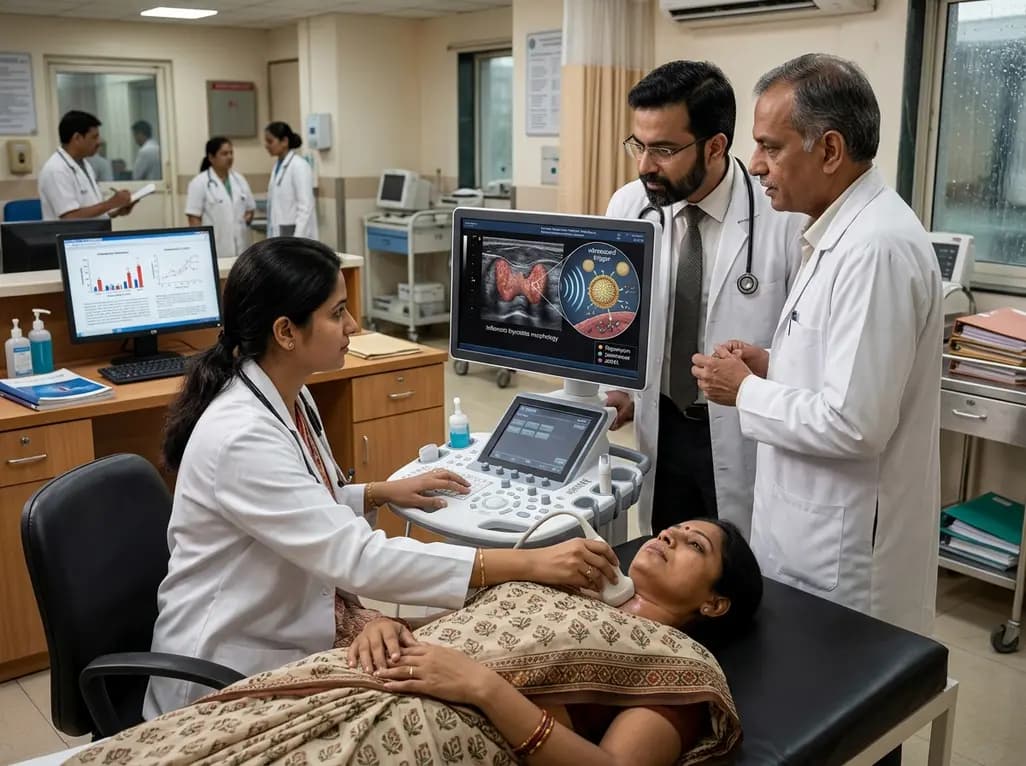
Researchers have developed an innovative ultrasound-responsive nano-contrast agent that co-delivers CIITA-siRNA and rapamycin directly to inflamed thyroid tissue, significantly reducing autoimmune injury and thyroid autoantibodies in preclinical models of Hashimoto thyroiditis.
3 weeks back
