.webp&w=384&q=75)

Loading, please wait...
Loading, please wait...

Advanced glycation end products accumulate in patients suffering from metabolic disorders, chronic hyperglycemia, and physiological aging. Consequently, high systemic levels of these glycated compounds impair tissue healing and bone integration around implants. When an orthopedic or dental implant enters biological fluids, proteins quickly adhere to its surface, forming a protein corona. However, in a diabetic microenvironment, advanced glycation end products modify this dynamic layer. As a result, the altered corona triggers cellular dysfunction and local inflammatory cascades. Bone marrow mesenchymal stem cells struggle to proliferate or differentiate under these severe pathological conditions. Furthermore, heightened oxidative stress at biomaterial interfaces induces apoptosis and halts mineral deposition. Clinicians frequently encounter higher rates of implant failure in diabetic individuals due to these biological obstacles. Standard surface modifications fail to address this disease-specific challenge because they indiscriminately adsorb glycated proteins. Therefore, developing pathology-adaptive biomaterial interfaces represents a crucial breakthrough for regenerative medicine. By selectively modulating protein adsorption, researchers can protect stem cells and promote robust osseointegration. Understanding these molecular interactions allows bioengineers to design smarter coatings tailored to patients with complex metabolic conditions.
Recent advances in surface engineering focus on controlling chemical functionalization at the micro- and nanoscale levels. Researchers functionalized titanium surfaces using carboxyl, amine, or hydrocarbon plasma polymer coatings to evaluate their specific biological responses. These distinct functional chemistries precisely dictate how serum proteins interact with biomaterial interfaces. Specifically, carboxyl and amine surfaces display unique electrostatic and hydrophilic characteristics. Consequently, these tailored coatings significantly reduce the accumulation of advanced glycation end products compared to hydrophobic hydrocarbon controls. Interestingly, total serum protein adsorption remains fully preserved on these modified surfaces. This selective exclusion specifically targets harmful glycated species without compromising physiological protein interactions required for tissue repair. Furthermore, plasma polymerization offers a uniform, reproducible layer that adheres strongly to titanium implants. Surgeons routinely rely on titanium due to its mechanical strength, yet biofunctional coatings provide the necessary biological cues. By controlling interfacial chemistry, engineers can effectively screen out pathogenic molecules while retaining beneficial growth factors. Therefore, pathology-adaptive surface chemistry provides a predictable platform for improving bone growth in metabolically compromised patients. This targeted design strategy marks a major shift from passive implants to active, microenvironment-responsive biomaterials.
The competitive adsorption of serum proteins dictates subsequent cellular behaviors at the implant site. In diabetic environments, unmodified surfaces accumulate excessive amounts of glycated albumin and other altered molecules. Consequently, bone marrow mesenchymal stem cells receive improper signaling pathways upon contact with the material. In contrast, carboxyl- and amine-functionalized surfaces modify the composition of the protein corona. By excluding glycated species, these surfaces allow physiological proteins to create a supportive matrix for cellular attachment. Furthermore, bone marrow stem cells retain their capacity to express key osteogenic genes when cultured on these advanced coatings. Laboratory evaluations demonstrate sustained cell proliferation and enhanced extracellular matrix mineralization even under heavy glycation stress. Additionally, the preserved regenerative potential directly correlates with reduced cellular damage. Stem cells maintain normal morphology and functional activity rather than undergoing premature senescence or death. Therefore, selectively modulating the protein corona offers a reliable method to safeguard tissue regeneration. This strategy demonstrates that altering initial protein adsorption can dramatically shift downstream cellular fates toward complete bone restoration.
Glycated proteins trigger inflammatory pathways primarily through the activation of the receptor for advanced glycation end products. When AGEs bind to RAGE on local macrophages, they initiate strong inflammatory signaling cascades. Consequently, macrophages undergo classical inflammatory activation, releasing pro-inflammatory cytokines that exacerbate tissue damage. Furthermore, this pathway stimulates excessive reactive oxygen species generation within adjacent stem cells. Elevated oxidative stress leads to lipid peroxidation, mitochondrial dysfunction, and eventual cell apoptosis. However, modulating biomaterial interfaces disrupts this destructive cascade at its origin. Because functionalized surfaces reduce AGE accumulation in the protein corona, downstream RAGE activation drops significantly. As a result, local macrophage populations maintain a balanced immunomodulatory profile rather than a persistent inflammatory state. In addition, lower intracellular reactive oxygen species levels prevent apoptotic cell death in bone marrow mesenchymal stem cells. Attenuating the AGE-RAGE axis thus restores a favorable microenvironment for tissue repair. Therefore, controlling inflammatory cross-talk at biomaterial interfaces remains vital for successful implant integration in diabetic patients.
Restoring bone formation in patients with diabetes or age-related metabolic shifts presents a major clinical objective. Traditional orthopedic and dental implants often exhibit high revision rates in compromised patient populations. However, pathology-adaptive surface coatings offer a promising clinical solution by actively restoring osteogenesis. These functionalized biomaterial interfaces attenuate oxidative damage and preserve regenerative cellular functions. Consequently, bone marrow mesenchymal stem cells rapidly synthesize mineralized matrix components required for strong implant anchorage. Furthermore, this approach reduces the requirement for high-dose systemic pharmacological therapies, which often carry adverse side effects. Surgeons could potentially utilize these advanced coatings across various medical applications, including joint replacements and dental restorations. Additionally, the ability to selectively exclude disease-associated molecules opens new avenues for target-specific biomaterial design. Future clinical trials will determine how these plasma polymer coatings perform in complex in vivo human microenvironments. Nevertheless, this pathology-adaptive strategy represents a pivotal step toward personalized implantable devices. Ultimately, integrating surface chemistry with microenvironmental biology will enhance long-term success rates for high-risk surgical patients.
Advanced glycation end products accumulate in metabolic conditions like diabetes and aging. These glycated proteins modify the protein corona on biomaterial surfaces, triggering reactive oxygen species generation and chronic macrophage inflammation via the AGE-RAGE axis. Consequently, bone marrow mesenchymal stem cells experience heightened oxidative stress and apoptosis, which severely impairs osteogenic gene expression and prevents successful bone integration around orthopedic and dental implants.
Pathology-adaptive biomaterial interfaces utilize plasma polymer coatings with defined functional chemistries, such as carboxyl or amine groups. These specific surface modifications selectively reduce the adsorption of harmful advanced glycation end products while preserving normal serum protein adhesion. By controlling the protein corona composition, the coatings prevent inflammatory macrophage activation, lower cellular oxidative stress, and restore normal osteogenic differentiation in stem cells.
Yes, plasma polymer coatings can be applied directly to standard titanium implants used in orthopedic and dental surgery. The surface functionalization process modifies the immediate interfacial chemistry without altering the underlying mechanical strength of the titanium substrate. This approach creates a biocompatible, pathology-responsive interface that protects surrounding stem cells from glycation-induced damage and promotes durable osseointegration in compromised patient populations.
Disclaimer: This content is for informational and educational purposes only and does not constitute medical, diagnostic, or therapeutic advice. Refer to the latest local and national guidelines for clinical practice.
References
Ngoc Le T et al. Pathology-Adaptive Biomaterial Interfaces Selectively Modulate AGE-Modified Protein Corona To Restore Osteogenesis. ACS Biomater Sci Eng. 2026 Aug 12. doi: 10.1021/acsbiomaterials.6c00431. PMID: 42585621.

Read summarized clinical updates, watch expert medical content, and earn CME certifications right from your smartphone.
Open your smartphone camera to scan and install.





A novel pathology-adaptive surface engineering strategy uses functionalized plasma polymer coatings to selectively modulate AGE adsorption, reducing oxidative stress and restoring bone formation in diabetic and aging microenvironments.
last month

A randomized trial shows oral DL-3-n-butylphthalide (200 mg thrice daily) significantly slows functional decline in spinocerebellar ataxia type 3 over 12 months, improving SARA and SCAFI scores with favorable safety and zero serious adverse events.
Last week
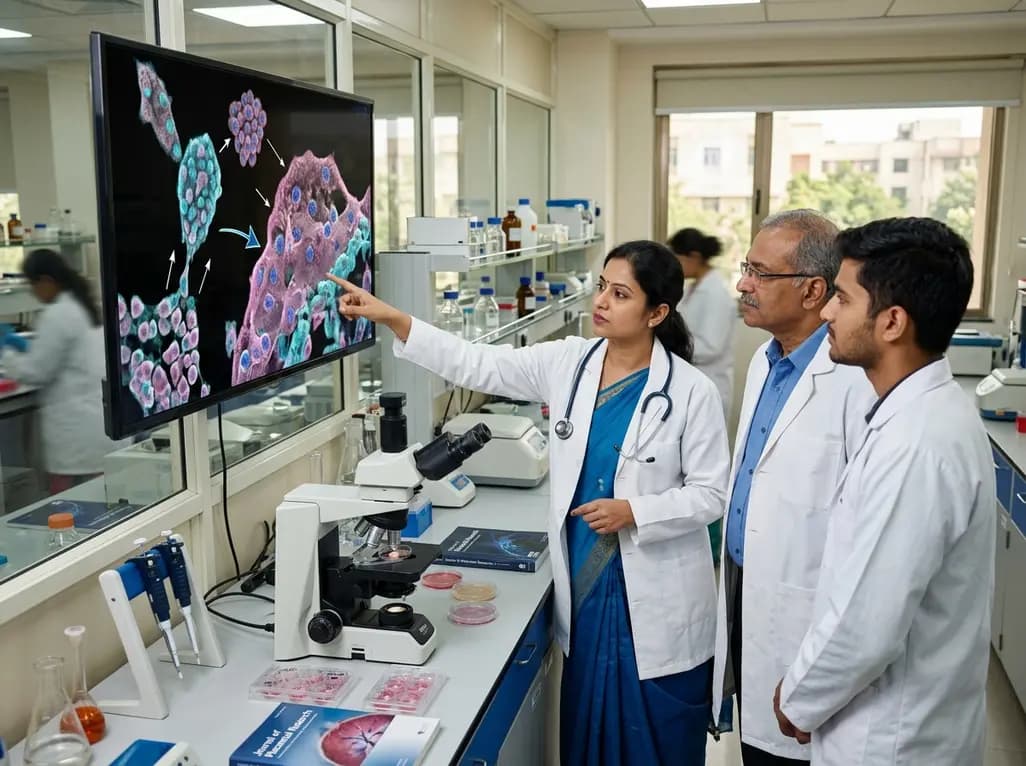
Recent research reveals that downregulating YAP1/TAZ-TEAD via Hippo signaling triggers spontaneous human trophoblast syncytialization in 3D cultures, illuminating placental biology and preeclampsia.
2 weeks back

A landmark comparative study evaluates atrial electrophysiology across humans, swine, and rodents. By linking cellular recordings with transcriptomics and in silico modeling, researchers resolve cross-species gaps, explaining translational failures to advance targeted therapies for atrial arrhythmias.
2 weeks back

Researchers have developed an innovative ultrasound-responsive nano-contrast agent that co-delivers CIITA-siRNA and rapamycin directly to inflamed thyroid tissue, significantly reducing autoimmune injury and thyroid autoantibodies in preclinical models of Hashimoto thyroiditis.
2 weeks back
