.webp&w=384&q=75)

Loading, please wait...
Loading, please wait...

Recent research highlights the significant potential of snRNA vascular disease biomarkers in managing conditions like lower extremity artery disease (LEAD), abdominal aortic aneurysm (AAA), and chronic venous disease (CVD). These vascular conditions often remain underdiagnosed, yet they contribute heavily to global morbidity and mortality. Consequently, the discovery of novel molecular tools is essential for improving early diagnosis and risk stratification. This study investigated alterations in small nuclear RNAs (snRNAs) within peripheral blood mononuclear cells (PBMCs) to uncover their role in vascular biology.
The study utilized snRNA-seq and miRNA-seq data to identify specific genetic signatures associated with disease states. Notably, researchers identified four dysregulated snRNAs (RNU6-4P, RNU6-18P, RNU6-36P, and RNU2-48P) in patients with LEAD. Furthermore, patients with CVD exhibited two specific dysregulated snRNAs: RNVU1-19 and RNU1-146P. These findings suggest that snRNA vascular disease biomarkers can provide a more nuanced understanding of underlying pathophysiological mechanisms. Additionally, in silico analysis confirmed three miRNA-snRNA interactions, reinforcing the functional relevance of these molecules.
Beyond simple identification, genetic variants located within these dysregulated snRNAs point toward a functional association with critical vascular processes. For instance, the data suggests links to platelet function, blood pressure regulation, and the physiological impact of smoking. Therefore, these snRNAs are not just passive markers but may actively participate in the development of vascular lesions. In conclusion, the integration of snRNA profiling into clinical practice could facilitate the development of targeted therapies and more accurate diagnostic protocols for patients in India and worldwide.
Small nuclear RNAs (snRNAs) are non-coding RNA molecules involved in the processing of pre-messenger RNA. In vascular disease, their dysregulation can serve as a biological signature, or biomarker, helping clinicians identify diseases like LEAD and CVD earlier than traditional methods.
Research indicates that genetic variants within certain snRNAs are functionally associated with blood pressure regulation and platelet function. This suggests that snRNA levels reflect the systemic vascular health and the body\'s response to risk factors like hypertension and smoking.
Currently, snRNA testing is an emerging diagnostic aid intended to complement existing tools like the ankle-brachial index (ABI) and imaging. Its primary value lies in providing molecular insights that improve risk stratification and lead to personalized treatment plans.
Disclaimer: This content is for informational and educational purposes only. It does not constitute medical advice or a professional relationship. Always consult a qualified healthcare provider for diagnosis and treatment. Refer to the latest local and national guidelines for clinical practice.
References
Zalewski DP et al. Non-coding RNAs in peripheral vascular diseases - a snRNA study. J Appl Genet. 2026 Jun 19. doi: 10.1007/s13353-026-01087-2. PMID: 42319738.
Taylor & Francis. Full article: Emergent RNA targets in cardiovascular disease: likely candidates for treatment development. May 2026.
PubMed. Non-coding RNA biomarkers in cardiovascular disease. October 2025.
"
Read summarized clinical updates, watch expert medical content, and earn CME certifications right from your smartphone.
Open your smartphone camera to scan and install.





A recent study identifies specific small nuclear RNAs (snRNAs) as potential biomarkers for peripheral vascular diseases like LEAD and CVD. These findings link snRNA dysregulation to platelet function and blood pressure, offering new insights into vascular pathophysiology.
4 months ago

Depemokimab offers twice-yearly dosing for severe eosinophilic asthma and chronic rhinosinusitis with nasal polyps, significantly cutting exacerbations and hospital admissions.
3 days back

A novel copper metal-organic framework hydrogel remodels the uterine microenvironment to stimulate robust endometrial regeneration, reduce intrauterine fibrosis, and restore reproductive fertility, offering a groundbreaking strategy for managing refractory endometrial damage and Asherman syndrome.
4 days back

New research reveals that non-ablative radiotherapy suppresses ventricular tachycardia by increasing conduction velocity via NaV1.5 upregulation and action potential prolongation. However, sustained sodium current elevation and depressed calcium handling highlight the need for careful clinical translation.
6 days back

A single-cell transcriptomic atlas reveals how peripheral nerve injuries cause dorsal root ganglion remodeling. By evaluating proximal nerve crush and resection, researchers identify distinct glial and immune programs that resolve neuropathic pain and promote regeneration.
3 days back
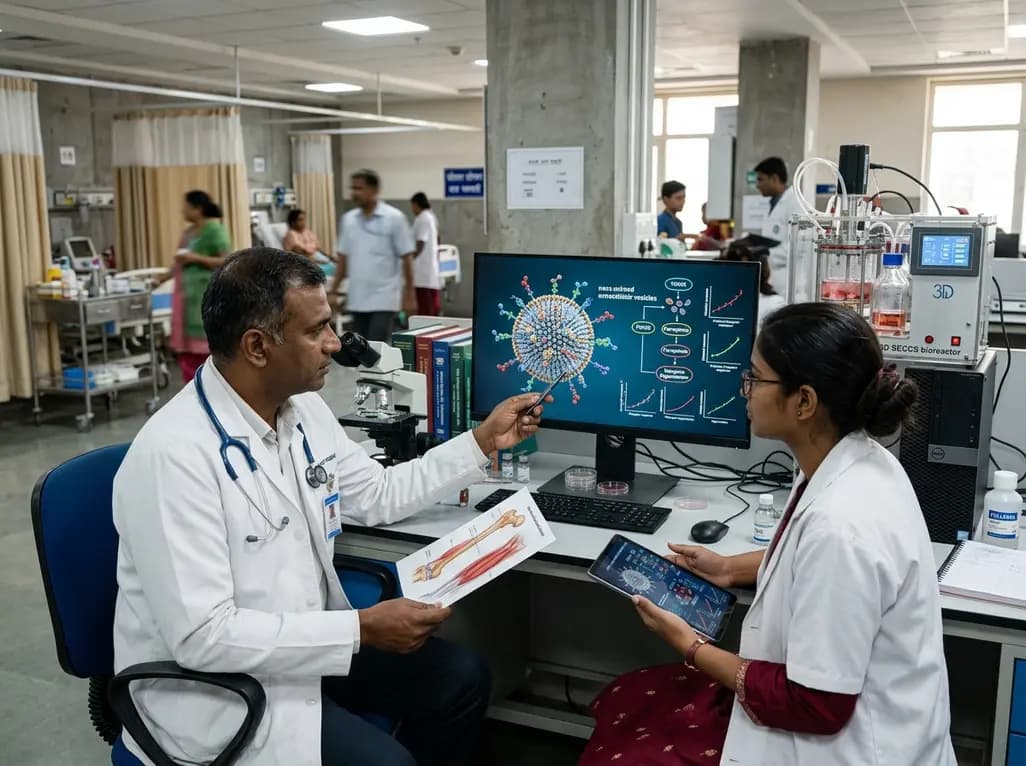
A breakthrough study demonstrates that fullerol-primed extracellular vesicles generated in a 3D SECCS bioreactor attenuate ferroptosis and restore myogenic regeneration in diabetes via the FOXO3 pathway, offering a cell-free therapeutic strategy for diabetic musculoskeletal degeneration.
3 days back
