

Loading, please wait...
Loading, please wait...
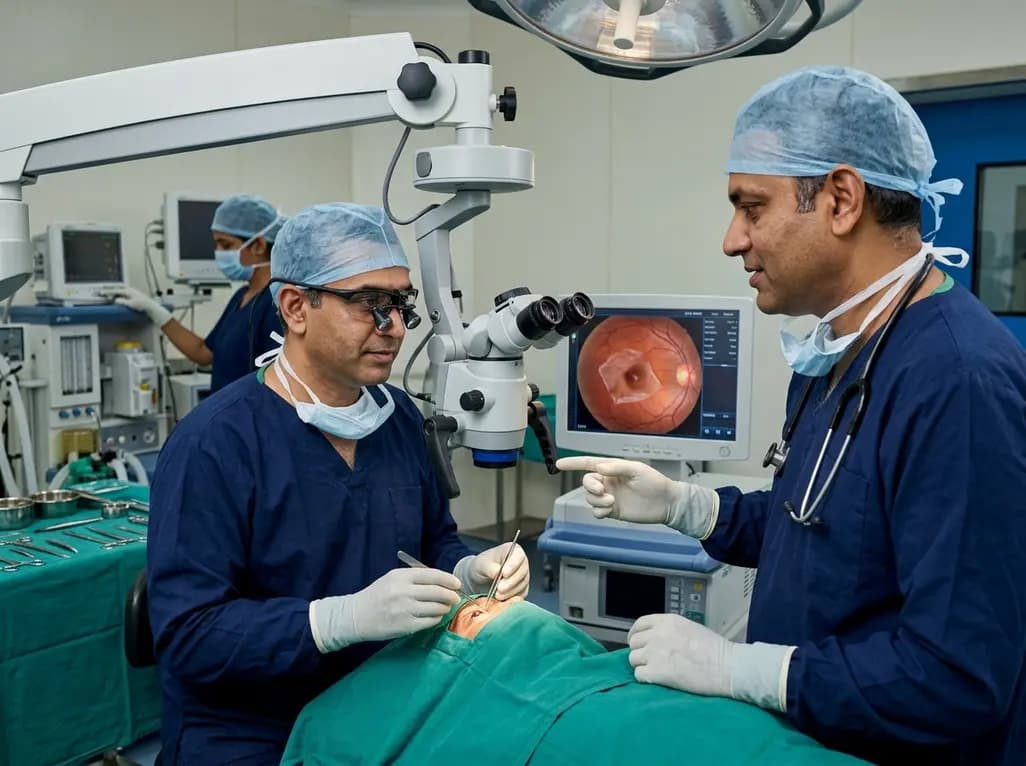
A prospective randomized study evaluated whether additional manipulation of the inverted internal limiting membrane (ILM) flap is necessary after the flap has been placed over a large stage IV idiopathic macular hole. Patients were randomized to a classic inverted flap technique or a modified approach in which the flap was not trimmed, tucked, or massaged after inversion. At 12 months, macular hole closure was extremely high in both groups, with nearly identical closure rates. Visual and outer-retinal structural outcomes were also broadly similar. The practical importance of this work is that it challenges the assumption that more surgical manipulation necessarily improves anatomical success. For surgeons, reducing unnecessary handling may simplify the procedure and potentially decrease the risk of flap displacement or retinal trauma. The findings are particularly relevant in training environments because they help focus attention on the key steps that create a stable scaffold while avoiding technically complex maneuvers that may not add measurable benefit. As with all macular-hole evidence, case selection matters, and results in large stage IV holes may not translate directly to smaller holes, high myopia, traumatic holes, or chronic holes.

Read summarized clinical updates, watch expert medical content, and earn CME certifications right from your smartphone.
Open your smartphone camera to scan and install.





A prospective randomized study evaluated whether additional manipulation of the inverted internal limiting membrane (ILM) flap is necessary after the flap has been placed over a large stage IV idiopathic macular hole. Patients were randomized to a classic inverted flap technique or a modified approach in which the flap was not trimmed, tucked, or massaged after inversion. At 12 months, macular hole closure was extremely high in both groups, with nearly identical closure rates. Visual and outer-retinal structural outcomes were also broadly similar. The practical importance of this work is that it challenges the assumption that more surgical manipulation necessarily improves anatomical success. For surgeons, reducing unnecessary handling may simplify the procedure and potentially decrease the risk of flap displacement or retinal trauma. The findings are particularly relevant in training environments because they help focus attention on the key steps that create a stable scaffold while avoiding technically complex maneuvers that may not add measurable benefit. As with all macular-hole evidence, case selection matters, and results in large stage IV holes may not translate directly to smaller holes, high myopia, traumatic holes, or chronic holes.
3 weeks back

Discover how catalytic nanozymes redefine autoimmune disease therapy by establishing a physiological redox set-point to restore immune tolerance without broad immunosuppression.
Last week

Recent research reveals that downregulating YAP1/TAZ-TEAD via Hippo signaling triggers spontaneous human trophoblast syncytialization in 3D cultures, illuminating placental biology and preeclampsia.
3 weeks back

A landmark comparative study evaluates atrial electrophysiology across humans, swine, and rodents. By linking cellular recordings with transcriptomics and in silico modeling, researchers resolve cross-species gaps, explaining translational failures to advance targeted therapies for atrial arrhythmias.
3 weeks back

A novel pathology-adaptive surface engineering strategy uses functionalized plasma polymer coatings to selectively modulate AGE adsorption, reducing oxidative stress and restoring bone formation in diabetic and aging microenvironments.
last month

Researchers have developed an innovative ultrasound-responsive nano-contrast agent that co-delivers CIITA-siRNA and rapamycin directly to inflamed thyroid tissue, significantly reducing autoimmune injury and thyroid autoantibodies in preclinical models of Hashimoto thyroiditis.
3 weeks back
