.webp&w=384&q=75)

Loading, please wait...
Loading, please wait...

Shrinking Lung Syndrome (SLS) is a rare but serious pulmonary complication of systemic lupus erythematosus (SLE). Effective Shrinking Lung Syndrome management requires a high index of clinical suspicion when patients present with dyspnea and pleuritic chest pain. Clinicians typically diagnose the condition by demonstrating a restrictive ventilatory defect and elevated diaphragmatic domes without significant parenchymal disease. Because standardized guidelines are absent, clinicians must rely on evidence-based reviews to guide therapeutic interventions effectively.
Glucocorticoids remain the primary therapeutic choice for most patients. In fact, approximately 95% of patients receive steroid therapy to address underlying inflammation. Although most individuals experience symptomatic relief, the extent of lung function restoration varies significantly. For example, while symptoms resolve in nearly 95% of cases, only about 20% of patients achieve complete normalization of pulmonary function tests. Therefore, early and aggressive treatment is vital to prevent permanent lung volume loss and improve long-term respiratory mechanics.
For refractory cases, rituximab has emerged as a successful primary biologic option. Furthermore, adding other immunosuppressants like cyclophosphamide or mycophenolate mofetil can provide additional benefits in severe presentations. Clinicians also emphasize non-pharmacological interventions to improve diaphragmatic strength. Specifically, inspiratory muscle training and non-invasive ventilation often lead to better functional outcomes for patients with chronic weakness. Consequently, a multidisciplinary approach combining pharmacotherapy and rehabilitation offers the best chance for symptomatic resolution.
Despite these interventions, many patients maintain chronic restrictive patterns even after treatment. This chronic status highlights the difficulty in achieving full functional recovery in SLS. However, the mortality rate directly attributed to the syndrome remains low, ranging between 2% and 5.5%. To optimize outcomes, doctors should prioritize early diagnosis and integrate respiratory rehabilitation into the long-term care plan for every lupus patient with respiratory distress.
Glucocorticoids are the mainstay of therapy and are used in nearly 95% of cases to manage symptoms and inflammation effectively.
While symptomatic resolution occurs in 75-95% of patients, complete normalization of lung function tests is achieved in only 20-23% of cases, meaning most maintain some chronic restriction.
Rituximab is an effective primary biologic for refractory cases where standard glucocorticoid therapy fails to produce adequate clinical or functional improvement.
Disclaimer: This content is for informational and educational purposes only. It does not constitute medical advice or a substitute for professional healthcare. Always consult a qualified medical professional for diagnosis and treatment. Refer to the latest local and national guidelines for clinical practice.
References
Lemos JR et al. Treatment strategies and clinical outcomes in shrinking lung syndrome in systemic lupus erythematosus: An updated systematic review. Lupus. 2026 Jun 16. doi: 10.1177/09612033261461973. PMID: 42301754.
Frota TQ et al. Shrinking lung syndrome in systemic lupus erythematosus: Insights from a case series and a systematic review of the past decade. Lupus. 2026 Jun;35(7):722-732. doi: 10.1177/09612033261435924.
Chaudhry S et al. Improved Lung Function With Cyclophosphamide and Rituximab in a Case of Shrinking Lung Syndrome. Cureus. 2025 Nov 23;17(11):e97612. doi: 10.7759/cureus.97612.
"
Read summarized clinical updates, watch expert medical content, and earn CME certifications right from your smartphone.
Open your smartphone camera to scan and install.





Shrinking Lung Syndrome (SLS) is a rare but impactful SLE complication. Recent systematic reviews highlight glucocorticoids as the primary treatment, with rituximab showing promise for refractory cases. While symptoms often improve, complete functional recovery remains rare, necessitating multidisciplinary care.
4 months ago

Depemokimab offers twice-yearly dosing for severe eosinophilic asthma and chronic rhinosinusitis with nasal polyps, significantly cutting exacerbations and hospital admissions.
3 days back

A novel copper metal-organic framework hydrogel remodels the uterine microenvironment to stimulate robust endometrial regeneration, reduce intrauterine fibrosis, and restore reproductive fertility, offering a groundbreaking strategy for managing refractory endometrial damage and Asherman syndrome.
3 days back

New research reveals that non-ablative radiotherapy suppresses ventricular tachycardia by increasing conduction velocity via NaV1.5 upregulation and action potential prolongation. However, sustained sodium current elevation and depressed calcium handling highlight the need for careful clinical translation.
6 days back

A single-cell transcriptomic atlas reveals how peripheral nerve injuries cause dorsal root ganglion remodeling. By evaluating proximal nerve crush and resection, researchers identify distinct glial and immune programs that resolve neuropathic pain and promote regeneration.
3 days back
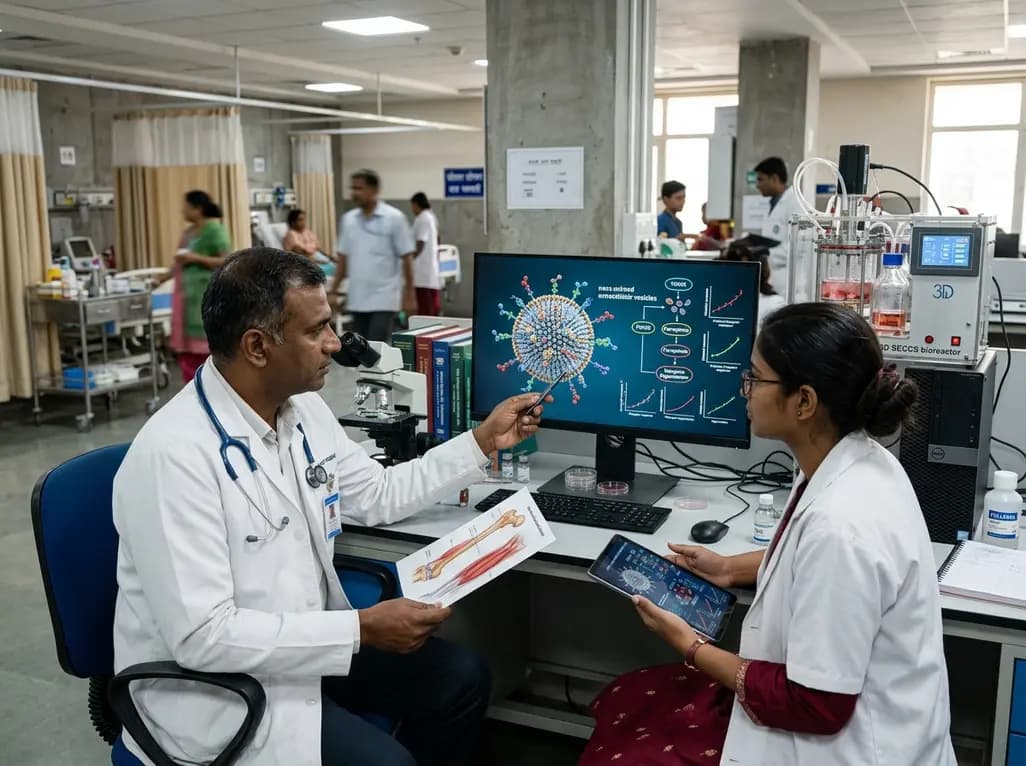
A breakthrough study demonstrates that fullerol-primed extracellular vesicles generated in a 3D SECCS bioreactor attenuate ferroptosis and restore myogenic regeneration in diabetes via the FOXO3 pathway, offering a cell-free therapeutic strategy for diabetic musculoskeletal degeneration.
3 days back
