.webp&w=384&q=75)

Loading, please wait...
Loading, please wait...
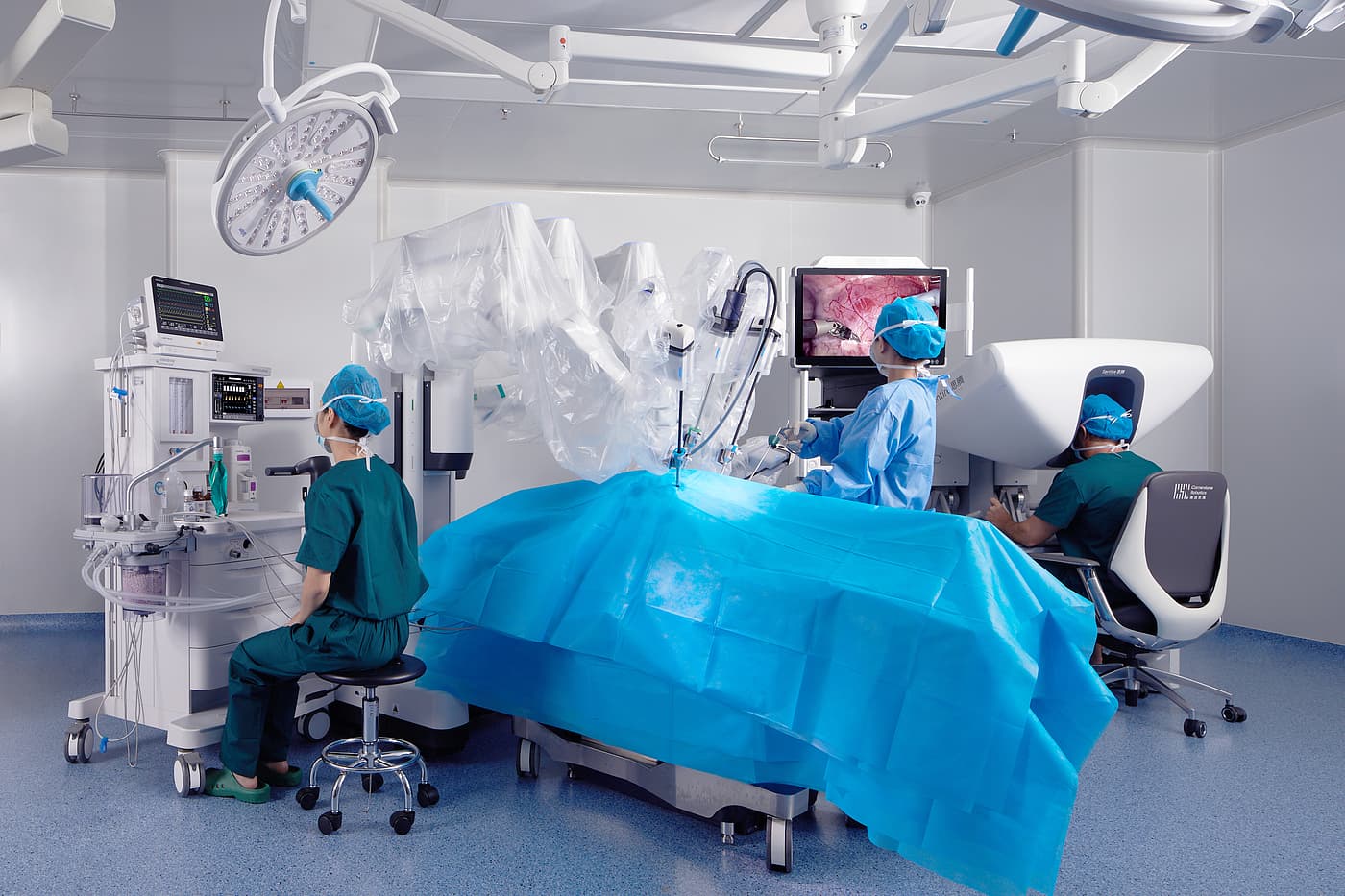
The ROLARR randomized clinical trial compared robotic-assisted and conventional laparoscopic surgery for rectal cancer, focusing on an outcome of major practical importance: conversion to open laparotomy. The hypothesis was that robotic technology, with enhanced visualization and instrument dexterity, might make difficult pelvic surgery easier and reduce the need for conversion. Across the trial population, the robotic approach did not demonstrate a statistically significant overall reduction in conversion to open surgery. The result is important because adoption of robotics is often justified by technical advantages that are intuitively appealing but must still translate into clinically meaningful patient outcomes. For surgeons, ROLARR highlights a useful principle: technology should be assessed on the outcomes it changes, not only on what it can do technically. Robotics may still offer advantages in ergonomics, instrument articulation and operating in confined pelvic spaces, and the value may differ according to surgeon experience, anatomy and case complexity. The trial therefore does not make robotic surgery irrelevant; rather, it encourages a more selective and evidence-based approach. For rectal cancer programs, choice of platform should remain connected to oncological quality, surgeon expertise, patient factors, resource availability and the wider multidisciplinary pathway.

Read summarized clinical updates, watch expert medical content, and earn CME certifications right from your smartphone.
Open your smartphone camera to scan and install.





The ROLARR randomized clinical trial compared robotic-assisted and conventional laparoscopic surgery for rectal cancer, focusing on an outcome of major practical importance: conversion to open laparotomy. The hypothesis was that robotic technology, with enhanced visualization and instrument dexterity, might make difficult pelvic surgery easier and reduce the need for conversion. Across the trial population, the robotic approach did not demonstrate a statistically significant overall reduction in conversion to open surgery. The result is important because adoption of robotics is often justified by technical advantages that are intuitively appealing but must still translate into clinically meaningful patient outcomes. For surgeons, ROLARR highlights a useful principle: technology should be assessed on the outcomes it changes, not only on what it can do technically. Robotics may still offer advantages in ergonomics, instrument articulation and operating in confined pelvic spaces, and the value may differ according to surgeon experience, anatomy and case complexity. The trial therefore does not make robotic surgery irrelevant; rather, it encourages a more selective and evidence-based approach. For rectal cancer programs, choice of platform should remain connected to oncological quality, surgeon expertise, patient factors, resource availability and the wider multidisciplinary pathway.
4 weeks back

Discover how catalytic nanozymes redefine autoimmune disease therapy by establishing a physiological redox set-point to restore immune tolerance without broad immunosuppression.
Last week

Recent research reveals that downregulating YAP1/TAZ-TEAD via Hippo signaling triggers spontaneous human trophoblast syncytialization in 3D cultures, illuminating placental biology and preeclampsia.
3 weeks back

A landmark comparative study evaluates atrial electrophysiology across humans, swine, and rodents. By linking cellular recordings with transcriptomics and in silico modeling, researchers resolve cross-species gaps, explaining translational failures to advance targeted therapies for atrial arrhythmias.
3 weeks back

A novel pathology-adaptive surface engineering strategy uses functionalized plasma polymer coatings to selectively modulate AGE adsorption, reducing oxidative stress and restoring bone formation in diabetic and aging microenvironments.
last month

Researchers have developed an innovative ultrasound-responsive nano-contrast agent that co-delivers CIITA-siRNA and rapamycin directly to inflamed thyroid tissue, significantly reducing autoimmune injury and thyroid autoantibodies in preclinical models of Hashimoto thyroiditis.
3 weeks back
