.webp&w=384&q=75)

Loading, please wait...
Loading, please wait...
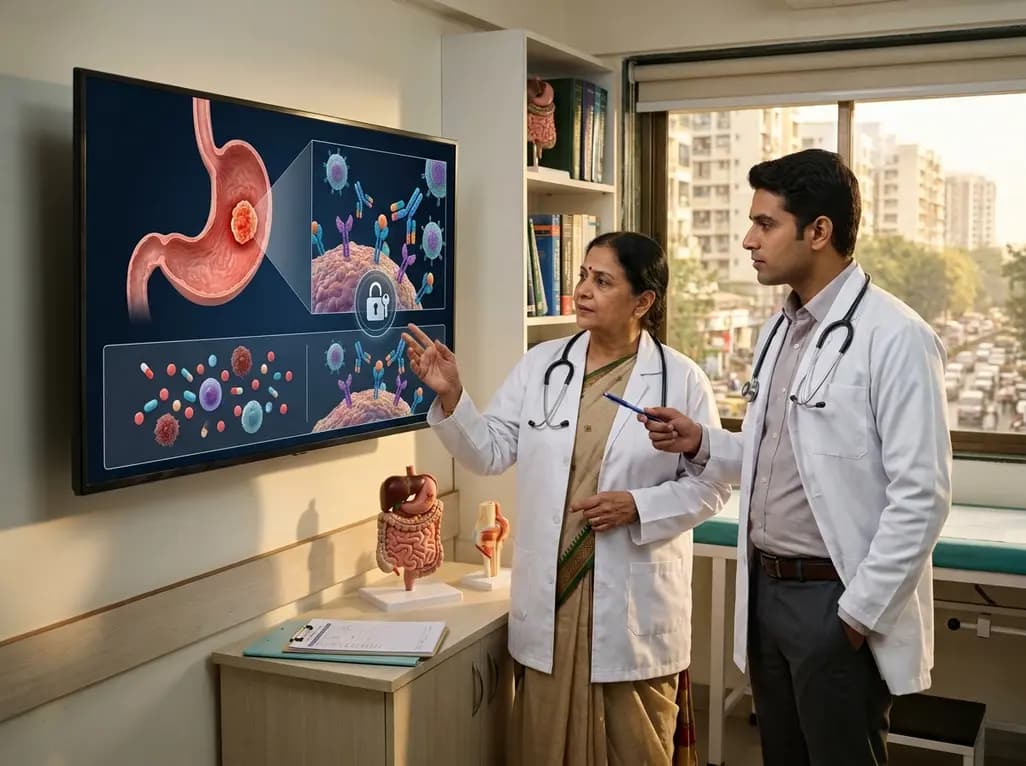
Gastric cancer remains a global health challenge, particularly in regions where late-stage diagnosis is prevalent. Historically, treatment relied heavily on broad-spectrum chemotherapy regimens, which offered limited survival benefits. However, the identification of Claudin 18.2 (CLDN18.2) as a highly specific biomarker has fundamentally altered the management landscape. This tight junction protein is typically confined to the gastric mucosa in healthy tissue but becomes highly accessible in malignant cells. Consequently, CLDN18.2 gastric cancer therapy has emerged as a cornerstone of precision oncology. By focusing on this specific target, clinicians can now offer more personalized interventions for patients who do not harbor other common biomarkers like HER2. Furthermore, the high expression of CLDN18.2 in approximately 30-40% of gastric adenocarcinomas makes it an exceptionally attractive target for novel therapeutic agents. As researchers deepen their understanding of its molecular structure, the development of monoclonal antibodies and cellular therapies continues to accelerate. This shift toward biomarker-guided strategies marks a significant departure from the 'one-size-fits-all' approach of the past. Today, modern oncology increasingly focuses on maximizing efficacy while minimizing systemic toxicity through such targeted mechanisms.
The clinical validation of CLDN18.2 as a therapeutic target reached a major milestone with the development of zolbetuximab. This first-in-class monoclonal antibody specifically binds to CLDN18.2 on the surface of tumor cells, triggering immune-mediated cell death through antibody-dependent cellular cytotoxicity and complement-dependent cytotoxicity. Two pivotal Phase 3 trials, SPOTLIGHT and GLOW, have solidified its role in clinical practice. The SPOTLIGHT trial evaluated zolbetuximab in combination with mFOLFOX6, while the GLOW trial utilized the CAPOX regimen. Both studies focused on patients with CLDN18.2-positive and HER2-negative metastatic gastric or gastroesophageal junction adenocarcinoma. Results were consistently impressive, demonstrating significant improvements in both progression-free survival and overall survival. Specifically, the addition of zolbetuximab reduced the risk of disease progression or death by approximately 25% to 30%. Moreover, the safety profile remained manageable, with gastrointestinal symptoms like nausea and vomiting being the most common adverse events. These findings have led to the approval of zolbetuximab as a standard-of-care first-line treatment option. Therefore, testing for CLDN18.2 expression is now considered essential for patients diagnosed with advanced gastric adenocarcinoma. This advancement highlights how targeted biologics can enhance the effectiveness of traditional chemotherapy when applied to a molecularly defined patient population.
While monoclonal antibodies have proven effective, the therapeutic landscape is rapidly expanding to include antibody-drug conjugates (ADCs). These sophisticated molecules consist of a CLDN18.2-specific antibody linked to a potent cytotoxic payload, such as a topoisomerase inhibitor or a microtubule-disrupting agent. The primary advantage of ADCs lies in their ability to deliver chemotherapy directly to the tumor microenvironment, thereby increasing the local concentration of the drug while sparing healthy tissues. Recent early-phase clinical trials for agents like CMG901 and SYSA1801 have shown remarkable activity, even in patients who have previously progressed on standard therapies. Furthermore, ADCs can induce a 'bystander effect,' where the released cytotoxic payload kills neighboring tumor cells that may not express the target antigen. This mechanism is particularly valuable in addressing the inherent heterogeneity of gastric tumors. Consequently, ADCs are being investigated as both second-line options and potential additions to frontline regimens. Researchers are also exploring different linker technologies to optimize drug stability and release. As clinical data matures, these agents are expected to provide a robust therapeutic alternative for patients with varying levels of CLDN18.2 expression. The transition toward ADCs represents the next logical step in the evolution of targeted CLDN18.2 gastric cancer therapy.
Chimeric Antigen Receptor (CAR)-T cell therapy, which has revolutionized the treatment of hematologic malignancies, is now showing promise in solid tumors like gastric cancer. By genetically engineering a patient's own T cells to recognize CLDN18.2, scientists have created a living drug capable of seeking out and destroying cancer cells. One of the most advanced candidates in this field is satricabtagene autoleucel (satri-cel). In clinical studies, this therapy has demonstrated encouraging objective response rates in heavily pre-treated patients who had failed multiple lines of conventional treatment. Furthermore, the regulatory approval of satri-cel in specific regions marks the world's first CAR-T therapy cleared for a solid tumor indication. Despite these successes, challenges remain, particularly regarding the infiltration of T cells into the dense stroma of gastric tumors and the potential for off-target effects. However, innovative strategies such as pre-conditioning regimens and the use of fourth-generation CAR-T designs are being employed to overcome these barriers. Additionally, the ability of CAR-T cells to persist and provide long-term surveillance offers a unique advantage over transient pharmacological agents. As manufacturing processes become more efficient and safety protocols improve, cellular therapies may eventually move into earlier lines of treatment, offering hope for long-term remission in advanced cases.
The success of CLDN18.2 targeted therapies depends entirely on accurate patient selection through rigorous biomarker testing. Currently, immunohistochemistry (IHC) is the gold standard for assessing CLDN18.2 expression in tumor tissue. However, several challenges complicate this process, including the heterogeneity of expression within a single tumor and the potential for expression levels to change over time or after exposure to chemotherapy. Furthermore, different clinical trials have used varying thresholds for defining 'positivity,' leading to questions about the optimal cutoff for treatment eligibility. For instance, zolbetuximab trials typically required moderate-to-strong staining in at least 75% of tumor cells. In contrast, newer modalities like ADCs and CAR-T therapies may prove effective even in tumors with lower expression levels. Consequently, pathologists and oncologists must collaborate closely to ensure standardized testing protocols. Additionally, the limited availability of specialized IHC assays in some regions, including parts of India, can delay the initiation of targeted therapy. Addressing these logistical and technical hurdles is crucial for the widespread implementation of precision oncology. Future research aims to develop liquid biopsy techniques or functional imaging to monitor CLDN18.2 expression non-invasively, which would facilitate more dynamic treatment adjustments throughout the patient's journey.
Looking ahead, the future of CLDN18.2 gastric cancer therapy lies in rational combination strategies that leverage synergistic mechanisms. One of the most exciting areas of research involves combining anti-CLDN18.2 agents with immune checkpoint inhibitors, such as PD-1 or PD-L1 blockers. Preclinical evidence suggests that targeting CLDN18.2 can modulate the tumor microenvironment, making it more susceptible to immunotherapy. Early results from the ILUSTRO trial, for example, have shown that a triplet combination of zolbetuximab, chemotherapy, and nivolumab can produce deep and durable responses. Moreover, bispecific antibodies (BsAbs) are being designed to simultaneously bind CLDN18.2 and CD3, effectively bringing T cells into direct contact with tumor cells. This dual targeting approach may enhance immune activation compared to traditional monoclonal antibodies. Similarly, researchers are investigating the sequential use of different CLDN18.2-directed modalities to overcome emergent resistance. By integrating these diverse platforms—mAbs, ADCs, and cellular therapies—clinicians can develop a more comprehensive and resilient treatment plan. Ultimately, the goal is to transform advanced gastric cancer into a manageable chronic condition through the continuous optimization of targeted interventions. Continued investment in clinical trials and translational research will be essential to realize the full potential of these emerging paradigms.
CLDN18.2 expression is primarily assessed using immunohistochemistry (IHC) on tumor biopsy samples. Pathologists evaluate the percentage of tumor cells showing specific membrane staining and the intensity of that staining. Current clinical guidelines for zolbetuximab require a high threshold, often defined as at least 75% of tumor cells exhibiting moderate-to-strong staining intensity. This rigorous testing ensures that the therapy is directed toward patients most likely to benefit from the targeted mechanism.
The side effect profile of anti-CLDN18.2 therapies, specifically zolbetuximab, is generally manageable but requires careful monitoring. Gastrointestinal adverse events are the most common, including nausea, vomiting, and decreased appetite, which often occur shortly after infusion. These symptoms are typically transient and can be managed with standard antiemetic medications. For more intensive treatments like CAR-T therapy, clinicians must also watch for cytokine release syndrome or potential off-target effects on the healthy gastric mucosa.
Currently, zolbetuximab is primarily approved and indicated for patients with HER2-negative, CLDN18.2-positive advanced gastric or gastroesophageal junction adenocarcinoma. This is because the pivotal clinical trials focused on this specific subpopulation to fill an unmet medical need where HER2-targeted therapies were not applicable. While some tumors may express both HER2 and CLDN18.2, the current standard of care prioritizes HER2-targeted agents for HER2-positive cases, though future studies may explore combination strategies for dual-positive tumors.
Disclaimer: This content is for informational and educational purposes only and does not constitute medical advice, diagnosis, or treatment. Always seek the advice of a qualified healthcare provider regarding a medical condition. The inclusion of specific drug names or trials does not imply endorsement. Refer to the latest local and national guidelines for clinical practice.
References
Zhou W et al. Precision targeting of CLDN18.2: A new therapeutic paradigm for gastric cancer. Cancer Treat Rev. 2026 Jun 27. doi: undefined. PMID: 42364314.
Shitara K, et al. Zolbetuximab plus mFOLFOX6 in patients with CLDN18.2-positive, HER2-negative, untreated, locally advanced unresectable or metastatic gastric or gastro-oesophageal junction adenocarcinoma (SPOTLIGHT): a multicentre, randomised, double-blind, phase 3 trial. Lancet. 2023;401(10389):1655-1668.
Xu RH, et al. Zolbetuximab plus CAPOX in CLDN18.2-positive gastric or gastro-oesophageal junction adenocarcinoma: the phase 3 GLOW study. Nat Med. 2023;29(8):2133-2141.
Sahin U, et al. A study of zolbetuximab (IMAB362) plus GEMOX as first-line treatment of advanced pancreatic adenocarcinoma: The FAST study. Ann Oncol. 2021;32(11):1414-1424.
"
Read summarized clinical updates, watch expert medical content, and earn CME certifications right from your smartphone.
Open your smartphone camera to scan and install.





Claudin 18.2 (CLDN18.2) has emerged as a revolutionary biomarker in gastric cancer. This review explores the clinical impact of Zolbetuximab, next-generation antibodies, and CAR-T therapies, highlighting a shift from conventional chemotherapy to personalized, targeted treatment strategies.
3 months ago

Depemokimab offers twice-yearly dosing for severe eosinophilic asthma and chronic rhinosinusitis with nasal polyps, significantly cutting exacerbations and hospital admissions.
2 days back

A novel copper metal-organic framework hydrogel remodels the uterine microenvironment to stimulate robust endometrial regeneration, reduce intrauterine fibrosis, and restore reproductive fertility, offering a groundbreaking strategy for managing refractory endometrial damage and Asherman syndrome.
3 days back

New research reveals that non-ablative radiotherapy suppresses ventricular tachycardia by increasing conduction velocity via NaV1.5 upregulation and action potential prolongation. However, sustained sodium current elevation and depressed calcium handling highlight the need for careful clinical translation.
5 days back

A single-cell transcriptomic atlas reveals how peripheral nerve injuries cause dorsal root ganglion remodeling. By evaluating proximal nerve crush and resection, researchers identify distinct glial and immune programs that resolve neuropathic pain and promote regeneration.
3 days back
A breakthrough study demonstrates that fullerol-primed extracellular vesicles generated in a 3D SECCS bioreactor attenuate ferroptosis and restore myogenic regeneration in diabetes via the FOXO3 pathway, offering a cell-free therapeutic strategy for diabetic musculoskeletal degeneration.
3 days back
