.webp&w=384&q=75)

Loading, please wait...
Loading, please wait...

Transplantation medicine has long sought ways to minimize allograft rejection while reducing the systemic toxicity of immunosuppressive therapy. Specifically, the role of PRDM1 in Allograft Survival has emerged as a significant area of interest for researchers globally. PRDM1, also known as B lymphocyte-induced maturation protein 1 (Blimp-1), is a transcription factor recognized as a master regulator of immune cell differentiation. While its role in B-cell maturation is well-documented, its influence on T-cell subsets during the rejection process is increasingly critical. This study specifically aimed to examine how modulating PRDM1 expression affects the survival of islet and skin grafts in murine models. By understanding these molecular pathways, clinicians may eventually develop more targeted immunotherapies that promote long-term graft acceptance. Furthermore, the findings highlight a potential shift from general immunosuppression to precise molecular modulation of the host immune response.
The fundamental mechanism behind graft rejection involves the delicate balance between different T-cell subsets. Specifically, the differentiation of CD4+ T cells into Th1 or Th2 lineages determines the fate of the transplanted tissue. Th1 cells typically produce pro-inflammatory cytokines like interferon-gamma (IFN-γ), which accelerate the rejection of the allograft. In contrast, Th2 cells produce anti-inflammatory or regulatory cytokines such as IL-4 and IL-10, which help maintain graft health. Research into PRDM1 in Allograft Survival suggests that this transcription factor acts as a molecular switch. Consequently, when PRDM1 is highly expressed, it biases the immune environment toward a Th2 response. This shift is essential because it dampens the aggressive cellular attack on the donor tissue. Moreover, PRDM1 accomplishes this by directly repressing genes associated with the Th1 program, thereby preventing the overproduction of rejection-inducing cytokines.
To investigate these effects, researchers utilized mouse models of islet and skin transplantation. They employed bioinformatics analysis, which initially revealed that PRDM1 was significantly downregulated in CD4+ T cells during active graft rejection. Consequently, the team used lentiviral vectors to either inhibit or overexpress PRDM1 in purified CD4+ T cells before injecting them into the transplant recipients. The results were striking. In cases where PRDM1 was overexpressed, the mice demonstrated significantly longer survival times for both islet and skin grafts. Additionally, microscopic examination of these grafts showed only mild signs of immune infiltration and rejection. Conversely, when PRDM1 expression was inhibited via shRNA, the grafts underwent severe and rapid rejection. These experimental outcomes emphasize that PRDM1 is not merely a marker of immune activity but a functional driver of transplant tolerance and long-term graft viability.
The survival of the allografts is intrinsically linked to the specific cytokines secreted by the modulated CD4+ T cells. Specifically, the study found that the overexpression of PRDM1 led to a marked increase in the levels of IL-4 and IL-10. These Th2-associated cytokines are vital for dampening the host’s immune response and facilitating a state of operational tolerance. On the other hand, the inhibition of PRDM1 resulted in a significant surge of IFN-γ, a hallmark of Th1-mediated destruction. Therefore, the data suggests that the mechanism of PRDM1 in Allograft Survival is rooted in its ability to rewire the cytokine output of the immune system. By enhancing the production of protective cytokines and suppressing destructive ones, PRDM1 creates a local environment conducive to graft survival. This finding is particularly relevant for islet transplantation, where preserving delicate beta-cell function is paramount for treating diabetes successfully.
In the Indian clinical context, these findings have profound implications for the future of transplant surgery and endocrinology. Currently, patients undergoing islet or skin transplantation face a lifetime of expensive and potentially toxic immunosuppressants. Consequently, exploring molecular regulators like PRDM1 could lead to therapies that reduce the burden of these drugs. For instance, if clinicians can safely upregulate PRDM1-mediated pathways, they might achieve better outcomes in diabetic patients receiving islet cells. Furthermore, in the field of plastic and reconstructive surgery, prolonging skin allograft survival is essential for treating severe burn victims or complex wounds. Given the high prevalence of diabetes in India, advancing islet transplantation techniques is a national healthcare priority. Ultimately, translating these murine results into human clinical trials could revolutionize how we approach the chronic management of transplant recipients across multiple specialties.
Looking ahead, the focus on PRDM1 in Allograft Survival paves the way for sophisticated gene-editing and cell-based therapies. Researchers are now looking at whether CAR-T cell technology or similar adoptive cell transfers can be used to deliver PRDM1-overexpressing cells directly to the graft site. This localized approach would maximize the protective Th2 response while avoiding systemic immune suppression. Moreover, further studies are needed to understand the long-term stability of PRDM1-induced tolerance. It remains to be seen if the immune system eventually overcomes this suppression or if a permanent state of tolerance can be achieved. Additionally, investigating the interactions between PRDM1 and other transcription factors like Bcl-6 or T-bet will provide a more comprehensive map of the immune landscape. As biotechnology continues to evolve, the integration of these molecular insights into bedside practice remains a promising and exciting goal for medical science.
PRDM1, also known as Blimp-1, functions as a critical transcriptional repressor that regulates the cytokine production of CD4+ T cells. By promoting the secretion of Th2 cytokines like IL-4 and IL-10, it creates an anti-inflammatory environment. Simultaneously, it suppresses the Th1 pathway and the production of pro-inflammatory cytokines like IFN-gamma. This shift in the immune balance significantly reduces the risk of rejection and fosters a state of long-term immune tolerance toward the allograft.
The Th1/Th2 balance is a fundamental determinant of whether a transplant succeeds or fails. Th1 cells are the primary drivers of cellular rejection, using cytokines to activate macrophages and cytotoxic T cells that destroy the donor tissue. Conversely, Th2 cells modulate this response by producing cytokines that inhibit Th1 activity and promote tissue repair. Maintaining a Th2-dominant environment, often mediated by regulators like PRDM1, is essential for prolonging the survival of skin and islet allografts.
While the study demonstrates significant success in murine models, translating these findings to human patients requires extensive further research. Humans share similar PRDM1 pathways, but the complexity of the human immune system and the potential for off-target effects of gene modulation necessitate rigorous clinical trials. Currently, these insights are guiding the development of targeted immunotherapies. In the future, these may complement or replace existing immunosuppressive regimens, offering more precise and less toxic options for transplant recipients.
Disclaimer: This content is for informational and educational purposes only and does not constitute medical advice, diagnosis, or treatment. Always seek the advice of your physician or other qualified health provider with any questions you may have regarding a medical condition. Use of this information is at your own risk. Refer to the latest local and national guidelines for clinical practice.
References
Zhang X et al. PRDM1 regulates cytokine production in CD4+ T cells and prolongs islet and skin allograft survival by regulating Th1/Th2 differentiation. Int Immunopharmacol. 2026 Jul 03. doi: undefined. PMID: 42398173.
Kallies A et al. Blimp-1 transcription factor is required for the differentiation of effector CD8(+) T cells and memory responses. Immunity. 2009;31(2):283-295.
Cimmino L et al. Blimp-1 Attenuates Th1 Differentiation by Repression of Ifng, Tbx21, and Bcl6 Gene Expression. J Immunol. 2008;181(4):2338-2347.
"
Read summarized clinical updates, watch expert medical content, and earn CME certifications right from your smartphone.
Open your smartphone camera to scan and install.





New research highlights the role of PRDM1 in regulating CD4+ T cells to improve islet and skin allograft survival. By modulating Th1/Th2 cytokine balance, PRDM1 overexpression promotes immune tolerance, offering a potential breakthrough in transplantation medicine and therapy for diabetic and surgical patients.
3 months ago

Depemokimab offers twice-yearly dosing for severe eosinophilic asthma and chronic rhinosinusitis with nasal polyps, significantly cutting exacerbations and hospital admissions.
3 days back

A novel copper metal-organic framework hydrogel remodels the uterine microenvironment to stimulate robust endometrial regeneration, reduce intrauterine fibrosis, and restore reproductive fertility, offering a groundbreaking strategy for managing refractory endometrial damage and Asherman syndrome.
3 days back

New research reveals that non-ablative radiotherapy suppresses ventricular tachycardia by increasing conduction velocity via NaV1.5 upregulation and action potential prolongation. However, sustained sodium current elevation and depressed calcium handling highlight the need for careful clinical translation.
5 days back

A single-cell transcriptomic atlas reveals how peripheral nerve injuries cause dorsal root ganglion remodeling. By evaluating proximal nerve crush and resection, researchers identify distinct glial and immune programs that resolve neuropathic pain and promote regeneration.
3 days back
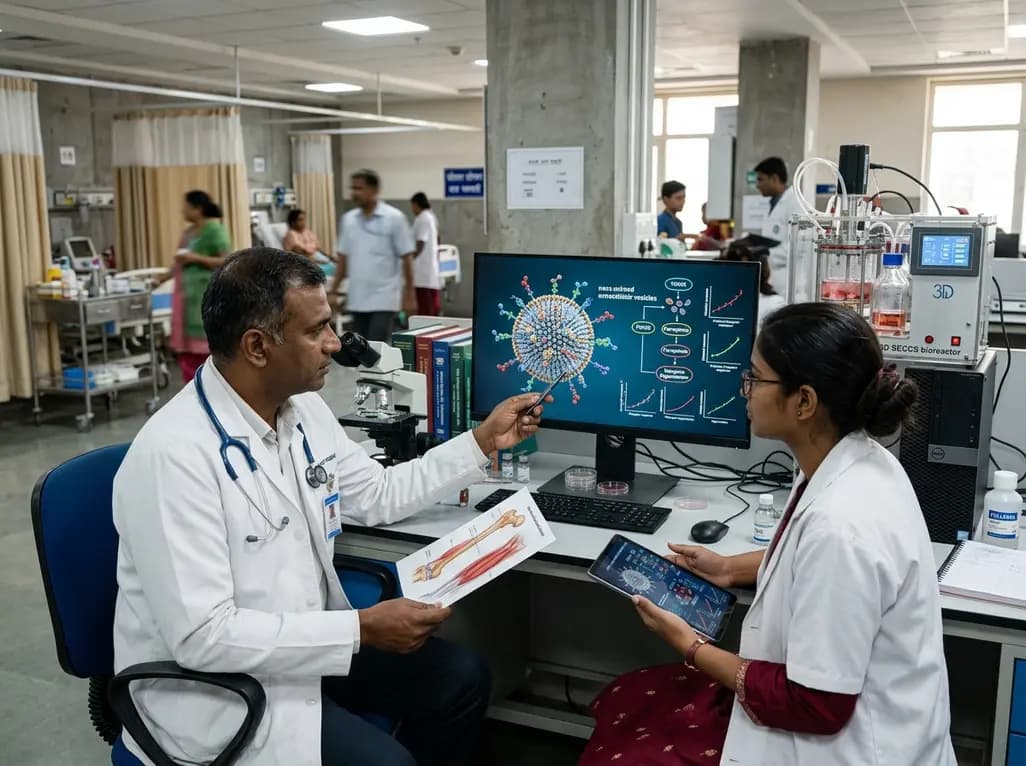
A breakthrough study demonstrates that fullerol-primed extracellular vesicles generated in a 3D SECCS bioreactor attenuate ferroptosis and restore myogenic regeneration in diabetes via the FOXO3 pathway, offering a cell-free therapeutic strategy for diabetic musculoskeletal degeneration.
3 days back
