.webp&w=384&q=75)

Loading, please wait...
Loading, please wait...
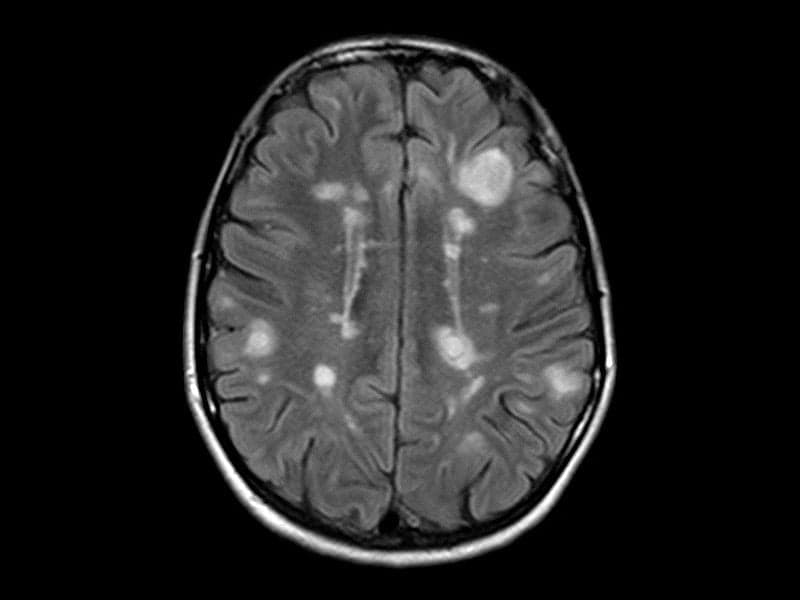
The international MOGAD diagnostic criteria were developed to reduce inconsistent diagnosis of myelin oligodendrocyte glycoprotein antibody-associated disease. The proposed criteria place a positive MOG-IgG cell-based assay at the centre of diagnosis but require a compatible clinical syndrome and appropriate exclusion of competing diagnoses. Typical presentations include optic neuritis, acute disseminated encephalomyelitis and transverse myelitis, while cortical encephalitis and brainstem or cerebellar presentations are less common. The criteria also stress that not every patient with multiple sclerosis should undergo indiscriminate MOG antibody testing because false positives can occur when pretest probability is low. For HCPs, accurate phenotyping matters because MOGAD has different relapse patterns, treatment considerations and prognosis from MS and AQP4-positive NMOSD. The framework is particularly useful when optic neuritis or transverse myelitis appears atypical for MS. The paper directly complements IANCON's neuro-ophthalmology, neuroimmunology and optic neuritis discussions by providing a structured diagnostic approach to a rapidly evolving disease category.

Read summarized clinical updates, watch expert medical content, and earn CME certifications right from your smartphone.
Open your smartphone camera to scan and install.





The international MOGAD diagnostic criteria were developed to reduce inconsistent diagnosis of myelin oligodendrocyte glycoprotein antibody-associated disease. The proposed criteria place a positive MOG-IgG cell-based assay at the centre of diagnosis but require a compatible clinical syndrome and appropriate exclusion of competing diagnoses. Typical presentations include optic neuritis, acute disseminated encephalomyelitis and transverse myelitis, while cortical encephalitis and brainstem or cerebellar presentations are less common. The criteria also stress that not every patient with multiple sclerosis should undergo indiscriminate MOG antibody testing because false positives can occur when pretest probability is low. For HCPs, accurate phenotyping matters because MOGAD has different relapse patterns, treatment considerations and prognosis from MS and AQP4-positive NMOSD. The framework is particularly useful when optic neuritis or transverse myelitis appears atypical for MS. The paper directly complements IANCON's neuro-ophthalmology, neuroimmunology and optic neuritis discussions by providing a structured diagnostic approach to a rapidly evolving disease category.
4 weeks back

Discover how catalytic nanozymes redefine autoimmune disease therapy by establishing a physiological redox set-point to restore immune tolerance without broad immunosuppression.
Last week

Recent research reveals that downregulating YAP1/TAZ-TEAD via Hippo signaling triggers spontaneous human trophoblast syncytialization in 3D cultures, illuminating placental biology and preeclampsia.
3 weeks back

A landmark comparative study evaluates atrial electrophysiology across humans, swine, and rodents. By linking cellular recordings with transcriptomics and in silico modeling, researchers resolve cross-species gaps, explaining translational failures to advance targeted therapies for atrial arrhythmias.
3 weeks back

A novel pathology-adaptive surface engineering strategy uses functionalized plasma polymer coatings to selectively modulate AGE adsorption, reducing oxidative stress and restoring bone formation in diabetic and aging microenvironments.
last month

Researchers have developed an innovative ultrasound-responsive nano-contrast agent that co-delivers CIITA-siRNA and rapamycin directly to inflamed thyroid tissue, significantly reducing autoimmune injury and thyroid autoantibodies in preclinical models of Hashimoto thyroiditis.
3 weeks back
