.webp&w=384&q=75)

Loading, please wait...
Loading, please wait...
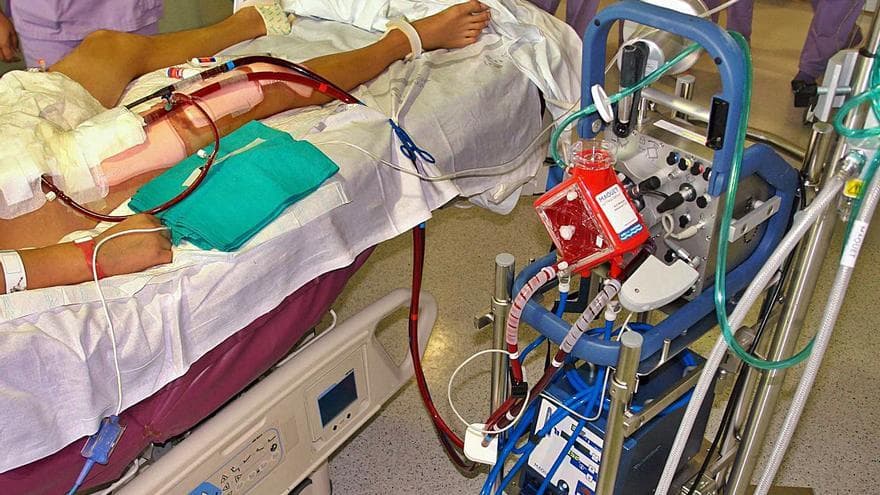
A pilot randomised controlled study examined a low-frequency ventilation strategy in patients with ARDS receiving extracorporeal membrane oxygenation. The intervention used very low respiratory rates and tidal volumes with controlled levels of PEEP and plateau pressure during the first 72 hours of ECMO. The trial was small, with 44 patients, so it was not designed to establish definitive mortality benefit. Its importance is mechanistic and practical: ECMO can take over much of the work of gas exchange, allowing clinicians to reduce ventilator intensity and potentially limit further ventilator-induced lung injury. The study fits CritiCARE's discussions of VV-ECMO, refractory hypoxaemia, ventilation strategy during ECMO and weaning or decannulation. For HCPs, the lesson is that ECMO should not simply be added on top of conventional ventilation settings. Once extracorporeal support is established, the ventilator strategy should be reconsidered to minimise mechanical stress while preserving lung recruitment and patient synchrony. The paper also highlights the limits of current evidence. A physiologically attractive strategy still requires larger trials before being adopted as a universal ECMO protocol. The practical framework remains: protect the lung, monitor gas exchange and haemodynamics, and progressively reassess how much ventilatory support the recovering patient truly needs.

Read summarized clinical updates, watch expert medical content, and earn CME certifications right from your smartphone.
Open your smartphone camera to scan and install.





A pilot randomised controlled study examined a low-frequency ventilation strategy in patients with ARDS receiving extracorporeal membrane oxygenation. The intervention used very low respiratory rates and tidal volumes with controlled levels of PEEP and plateau pressure during the first 72 hours of ECMO. The trial was small, with 44 patients, so it was not designed to establish definitive mortality benefit. Its importance is mechanistic and practical: ECMO can take over much of the work of gas exchange, allowing clinicians to reduce ventilator intensity and potentially limit further ventilator-induced lung injury. The study fits CritiCARE's discussions of VV-ECMO, refractory hypoxaemia, ventilation strategy during ECMO and weaning or decannulation. For HCPs, the lesson is that ECMO should not simply be added on top of conventional ventilation settings. Once extracorporeal support is established, the ventilator strategy should be reconsidered to minimise mechanical stress while preserving lung recruitment and patient synchrony. The paper also highlights the limits of current evidence. A physiologically attractive strategy still requires larger trials before being adopted as a universal ECMO protocol. The practical framework remains: protect the lung, monitor gas exchange and haemodynamics, and progressively reassess how much ventilatory support the recovering patient truly needs.
4 weeks back

Discover how catalytic nanozymes redefine autoimmune disease therapy by establishing a physiological redox set-point to restore immune tolerance without broad immunosuppression.
Last week

Recent research reveals that downregulating YAP1/TAZ-TEAD via Hippo signaling triggers spontaneous human trophoblast syncytialization in 3D cultures, illuminating placental biology and preeclampsia.
3 weeks back

A landmark comparative study evaluates atrial electrophysiology across humans, swine, and rodents. By linking cellular recordings with transcriptomics and in silico modeling, researchers resolve cross-species gaps, explaining translational failures to advance targeted therapies for atrial arrhythmias.
3 weeks back

A novel pathology-adaptive surface engineering strategy uses functionalized plasma polymer coatings to selectively modulate AGE adsorption, reducing oxidative stress and restoring bone formation in diabetic and aging microenvironments.
last month

Researchers have developed an innovative ultrasound-responsive nano-contrast agent that co-delivers CIITA-siRNA and rapamycin directly to inflamed thyroid tissue, significantly reducing autoimmune injury and thyroid autoantibodies in preclinical models of Hashimoto thyroiditis.
3 weeks back
