.webp&w=384&q=75)

Loading, please wait...
Loading, please wait...
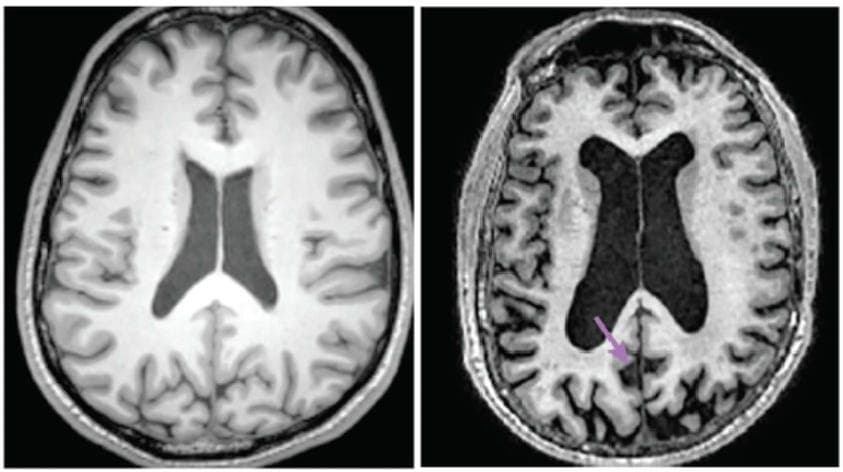
Lecanemab is an antibody directed against soluble amyloid-beta protofibrils and was evaluated in a large phase 3 trial involving people with early Alzheimer disease and biomarker-confirmed amyloid pathology. Over 18 months, participants receiving lecanemab had a smaller worsening in Clinical Dementia Rating-Sum of Boxes than those receiving placebo, along with greater reductions in brain amyloid burden and modest advantages on cognitive and functional measures. The trial established that amyloid-targeting treatment can produce a measurable slowing of progression in early symptomatic disease. The benefits were modest rather than restorative, and treatment was associated with infusion reactions and amyloid-related imaging abnormalities, including edema or effusions. These safety issues require careful patient selection, MRI monitoring and counselling. For HCPs, the study signals a new treatment era in Alzheimer disease, but it also changes the practical workflow: diagnosis needs stronger biological confirmation, risk assessment needs to consider factors such as APOE status and cerebrovascular disease, and treatment requires structured safety monitoring. The trial is highly relevant to IANCON's emphasis on dementia diagnostics, biomarkers and emerging disease-modifying therapies.

Read summarized clinical updates, watch expert medical content, and earn CME certifications right from your smartphone.
Open your smartphone camera to scan and install.





Lecanemab is an antibody directed against soluble amyloid-beta protofibrils and was evaluated in a large phase 3 trial involving people with early Alzheimer disease and biomarker-confirmed amyloid pathology. Over 18 months, participants receiving lecanemab had a smaller worsening in Clinical Dementia Rating-Sum of Boxes than those receiving placebo, along with greater reductions in brain amyloid burden and modest advantages on cognitive and functional measures. The trial established that amyloid-targeting treatment can produce a measurable slowing of progression in early symptomatic disease. The benefits were modest rather than restorative, and treatment was associated with infusion reactions and amyloid-related imaging abnormalities, including edema or effusions. These safety issues require careful patient selection, MRI monitoring and counselling. For HCPs, the study signals a new treatment era in Alzheimer disease, but it also changes the practical workflow: diagnosis needs stronger biological confirmation, risk assessment needs to consider factors such as APOE status and cerebrovascular disease, and treatment requires structured safety monitoring. The trial is highly relevant to IANCON's emphasis on dementia diagnostics, biomarkers and emerging disease-modifying therapies.
3 weeks back

Discover how catalytic nanozymes redefine autoimmune disease therapy by establishing a physiological redox set-point to restore immune tolerance without broad immunosuppression.
Last week

Recent research reveals that downregulating YAP1/TAZ-TEAD via Hippo signaling triggers spontaneous human trophoblast syncytialization in 3D cultures, illuminating placental biology and preeclampsia.
3 weeks back

A landmark comparative study evaluates atrial electrophysiology across humans, swine, and rodents. By linking cellular recordings with transcriptomics and in silico modeling, researchers resolve cross-species gaps, explaining translational failures to advance targeted therapies for atrial arrhythmias.
3 weeks back

A novel pathology-adaptive surface engineering strategy uses functionalized plasma polymer coatings to selectively modulate AGE adsorption, reducing oxidative stress and restoring bone formation in diabetic and aging microenvironments.
last month

Researchers have developed an innovative ultrasound-responsive nano-contrast agent that co-delivers CIITA-siRNA and rapamycin directly to inflamed thyroid tissue, significantly reducing autoimmune injury and thyroid autoantibodies in preclinical models of Hashimoto thyroiditis.
3 weeks back
