.webp&w=384&q=75)

Loading, please wait...
Loading, please wait...

Influenza-associated HLH (hemophagocytic lymphohistiocytosis) is an under-recognized but life-threatening hyper-inflammatory condition. While viral infections frequently trigger HLH, clinicians often overlook influenza as a primary driver. Recent systematic reviews indicate that this condition affects a wide age range, from infants to the elderly. Specifically, Influenza A, particularly the H1N1 strain, is responsible for over 90% of documented cases. Recognizing the clinical presentation early is vital for improving patient prognosis in acute settings.
The clinical manifestation of this condition is often severe and multisystemic. According to pooled data, all patients present with fever. In addition, common laboratory findings include elevated ferritin levels in nearly 95% of cases and hemophagocytosis on biopsy in over 97%. Other frequent markers include thrombocytopenia, splenomegaly, and hypertriglyceridemia. Furthermore, nearly half of the patients exhibit leukopenia or anemia. Because these symptoms mimic severe sepsis or primary viral pneumonia, clinicians must maintain a high index of suspicion for Influenza-associated HLH when standard treatments fail.
Effective management requires a dual approach focusing on the underlying infection and the hyper-inflammatory response. Current therapeutic strategies typically involve antiviral therapy combined with HLH-directed treatments such as corticosteroids, intravenous immunoglobulin (IVIG), and etoposide. Data suggests that patients receiving both antiviral and HLH-directed therapies have a survival rate of 65.4%, compared to only 50% for those receiving either therapy alone. Consequently, early initiation of combined treatment is essential. Most patients require intensive care, highlighting the severity of this syndrome.
The most common markers include persistent fever, highly elevated ferritin levels (above 94% of cases), hemophagocytosis on biopsy, and cytopenias such as thrombocytopenia and anemia.
Influenza A is the most frequent culprit, accounting for over 91% of cases, with the H1N1 subtype being the predominant strain identified in systematic reviews.
Yes, clinical data indicates that combining antiviral therapy with HLH-directed treatments (like steroids or etoposide) increases the survival rate to approximately 65%, compared to 50% with monotherapy.
Disclaimer: This content is for informational and educational purposes only... Refer to the latest local and national guidelines for clinical practice.
References
Balusu K et al. Influenza as a Less Commonly Recognized Cause of Hemophagocytic Lymphohistiocytosis: A Systematic Review of Case Reports and Case Series. Eur J Haematol. 2026 Jun 17. doi: 10.1111/ejh.70241. PMID: 42306884.
Henter JI et al. HLH-2004: Diagnostic and therapeutic guidelines for hemophagocytic lymphohistiocytosis. Pediatr Blood Cancer. 2007;48(2):124-131.
Ramos-Casals M et al. Adult haemophagocytic syndrome. Lancet. 2014;383(9927):1503-1516.
"
Read summarized clinical updates, watch expert medical content, and earn CME certifications right from your smartphone.
Open your smartphone camera to scan and install.





A systematic review highlights influenza as a rare but life-threatening trigger for hemophagocytic lymphohistiocytosis (HLH). Learn about the clinical markers, treatment strategies involving antiviral and HLH-directed therapy, and survival rates in this comprehensive analysis.
4 months ago

Depemokimab offers twice-yearly dosing for severe eosinophilic asthma and chronic rhinosinusitis with nasal polyps, significantly cutting exacerbations and hospital admissions.
4 days back

A novel copper metal-organic framework hydrogel remodels the uterine microenvironment to stimulate robust endometrial regeneration, reduce intrauterine fibrosis, and restore reproductive fertility, offering a groundbreaking strategy for managing refractory endometrial damage and Asherman syndrome.
4 days back

New research reveals that non-ablative radiotherapy suppresses ventricular tachycardia by increasing conduction velocity via NaV1.5 upregulation and action potential prolongation. However, sustained sodium current elevation and depressed calcium handling highlight the need for careful clinical translation.
6 days back

A single-cell transcriptomic atlas reveals how peripheral nerve injuries cause dorsal root ganglion remodeling. By evaluating proximal nerve crush and resection, researchers identify distinct glial and immune programs that resolve neuropathic pain and promote regeneration.
4 days back
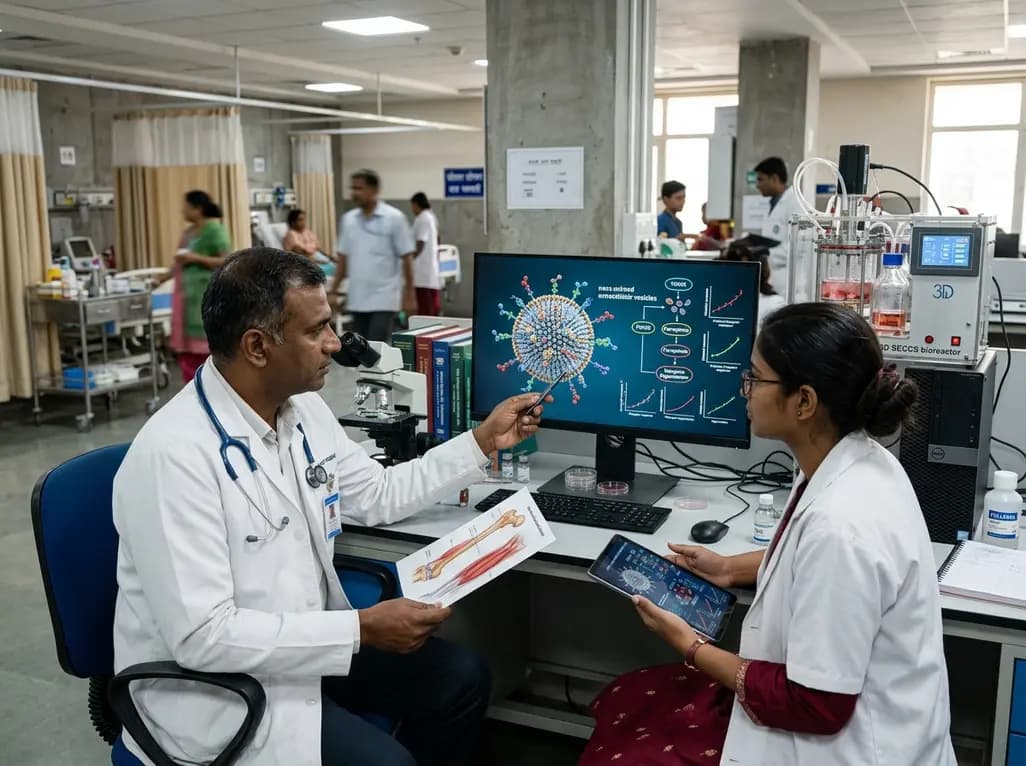
A breakthrough study demonstrates that fullerol-primed extracellular vesicles generated in a 3D SECCS bioreactor attenuate ferroptosis and restore myogenic regeneration in diabetes via the FOXO3 pathway, offering a cell-free therapeutic strategy for diabetic musculoskeletal degeneration.
4 days back
