.webp&w=384&q=75)

Loading, please wait...
Loading, please wait...
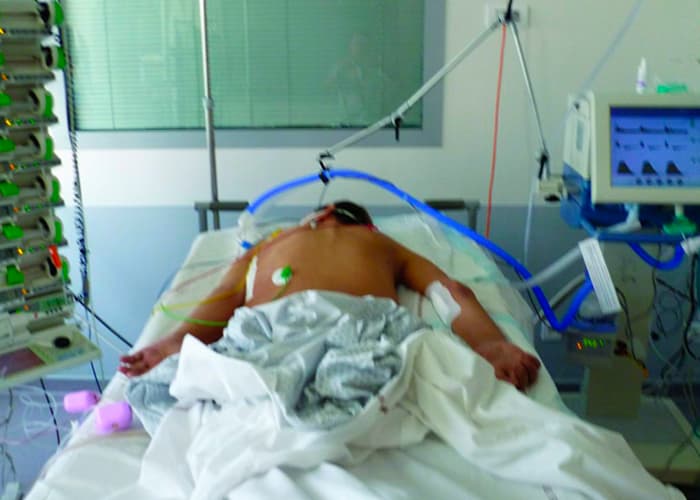
ICU-ROX tested whether mechanically ventilated adults should receive a conservative oxygen strategy that limited exposure to high inspired oxygen concentrations compared with usual oxygen therapy. The trial included 1,000 critically ill adults expected to require mechanical ventilation beyond the first day. The conservative strategy reduced exposure to oxygen in some patients, but it did not significantly increase ventilator-free days or produce a clear mortality benefit. The findings are important because excessive oxygen can cause oxidative injury, yet the ideal oxygen target in critical illness is not defined simply by “lower is always better.” The study supports a more measured approach: clinicians should avoid unnecessary hyperoxia while maintaining adequate oxygen delivery and considering the underlying disease. Oxygen targets may need to differ in ARDS, cardiac arrest, traumatic brain injury, COPD and other conditions. ICU-ROX also demonstrates the difficulty of translating physiologic concerns into universally beneficial treatment thresholds. The practical takeaway is to treat oxygen like a drug—titrate it to a clinically meaningful target and reassess frequently rather than leaving high FiO2 settings unchanged. The trial therefore complements, rather than replaces, disease-specific evidence and reinforces the need for individualised oxygen therapy.

Read summarized clinical updates, watch expert medical content, and earn CME certifications right from your smartphone.
Open your smartphone camera to scan and install.





ICU-ROX tested whether mechanically ventilated adults should receive a conservative oxygen strategy that limited exposure to high inspired oxygen concentrations compared with usual oxygen therapy. The trial included 1,000 critically ill adults expected to require mechanical ventilation beyond the first day. The conservative strategy reduced exposure to oxygen in some patients, but it did not significantly increase ventilator-free days or produce a clear mortality benefit. The findings are important because excessive oxygen can cause oxidative injury, yet the ideal oxygen target in critical illness is not defined simply by “lower is always better.” The study supports a more measured approach: clinicians should avoid unnecessary hyperoxia while maintaining adequate oxygen delivery and considering the underlying disease. Oxygen targets may need to differ in ARDS, cardiac arrest, traumatic brain injury, COPD and other conditions. ICU-ROX also demonstrates the difficulty of translating physiologic concerns into universally beneficial treatment thresholds. The practical takeaway is to treat oxygen like a drug—titrate it to a clinically meaningful target and reassess frequently rather than leaving high FiO2 settings unchanged. The trial therefore complements, rather than replaces, disease-specific evidence and reinforces the need for individualised oxygen therapy.
3 weeks back

Discover how catalytic nanozymes redefine autoimmune disease therapy by establishing a physiological redox set-point to restore immune tolerance without broad immunosuppression.
Last week

Recent research reveals that downregulating YAP1/TAZ-TEAD via Hippo signaling triggers spontaneous human trophoblast syncytialization in 3D cultures, illuminating placental biology and preeclampsia.
3 weeks back

A landmark comparative study evaluates atrial electrophysiology across humans, swine, and rodents. By linking cellular recordings with transcriptomics and in silico modeling, researchers resolve cross-species gaps, explaining translational failures to advance targeted therapies for atrial arrhythmias.
3 weeks back

A novel pathology-adaptive surface engineering strategy uses functionalized plasma polymer coatings to selectively modulate AGE adsorption, reducing oxidative stress and restoring bone formation in diabetic and aging microenvironments.
last month

Researchers have developed an innovative ultrasound-responsive nano-contrast agent that co-delivers CIITA-siRNA and rapamycin directly to inflamed thyroid tissue, significantly reducing autoimmune injury and thyroid autoantibodies in preclinical models of Hashimoto thyroiditis.
3 weeks back
