.webp&w=384&q=75)

Loading, please wait...
Loading, please wait...
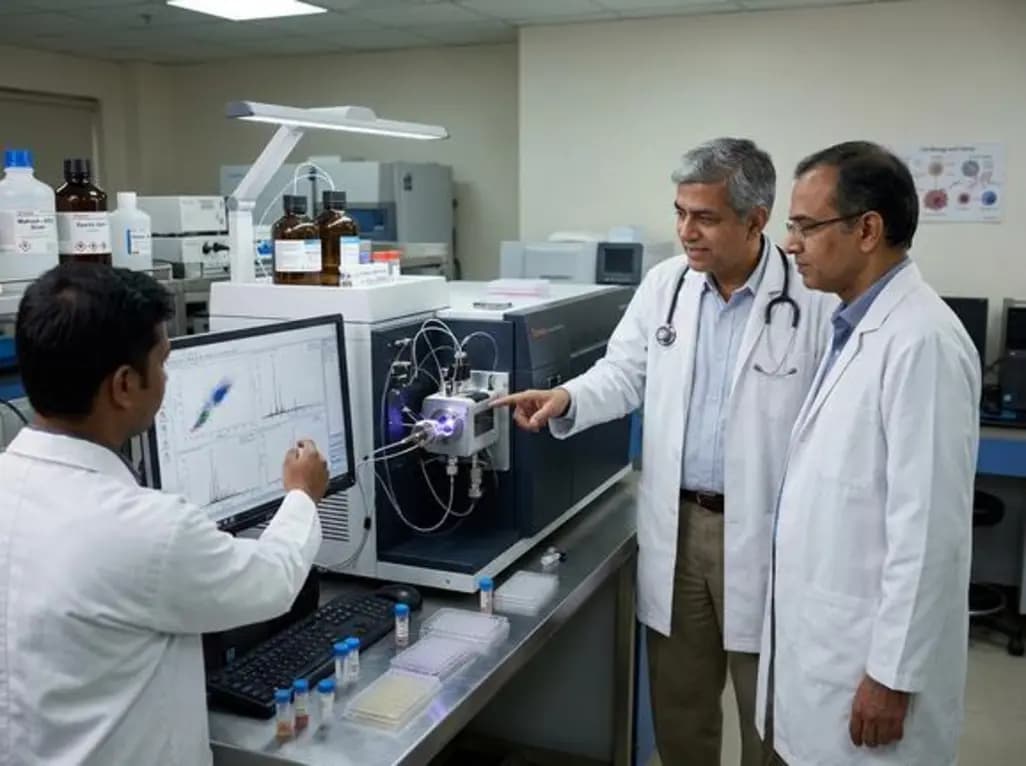
Understanding cellular heterogeneity is vital for modern clinical research. A revolutionary single-cell metabolomics platform known as Hybrid-CytoMS has emerged to address existing limitations in metabolite coverage. Traditional methods often struggle with low intracellular abundance and diverse physicochemical properties of metabolites. However, this new technology integrates a dielectric barrier discharge ionization (DBDI) source with an electrospray ionization (ESI)-based system. Consequently, the integration significantly enhances ionization efficiency through the synergistic complementarity of both mechanisms.
The platform utilizes a coaxial architecture to minimize ion transmission losses during high-throughput analysis. Specifically, the system maintains a rate of 30 cells per minute, allowing for rapid data collection. In positive ion mode, researchers detected over 2,500 features and 369 annotated metabolites. This represents a substantial increase compared to conventional ESI-only methods. Furthermore, the Hybrid-CytoMS enables the detection of nonpolar compounds that were previously invisible, providing a more comprehensive metabolic picture.
The practical application of this single-cell metabolomics platform was demonstrated in a study involving benzo[a]pyrene (BaP) exposure. BaP is a well-known polycyclic aromatic hydrocarbon and a prototypical carcinogen. Researchers applied Hybrid-CytoMS to HepG2 liver cancer cells to resolve metabolic perturbations at single-cell resolution. Specifically, the team successfully characterized the uptake and clearance curves of intracellular BaP. These findings help clarify the dynamic relationship between exogenous exposure and endogenous metabolic status.
Moreover, the study successfully tracked the metabolic trajectory across exposure time. This level of detail allows clinicians to understand how individual cells respond to toxic stress. Such insights are crucial for developing targeted therapies and understanding drug resistance in oncology. The high-throughput nature of the platform ensures that large cell populations can be analyzed efficiently, improving the statistical power of metabolic studies.
This technology paves the way for deeper investigations into cellular metabolic heterogeneity. By providing high-coverage data, Hybrid-CytoMS helps identify rare cell populations that may drive disease progression. Clinicians can potentially use these metabolic signatures to monitor therapeutic efficacy or environmental toxicity. As single-cell technologies continue to evolve, they will likely become integral to personalized medicine strategies in India and globally.
Hybrid-CytoMS combines DBDI and ESI ionization mechanisms. This dual-source approach allows for the simultaneous detection of polar, moderately polar, and nonpolar compounds, which conventional single-source systems often miss.
BaP is a potent carcinogen found in environmental pollutants. Studying its metabolic effects on HepG2 (liver) cells at the single-cell level helps researchers understand the mechanisms of chemical-induced liver injury and carcinogenesis.
The platform achieves a throughput of 30 cells per minute while maintaining high sensitivity and minimal ion loss due to its unique coaxial architecture.
Disclaimer: This content is for informational and educational purposes only. It does not constitute medical advice or a professional recommendation. Refer to the latest local and national guidelines for clinical practice.
References
Zhang Y et al. Coaxial Hybrid Ionization-Mass Cytometry for High-Throughput and High-Coverage Single-Cell Metabolomics. Anal Chem. 2026 Jun 18. doi: 10.1021/acs.analchem.6c02532. PMID: 42312475.
Luo M, Kou T, Yin Y, et al. Deep-coverage single-cell metabolomics enabled by ion mobility-resolved mass cytometry. Nature Methods. 2026;23(4):585-595.
Xu T, Li H, Dou P, et al. Concentric Hybrid Nanoelectrospray Ionization-Atmospheric Pressure Chemical Ionization Source for High-Coverage Mass Spectrometry Analysis of Single-Cell Metabolomics. Adv Sci. 2024;11(2):2306659.
"
Read summarized clinical updates, watch expert medical content, and earn CME certifications right from your smartphone.
Open your smartphone camera to scan and install.





Researchers have developed Hybrid-CytoMS, a coaxial hybrid ionization-mass cytometry platform that integrates DBDI and ESI sources. This system significantly improves metabolite coverage and throughput, enabling detailed single-cell metabolic profiling for advanced oncology and toxicology studies.
4 months ago

Depemokimab offers twice-yearly dosing for severe eosinophilic asthma and chronic rhinosinusitis with nasal polyps, significantly cutting exacerbations and hospital admissions.
4 days back

A novel copper metal-organic framework hydrogel remodels the uterine microenvironment to stimulate robust endometrial regeneration, reduce intrauterine fibrosis, and restore reproductive fertility, offering a groundbreaking strategy for managing refractory endometrial damage and Asherman syndrome.
5 days back

New research reveals that non-ablative radiotherapy suppresses ventricular tachycardia by increasing conduction velocity via NaV1.5 upregulation and action potential prolongation. However, sustained sodium current elevation and depressed calcium handling highlight the need for careful clinical translation.
Last week

A single-cell transcriptomic atlas reveals how peripheral nerve injuries cause dorsal root ganglion remodeling. By evaluating proximal nerve crush and resection, researchers identify distinct glial and immune programs that resolve neuropathic pain and promote regeneration.
4 days back
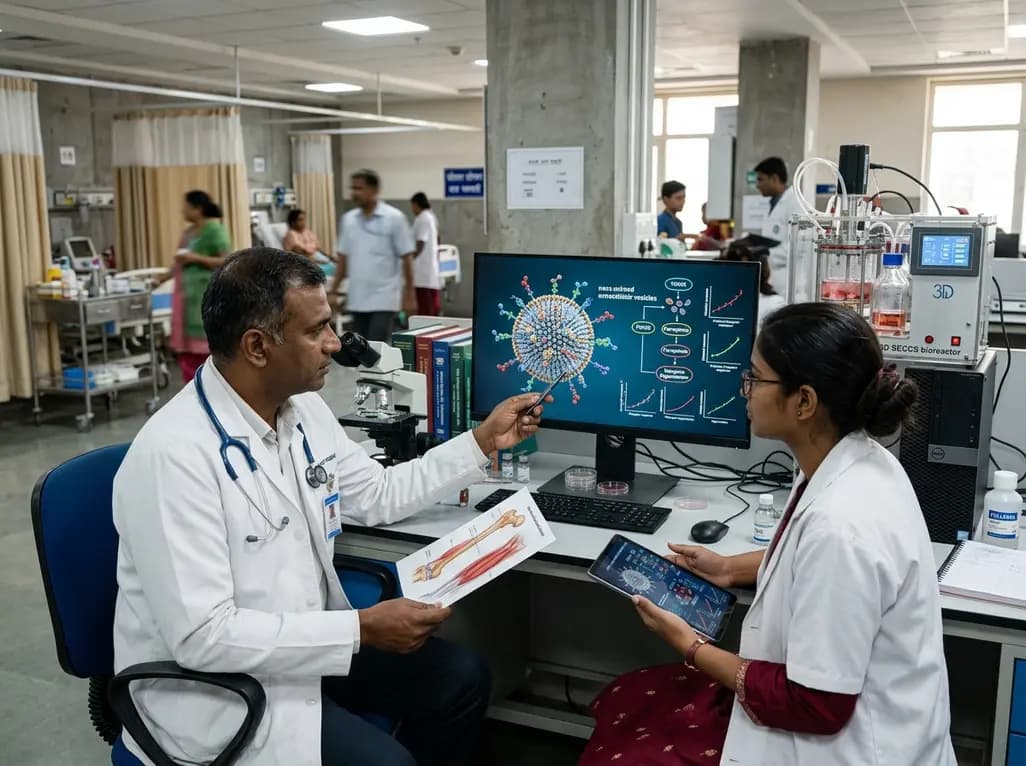
A breakthrough study demonstrates that fullerol-primed extracellular vesicles generated in a 3D SECCS bioreactor attenuate ferroptosis and restore myogenic regeneration in diabetes via the FOXO3 pathway, offering a cell-free therapeutic strategy for diabetic musculoskeletal degeneration.
4 days back
