.webp&w=384&q=75)

Loading, please wait...
Loading, please wait...
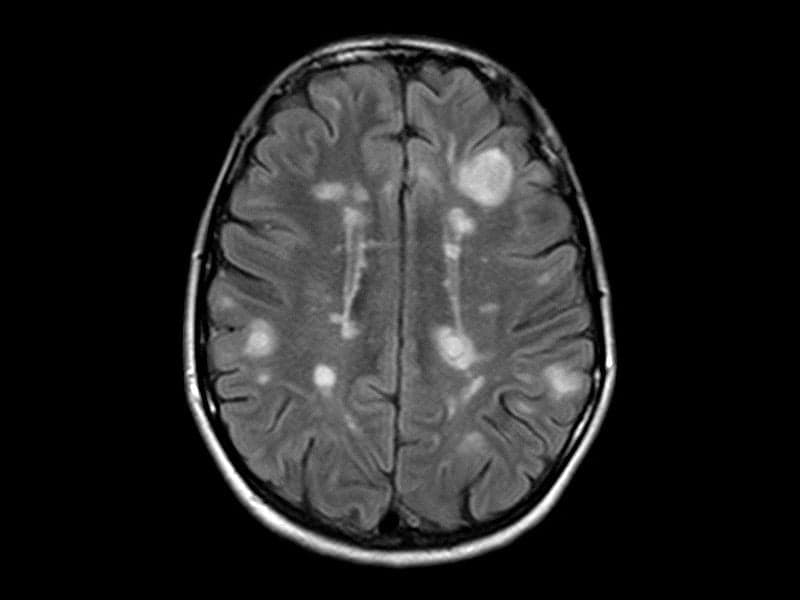
The PARADIGMS randomized phase 3 trial compared fingolimod with intramuscular interferon beta-1a in children and adolescents aged 10 to under 18 years with multiple sclerosis. Fingolimod produced a substantially lower annualized relapse rate and fewer new or newly enlarged T2 lesions. Benefits were also observed in treatment-naive and younger subgroups. The findings are clinically important because childhood-onset MS can be highly inflammatory, and recurrent relapses may contribute to disability and cognitive burden during a vulnerable developmental period. The study provides evidence that a high-efficacy oral disease-modifying therapy can control pediatric MS more effectively than interferon. For HCPs, treatment selection still needs to account for infection risk, vaccination, adherence, monitoring requirements and the child's developmental context. Fingolimod also carries specific cardiac and ophthalmic precautions. The broader lesson is that paediatric MS should not automatically be treated as a milder version of adult disease; early disease control can be important for preserving neurological and developmental function. This directly complements IANCON's emphasis on precision and future-oriented MS care.

Read summarized clinical updates, watch expert medical content, and earn CME certifications right from your smartphone.
Open your smartphone camera to scan and install.





The PARADIGMS randomized phase 3 trial compared fingolimod with intramuscular interferon beta-1a in children and adolescents aged 10 to under 18 years with multiple sclerosis. Fingolimod produced a substantially lower annualized relapse rate and fewer new or newly enlarged T2 lesions. Benefits were also observed in treatment-naive and younger subgroups. The findings are clinically important because childhood-onset MS can be highly inflammatory, and recurrent relapses may contribute to disability and cognitive burden during a vulnerable developmental period. The study provides evidence that a high-efficacy oral disease-modifying therapy can control pediatric MS more effectively than interferon. For HCPs, treatment selection still needs to account for infection risk, vaccination, adherence, monitoring requirements and the child's developmental context. Fingolimod also carries specific cardiac and ophthalmic precautions. The broader lesson is that paediatric MS should not automatically be treated as a milder version of adult disease; early disease control can be important for preserving neurological and developmental function. This directly complements IANCON's emphasis on precision and future-oriented MS care.
4 weeks back

Discover how catalytic nanozymes redefine autoimmune disease therapy by establishing a physiological redox set-point to restore immune tolerance without broad immunosuppression.
Last week

Recent research reveals that downregulating YAP1/TAZ-TEAD via Hippo signaling triggers spontaneous human trophoblast syncytialization in 3D cultures, illuminating placental biology and preeclampsia.
3 weeks back

A landmark comparative study evaluates atrial electrophysiology across humans, swine, and rodents. By linking cellular recordings with transcriptomics and in silico modeling, researchers resolve cross-species gaps, explaining translational failures to advance targeted therapies for atrial arrhythmias.
3 weeks back

A novel pathology-adaptive surface engineering strategy uses functionalized plasma polymer coatings to selectively modulate AGE adsorption, reducing oxidative stress and restoring bone formation in diabetic and aging microenvironments.
last month

Researchers have developed an innovative ultrasound-responsive nano-contrast agent that co-delivers CIITA-siRNA and rapamycin directly to inflamed thyroid tissue, significantly reducing autoimmune injury and thyroid autoantibodies in preclinical models of Hashimoto thyroiditis.
3 weeks back
