

Loading, please wait...
Loading, please wait...
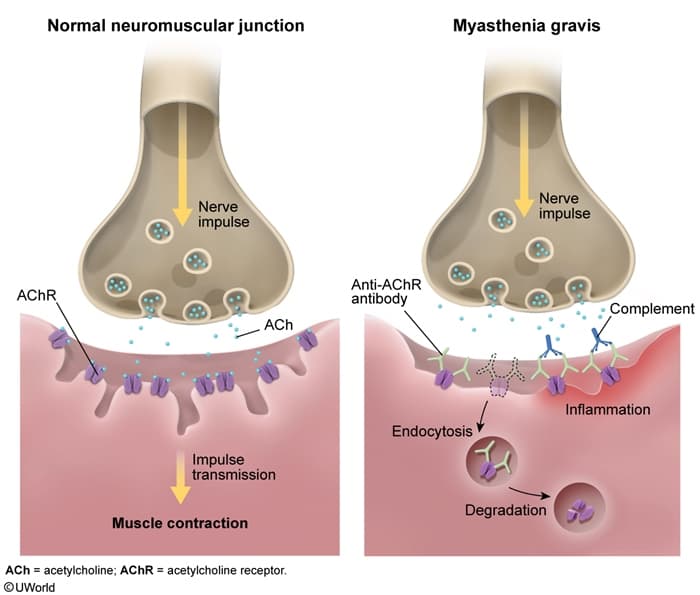
The ADAPT phase 3 trial evaluated efgartigimod, an engineered Fc-fragment that blocks the neonatal Fc receptor and reduces circulating pathogenic IgG. Adults with generalized myasthenia gravis received efgartigimod or placebo in repeated treatment cycles. Among acetylcholine-receptor antibody-positive participants, a substantially larger proportion achieved the prespecified MG-ADL responder outcome with efgartigimod during the first cycle. The treatment was generally well tolerated, with headache and nasopharyngitis among the more common adverse events. The study is important because it demonstrated that modulating IgG recycling can translate into rapid clinical improvement in a broad MG population. For HCPs, efgartigimod provides a targeted treatment option for patients whose generalized symptoms remain burdensome despite background therapy. Clinical response should guide the interval between treatment cycles rather than assuming a fixed schedule for every patient. The trial also reinforces the value of measuring patient-centred outcomes such as activities of daily living in addition to muscle strength. The findings directly complement IANCON's focus on practical pharmacotherapy and advanced treatment options for myasthenia gravis.

Read summarized clinical updates, watch expert medical content, and earn CME certifications right from your smartphone.
Open your smartphone camera to scan and install.





The ADAPT phase 3 trial evaluated efgartigimod, an engineered Fc-fragment that blocks the neonatal Fc receptor and reduces circulating pathogenic IgG. Adults with generalized myasthenia gravis received efgartigimod or placebo in repeated treatment cycles. Among acetylcholine-receptor antibody-positive participants, a substantially larger proportion achieved the prespecified MG-ADL responder outcome with efgartigimod during the first cycle. The treatment was generally well tolerated, with headache and nasopharyngitis among the more common adverse events. The study is important because it demonstrated that modulating IgG recycling can translate into rapid clinical improvement in a broad MG population. For HCPs, efgartigimod provides a targeted treatment option for patients whose generalized symptoms remain burdensome despite background therapy. Clinical response should guide the interval between treatment cycles rather than assuming a fixed schedule for every patient. The trial also reinforces the value of measuring patient-centred outcomes such as activities of daily living in addition to muscle strength. The findings directly complement IANCON's focus on practical pharmacotherapy and advanced treatment options for myasthenia gravis.
4 weeks back

Discover how catalytic nanozymes redefine autoimmune disease therapy by establishing a physiological redox set-point to restore immune tolerance without broad immunosuppression.
Last week

Recent research reveals that downregulating YAP1/TAZ-TEAD via Hippo signaling triggers spontaneous human trophoblast syncytialization in 3D cultures, illuminating placental biology and preeclampsia.
3 weeks back

A landmark comparative study evaluates atrial electrophysiology across humans, swine, and rodents. By linking cellular recordings with transcriptomics and in silico modeling, researchers resolve cross-species gaps, explaining translational failures to advance targeted therapies for atrial arrhythmias.
3 weeks back

A novel pathology-adaptive surface engineering strategy uses functionalized plasma polymer coatings to selectively modulate AGE adsorption, reducing oxidative stress and restoring bone formation in diabetic and aging microenvironments.
last month

Researchers have developed an innovative ultrasound-responsive nano-contrast agent that co-delivers CIITA-siRNA and rapamycin directly to inflamed thyroid tissue, significantly reducing autoimmune injury and thyroid autoantibodies in preclinical models of Hashimoto thyroiditis.
3 weeks back
