.webp&w=384&q=75)

Loading, please wait...
Loading, please wait...
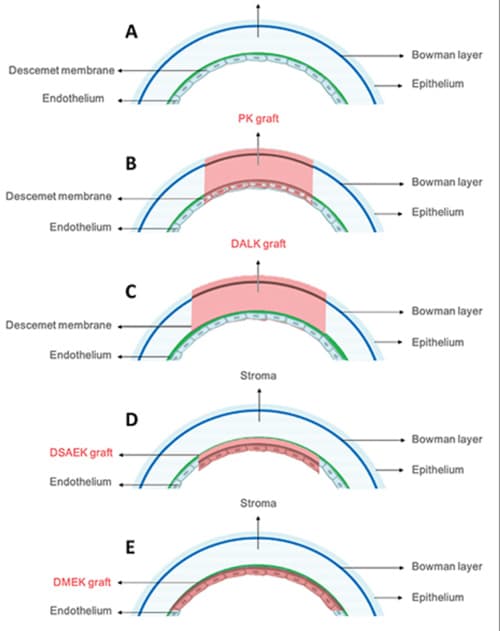
A randomized clinical trial directly compared deep anterior lamellar keratoplasty (DALK) using the big-bubble technique with penetrating keratoplasty (PK) in patients with keratoconus. DALK removes diseased corneal stroma while retaining the recipient Descemet membrane and endothelium, whereas PK replaces the full thickness of the cornea. The study is important because it illustrates the central surgical trade-off in keratoconus transplantation: achieving good optical rehabilitation while preserving healthy host tissue. Randomized evidence has generally shown broadly comparable visual outcomes between DALK and PK, while DALK offers theoretical and practical advantages related to endothelial preservation and reduced endothelial rejection risk. The operation is technically more demanding and may require conversion when a satisfactory stromal plane cannot be achieved. For HCP education, the paper supports discussion of DALK as a structured alternative rather than a niche technique reserved for a few centers. Case selection remains critical, particularly the absence of deep scarring that would compromise the interface. Training should emphasize tissue-plane recognition, controlled dissection, prevention of perforation, and the decision points that determine whether to continue with DALK or convert to PK.

Read summarized clinical updates, watch expert medical content, and earn CME certifications right from your smartphone.
Open your smartphone camera to scan and install.





A randomized clinical trial directly compared deep anterior lamellar keratoplasty (DALK) using the big-bubble technique with penetrating keratoplasty (PK) in patients with keratoconus. DALK removes diseased corneal stroma while retaining the recipient Descemet membrane and endothelium, whereas PK replaces the full thickness of the cornea. The study is important because it illustrates the central surgical trade-off in keratoconus transplantation: achieving good optical rehabilitation while preserving healthy host tissue. Randomized evidence has generally shown broadly comparable visual outcomes between DALK and PK, while DALK offers theoretical and practical advantages related to endothelial preservation and reduced endothelial rejection risk. The operation is technically more demanding and may require conversion when a satisfactory stromal plane cannot be achieved. For HCP education, the paper supports discussion of DALK as a structured alternative rather than a niche technique reserved for a few centers. Case selection remains critical, particularly the absence of deep scarring that would compromise the interface. Training should emphasize tissue-plane recognition, controlled dissection, prevention of perforation, and the decision points that determine whether to continue with DALK or convert to PK.
last month
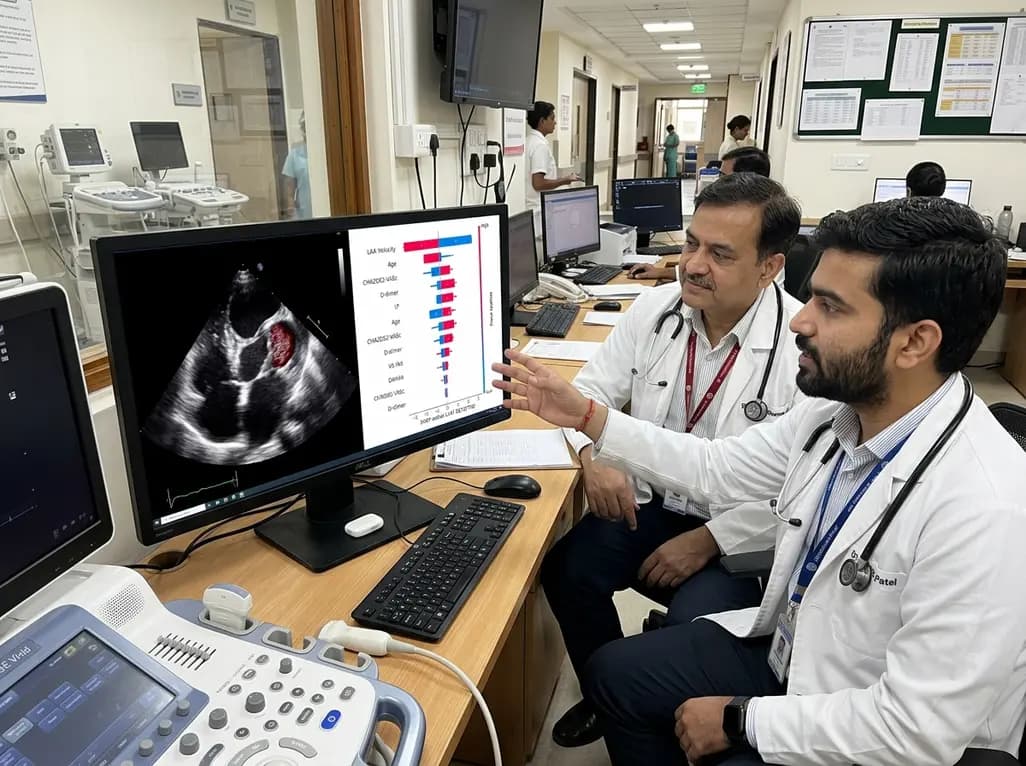
A study demonstrates an explainable machine learning framework integrating clinical and echocardiographic metrics to predict left atrial appendage thrombus in non-valvular atrial fibrillation, utilizing SHAP analysis for clinical interpretability.
2 days back

A systematic review and transcriptomic cross-study consensus analysis illuminates the role of necroptosis in cervical cancer. By promoting anti-tumor immunogenicity and resolving apoptosis resistance, necroptotic pathways offer actionable prognostic signatures and promising avenues for combination immunotherapy.
Yesterday

Abdominal aortic aneurysm rupture remains a catastrophic vascular emergency. Groundbreaking research reveals that USP53 accelerates aneurysm progression by reprogramming smooth muscle cell metabolism toward aerobic glycolysis, highlighting a promising target beyond conventional diameter-based surveillance.
Last week

A breakthrough study leverages natural language processing to accurately identify incident medication-related osteonecrosis of the jaw and track antiresorptive drug holidays from clinical narratives in electronic health records, advancing osteoporosis pharmacovigilance and dental safety.
Last week

Recent research defines ferro-aging as a conserved iron-lipid axis driving organ decline across primates. Age-related iron dyshomeostasis stimulates ACSL4-mediated lipid peroxidation, promoting cellular senescence. Notably, vitamin C directly inhibits ACSL4, suppressing phospholipid oxidation and multi-organ decay.
Last week
