.webp&w=384&q=75)

Loading, please wait...
Loading, please wait...

Acute ischemic stroke continues to represent a monumental challenge for global healthcare systems, and this is particularly true within the Indian context where it stands as a leading cause of mortality and long-term disability. Despite significant advancements in reperfusion strategies, such as mechanical thrombectomy and intravenous thrombolysis, a substantial number of patients do not qualify for these interventions or fail to achieve optimal functional recovery. Consequently, the search for a robust pharmacological Acute Ischemic Stroke Treatment that provides neuroprotection has intensified. The COURAGE-2 study was designed to investigate the potential of a combined therapy involving Epidermal Growth Factor (EGF) and Growth Hormone Releasing Peptide-6 (GHRP6). These molecules are hypothesized to act synergistically to stabilize the neurovascular unit and limit the progression of the ischemic penumbra. In India, where access to advanced neuro-intervention centers can be limited by geography and socio-economic factors, the development of an injectable neuroprotective agent could bridge a critical gap in care. By targeting the cellular cascades that lead to neuronal death, this dual-agent approach seeks to extend the window of salvageable tissue, offering a glimmer of hope for patients presenting within twelve hours of symptom onset. This trial represents one of the few Phase III efforts to validate neuroprotection in a clinical setting after numerous previous failures in the field.
The COURAGE-2 study was a multicenter, randomized, open-label clinical trial that aimed to assess whether the combination of EGF and GHRP6 could provide superior disability improvement compared to standard care alone. The trial enrolled 188 participants who presented within a twelve-hour window of stroke onset and exhibited a National Institutes of Health Stroke Scale (NIHSS) score ranging from 5 to 20. Participants were randomized into two distinct groups: the treatment arm received intravenous doses of 75µg EGF and 5mg GHRP6 twice daily for seven days, while the control arm received the standard of care as dictated by existing clinical guidelines. The primary efficacy endpoint was measured at both three and six months using the modified Rankin Scale (mRS) to quantify disability. Secondary endpoints were comprehensive, including survival rates, the Barthel Index for activities of daily living, and a blinded analysis of infarct volumes. The average age of the participants was approximately 63.5 years, with a baseline mean NIHSS score of 9.5. This demographic profile reflects a typical stroke population encountered in clinical practice, allowing for a realistic assessment of the drug's performance. The mean time from symptom onset to the initiation of treatment was 7.3 hours, which is a critical metric for any acute neuroprotective intervention aiming to serve the broader population.
Upon completion of the six-month follow-up, the COURAGE-2 trial faced a complex statistical outcome regarding its primary objective. In the intention-to-treat population, which included all randomized patients regardless of stroke severity, the study did not demonstrate a statistically significant difference in mRS scores or Barthel Index improvements between the treated and control groups. Specifically, the hypothesized 20% greater improvement in disability for the combined therapy was not observed across the entire cohort. Furthermore, survival rates between the groups were comparable at the primary assessment points. This lack of significance in the general population underscores the historical difficulty of translating neuroprotective success from animal models to human clinical trials. Factors such as the heterogeneity of stroke etiology, variations in baseline comorbidities, and the relatively broad range of initial NIHSS scores likely contributed to the dilution of the treatment effect. Nevertheless, the trial provided essential safety data, confirming that while serious adverse events occurred in 48 of the 188 patients, none were directly attributed to the study medication. The odds ratio for adverse events in the treated group was 1.92, yet the lack of causality suggests that the EGF and GHRP6 combination is generally well-tolerated even in the acute phase of a major neurological event.
While the overall trial did not reach its primary endpoint, a pre-planned subgroup analysis revealed compelling evidence for the efficacy of this combination as an Acute Ischemic Stroke Treatment in moderate-to-severe cases. Patients with an initial NIHSS score of 15 or higher showed a marked reduction in disability at the six-month mark. Specifically, the mean mRS for this severe-stroke subgroup in the treated arm was 2.6, compared to a significantly higher 4.7 in the control group. This disparity suggests that the neuroprotective properties of EGF and GHRP6 are most potent when the neurological deficit is more pronounced, perhaps due to a larger area of at-risk penumbra that the drugs can stabilize. Even more striking was the impact on mortality; the hazard ratio for death in the treated subgroup was 0.18, indicating a substantial survival benefit. Similar positive trends were observed when the threshold for analysis was adjusted to NIHSS ≥12. For clinicians managing patients in ICU settings, these findings are highly relevant, as they suggest that the combined therapy may prevent the catastrophic functional decline often seen in major middle cerebral artery territory strokes. The ability to significantly lower the mortality risk and improve the chance of functional independence in this high-risk population warrants a shift in how we view the window for neuroprotective intervention.
The biological rationale behind using EGF and GHRP6 in tandem lies in their pleiotropic effects on the central nervous system. Epidermal Growth Factor is known for its role in promoting cell proliferation, survival, and differentiation. In the context of an acute ischemic insult, EGF can stimulate endogenous regenerative mechanisms and provide trophic support to neurons and glial cells struggling in the low-oxygen environment. On the other hand, GHRP6, a synthetic hexapeptide, has demonstrated potent anti-apoptotic and anti-inflammatory properties in various preclinical models. It can effectively cross the blood-brain barrier and target receptors widely distributed throughout brain tissue. Together, these agents work to reduce oxidative stress and mitigate the inflammatory response that typically exacerbates secondary brain injury following the initial vascular occlusion. The COURAGE-2 trial's secondary analysis of infarct volume supported these mechanisms, showing a greater reduction in infarct size after 30 days in treated patients with strokes located in the middle cerebral artery territory. By preserving the structural integrity of the neurovascular unit, this therapy potentially limits the conversion of the penumbra into a permanent infarct. This multifaceted approach is distinct from traditional monotherapies, as it targets multiple steps of the ischemic cascade simultaneously, which may explain the superior outcomes seen in the severe stroke cohorts compared to historical neuroprotective candidates.
Future implementation of EGF and GHRP6 in clinical practice depends heavily on the balance between efficacy and safety. The safety profile observed in COURAGE-2 is encouraging, as it demonstrated that twice-daily intravenous administration for one week did not lead to treatment-related severe adverse events. This safety margin is vital for therapies administered in the high-stakes environment of an emergency department or intensive care unit. However, the study's failure to meet the primary endpoint in the general population means that the drug cannot yet be recommended for all stroke patients. Instead, the results act as a precision medicine indicator, suggesting that future research and clinical application should focus specifically on the moderate-to-severe stroke subpopulation. For the Indian medical community, where the burden of severe stroke is high and rehabilitation resources are often overstretched, these findings provide a roadmap for developing targeted protocols. Further large-scale Phase IV or confirmatory trials are necessary to solidify these subgroup benefits. In the meantime, the study reinforces the importance of early intervention and the potential role of growth factor-based therapies as an adjuvant to standard reperfusion techniques. As we move forward, the integration of such neuroprotective strategies could fundamentally change the prognosis for patients who would otherwise face a lifetime of total dependency or death due to extensive cerebral infarction.
The trial missed its primary endpoint because the 20% disability improvement target was not met across the diverse intention-to-treat population. This is often due to the inclusion of patients with milder strokes (NIHSS 5-10) who might recover well with standard care regardless of the experimental drug. The dilution effect of including these patients makes it statistically difficult to prove a benefit for the entire group, even when specific subgroups show significant improvement.
The combination provides pleiotropic benefits, including reduced neuronal apoptosis, decreased inflammatory response, and stimulation of endogenous repair mechanisms. Clinical data from the COURAGE-2 trial specifically showed a significant reduction in infarct volume in the middle cerebral artery territory after 30 days. Furthermore, in severe stroke patients, the therapy was associated with a much lower mortality risk and better functional scores, suggesting it protects viable brain tissue from secondary damage.
These findings suggest that for severe stroke patients (NIHSS ≥15) who often have poor prognoses in India, EGF and GHRP6 could be a life-saving adjuvant therapy. Since many Indian patients arrive at hospitals outside the thrombolysis window, a neuroprotective agent that works up to 12 hours post-onset is highly valuable. However, clinicians should wait for further confirmatory studies before routine adoption, focusing currently on optimizing standard care for this high-risk subpopulation.
Disclaimer: This content is for informational and educational purposes only and does not constitute medical advice, diagnosis, or treatment. Always seek the advice of a physician or other qualified health provider with any questions you may have regarding a medical condition. Never disregard professional medical advice or delay in seeking it because of something you have read here. Refer to the latest local and national guidelines for clinical practice.
References
Hernández-Bernal F et al. Phase III Open-Label, Randomized Clinical Trial of Epidermal Growth Factor and Growth Hormone Releasing Hexapeptide in Acute Ischemic Stroke. J Clin Neurosci. 2026 Jul 16. doi: undefined. PMID: 42462342.
Indian Stroke Association. Clinical Practice Guidelines for Management of Ischemic Stroke in India. 2024.
World Stroke Organization (WSO). Global Stroke Fact Sheet 2022. International Journal of Stroke. 2022.

Read summarized clinical updates, watch expert medical content, and earn CME certifications right from your smartphone.
Open your smartphone camera to scan and install.





The COURAGE-2 Phase III trial evaluated the combination of EGF and GHRP6 in acute ischemic stroke. While the primary endpoint was not met in the general population, significant improvements in disability and mortality were observed in patients with moderate-to-severe stroke (NIHSS ≥15), indicating a breakthrough.
3 months ago

Depemokimab offers twice-yearly dosing for severe eosinophilic asthma and chronic rhinosinusitis with nasal polyps, significantly cutting exacerbations and hospital admissions.
3 days back

A novel copper metal-organic framework hydrogel remodels the uterine microenvironment to stimulate robust endometrial regeneration, reduce intrauterine fibrosis, and restore reproductive fertility, offering a groundbreaking strategy for managing refractory endometrial damage and Asherman syndrome.
4 days back
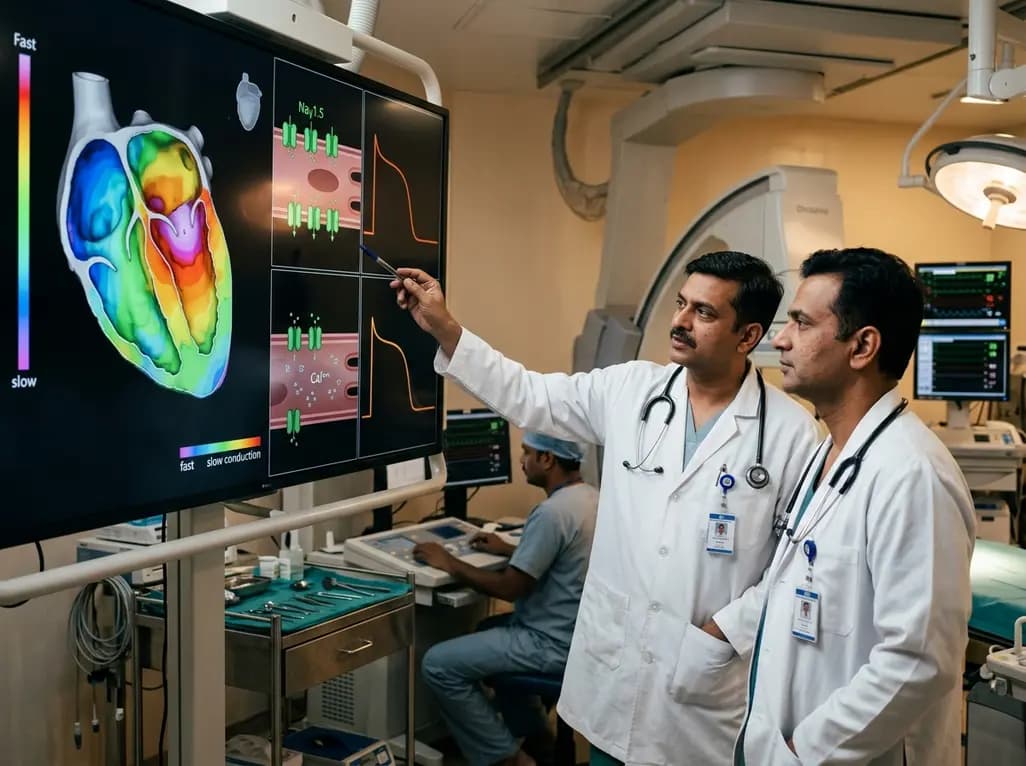
New research reveals that non-ablative radiotherapy suppresses ventricular tachycardia by increasing conduction velocity via NaV1.5 upregulation and action potential prolongation. However, sustained sodium current elevation and depressed calcium handling highlight the need for careful clinical translation.
6 days back

A single-cell transcriptomic atlas reveals how peripheral nerve injuries cause dorsal root ganglion remodeling. By evaluating proximal nerve crush and resection, researchers identify distinct glial and immune programs that resolve neuropathic pain and promote regeneration.
3 days back
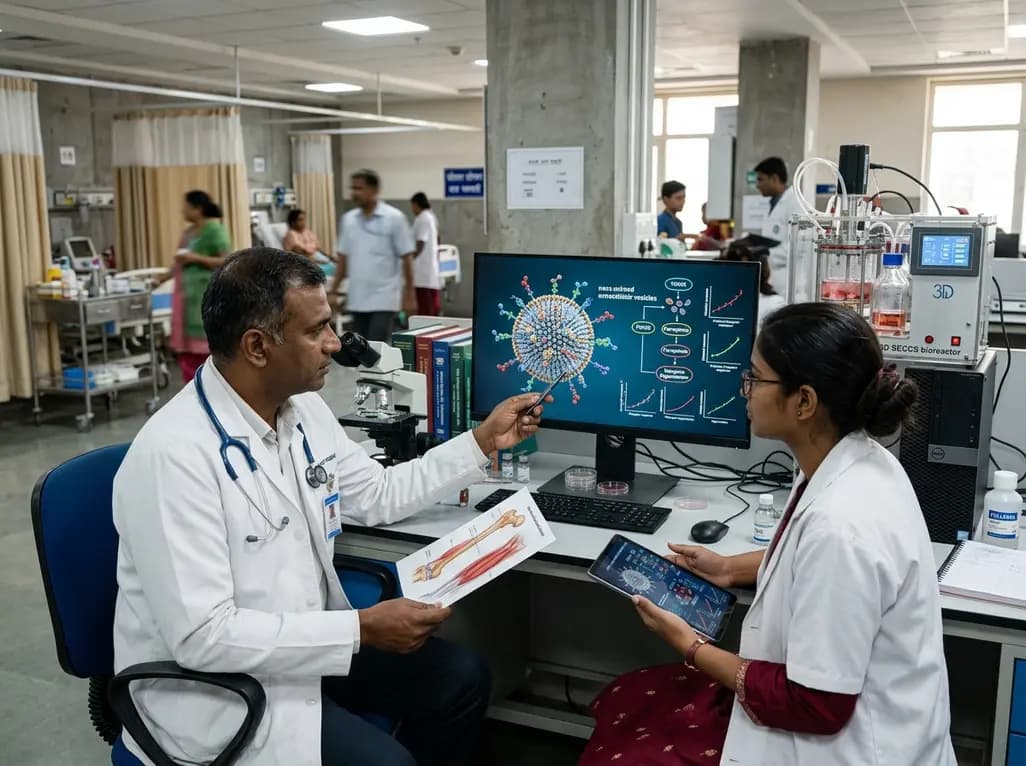
A breakthrough study demonstrates that fullerol-primed extracellular vesicles generated in a 3D SECCS bioreactor attenuate ferroptosis and restore myogenic regeneration in diabetes via the FOXO3 pathway, offering a cell-free therapeutic strategy for diabetic musculoskeletal degeneration.
3 days back
