.webp&w=384&q=75)

Loading, please wait...
Loading, please wait...
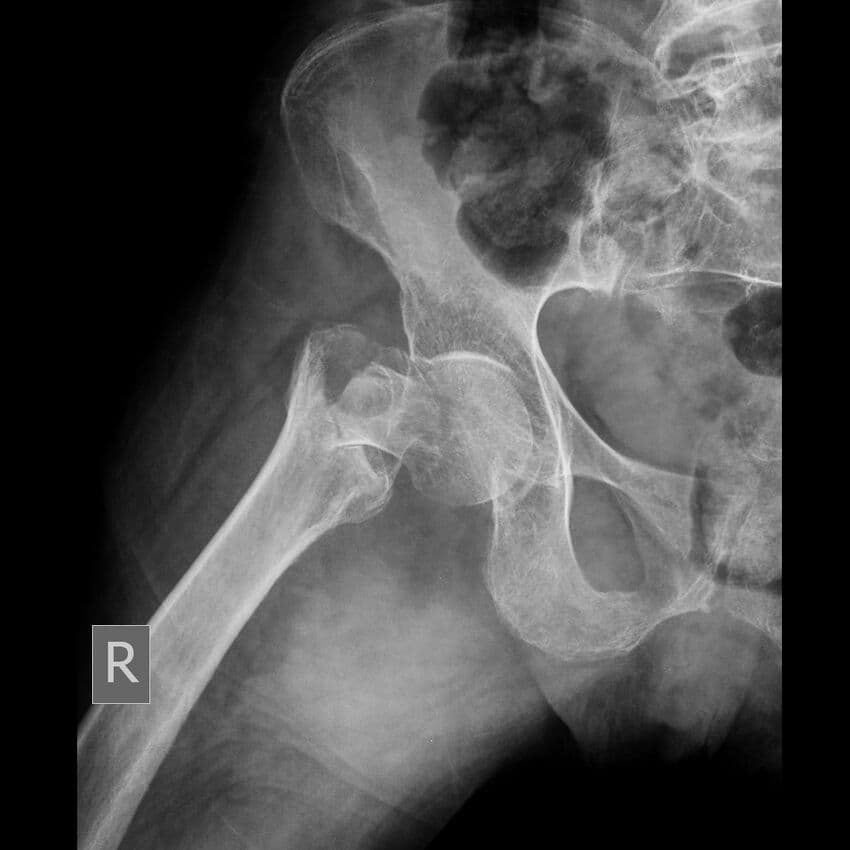
A randomized trial of 600 trochanteric fractures compared a sliding hip screw with the Targon PF intramedullary nail. Because treatment of proximal femoral fractures is strongly influenced by fracture stability, the study provides useful large-scale evidence on whether one fixation philosophy is broadly superior. The results did not demonstrate a consistent clinical advantage that would justify replacing the sliding hip screw for every fracture. Instead, outcomes varied with fracture characteristics and with the well-known strengths and limitations of each device. Intramedullary fixation may be attractive for unstable patterns because it places the load-bearing device closer to the mechanical axis, while the sliding hip screw remains effective for many two-part fractures. For HCPs, the clinically useful approach is to start with fracture classification and reduction strategy and then choose the implant that best controls the expected failure mode. Avoiding varus collapse, cut-out and loss of medial support matters more than the label on the implant. The trial supports a pragmatic message: use the simplest construct that provides reliable biomechanical control for the specific fracture pattern.

Read summarized clinical updates, watch expert medical content, and earn CME certifications right from your smartphone.
Open your smartphone camera to scan and install.





A randomized trial of 600 trochanteric fractures compared a sliding hip screw with the Targon PF intramedullary nail. Because treatment of proximal femoral fractures is strongly influenced by fracture stability, the study provides useful large-scale evidence on whether one fixation philosophy is broadly superior. The results did not demonstrate a consistent clinical advantage that would justify replacing the sliding hip screw for every fracture. Instead, outcomes varied with fracture characteristics and with the well-known strengths and limitations of each device. Intramedullary fixation may be attractive for unstable patterns because it places the load-bearing device closer to the mechanical axis, while the sliding hip screw remains effective for many two-part fractures. For HCPs, the clinically useful approach is to start with fracture classification and reduction strategy and then choose the implant that best controls the expected failure mode. Avoiding varus collapse, cut-out and loss of medial support matters more than the label on the implant. The trial supports a pragmatic message: use the simplest construct that provides reliable biomechanical control for the specific fracture pattern.
3 weeks back

Discover how catalytic nanozymes redefine autoimmune disease therapy by establishing a physiological redox set-point to restore immune tolerance without broad immunosuppression.
Last week

Recent research reveals that downregulating YAP1/TAZ-TEAD via Hippo signaling triggers spontaneous human trophoblast syncytialization in 3D cultures, illuminating placental biology and preeclampsia.
3 weeks back

A landmark comparative study evaluates atrial electrophysiology across humans, swine, and rodents. By linking cellular recordings with transcriptomics and in silico modeling, researchers resolve cross-species gaps, explaining translational failures to advance targeted therapies for atrial arrhythmias.
3 weeks back

A novel pathology-adaptive surface engineering strategy uses functionalized plasma polymer coatings to selectively modulate AGE adsorption, reducing oxidative stress and restoring bone formation in diabetic and aging microenvironments.
last month

Researchers have developed an innovative ultrasound-responsive nano-contrast agent that co-delivers CIITA-siRNA and rapamycin directly to inflamed thyroid tissue, significantly reducing autoimmune injury and thyroid autoantibodies in preclinical models of Hashimoto thyroiditis.
3 weeks back
