.webp&w=384&q=75)

Loading, please wait...
Loading, please wait...

Zolbetuximab in gastric cancer has emerged as a promising targeted therapy for patients with CLDN18.2-positive disease. Recently, researchers conducted a real-world study to evaluate its efficacy and the physiological changes it triggers. This study focused on patients with unresectable or recurrent gastric or gastroesophageal junction adenocarcinoma. Furthermore, it explored whether early changes in serum albumin levels could predict treatment success or failure. Consequently, the findings provide valuable insights for oncologists managing this complex patient population.
The study cohort included 38 patients treated with zolbetuximab-based chemotherapy. Among the 24 patients with measurable disease, the objective response rate (ORR) reached an impressive 75.0%. Moreover, many patients achieved early tumor shrinkage within the initial cycles. These results align with those seen in previous phase 3 clinical trials. Therefore, the therapeutic benefit of zolbetuximab remains consistent in a real-world setting outside of strictly controlled environments.
A common side effect during treatment is a decline in serum albumin. Many clinicians initially worried that this decline signaled treatment failure or poor nutrition. However, this study demonstrated that albumin kinetics do not correlate with antitumor efficacy. Specifically, both landmark nadir albumin and relative albumin changes showed no significant link to the ORR. Instead, these reductions likely represent a physiological response to the drug itself. Because of this, doctors should interpret early albumin drops as a manageable treatment-related change rather than a marker of progression.
In conclusion, the study reinforces the role of zolbetuximab as a potent treatment option. It clarifies that early albumin kinetics do not serve as surrogate markers for treatment failure. Consequently, clinicians should focus on overall clinical response and continue therapy despite minor biochemical fluctuations.
No, the study shows that early reductions in serum albumin are common physiological changes. They do not correspond to impaired tumor response or reduced efficacy of the chemotherapy regimen.
Zolbetuximab is indicated for patients with CLDN18.2-positive, HER2-negative advanced gastric or gastroesophageal junction adenocarcinoma. Biomarker testing is necessary to confirm eligibility.
The real-world ORR of 75.0% observed in this cohort is consistent with the clinical benefits demonstrated in the pivotal SPOTLIGHT and GLOW phase 3 trials.
Disclaimer: This content is for informational and educational purposes only and does not constitute medical advice or a professional opinion. Always seek the advice of a qualified healthcare provider for any questions regarding a medical condition. Refer to the latest local and national guidelines for clinical practice.
References

Read summarized clinical updates, watch expert medical content, and earn CME certifications right from your smartphone.
Open your smartphone camera to scan and install.





A real-world study on zolbetuximab for CLDN18.2+ gastric cancer shows a 75% response rate and finds that early albumin decline does not indicate treatment f...
8 months ago
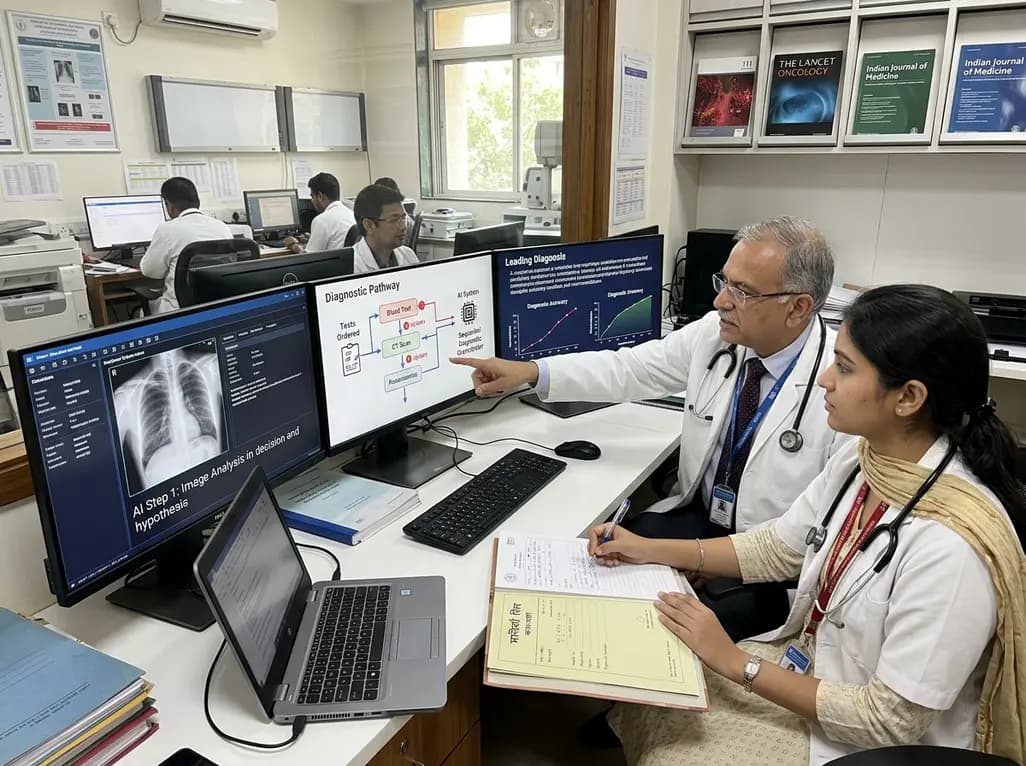
A breakthrough peer-reviewed study demonstrates that a sequential AI diagnosis system can mirror real-world clinical reasoning. By ordering stepwise tests and updating hypotheses dynamically, this multi-agent orchestrator achieved superior diagnostic accuracy while reducing investigative costs.
Today

A prenatal case highlights severe glutaric acidemia type II presenting as bilateral hyperechoic cystic kidneys at 18 weeks. Whole-exome sequencing revealed a novel homozygous ETFDH frameshift variant, demonstrating the power of rapid genetic testing in fetal renal anomalies.
Today

Review how tailored exercise programs benefit frail older patients with heart failure. Explore pathophysiological mechanisms, individualized training prescriptions, and strategies to overcome adherence barriers in clinical practice.
Yesterday

This comparative study evaluates posterior labral tears with and without glenohumeral instability, highlighting distinct demographic patterns, MRI underestimation in stable shoulders, and successful arthroscopic repair outcomes.
Yesterday

A clinical study demonstrates that early intervention with tocilizumab, either as monotherapy or bridged with corticosteroids, achieves significant proptosis reduction and resolves active inflammation in treatment-naive thyroid eye disease.
Yesterday
