.webp&w=384&q=75)

Loading, please wait...
Loading, please wait...

Global trends in adolescent mental health indicate a distressing rise in suicidal ideation and self-injurious behaviors. While psychiatric interventions have evolved, substantial disparities remain among marginalized groups. The clinical community increasingly recognizes that a universal approach to mental health care often fails to address the unique psychosocial stressors experienced by minority youth. Effective youth suicide prevention psychotherapy must account for cultural nuances, systemic inequities, and the specific lived experiences of the patient. In India, where demographic diversity is vast, the lessons from international meta-analyses on culturally responsive treatments are particularly relevant. Providers must navigate linguistic, regional, and socioeconomic variations that influence a young person's internal world and external support systems. Recent evidence suggests that while current psychotherapy models show promise, their efficacy is often tied to how well the manualized content is adapted for the target population. Without this adaptation, treatments may lack the necessary resonance to disrupt the cycles of despair that lead to suicidal crises. This article explores a landmark systematic review that underscores the urgent need for integrating culturally relevant content into evidence-based psychotherapy to better serve youth at risk.
A comprehensive systematic review and meta-analysis published in 2025 aimed to identify the effectiveness of manualized psychotherapy for youth. The researchers conducted extensive literature searches to identify studies that compared various interventions for suicidal thoughts and behaviors. The inclusion criteria required study populations to include at least 30% minority youth, ensuring the data reflected a diverse cohort. From an initial pool of 755 screened records, only 13 studies met the rigorous eligibility criteria, featuring eight specific manualized interventions. These studies involved a total of 1,972 youth participants up to the age of 25. The analysis focused on how these therapy manuals integrated culturally relevant content across seven distinct domains. The researchers employed a random-effects model to calculate the overall treatment effect and explored potential moderators that might influence recovery. This methodological rigor highlights a persistent gap in psychiatric literature: the scarcity of high-quality, large-sample studies focusing on specific minority demographics. For clinicians, these findings serve as a reminder that while the existing data is statistically significant, the evidence base for specialized interventions remains relatively thin, necessitating a cautious and personalized approach to youth suicide prevention psychotherapy in daily practice.
The meta-analysis revealed significant positive effects in reducing suicidal thoughts and behaviors between treatment and control groups. The calculated effect size, represented as Hedges g, was 1.08, with a 95% confidence interval ranging from 0.07 to 2.09. This suggests that manualized psychotherapy is a potent tool in the clinical arsenal for preventing youth self-harm. However, the researchers also noted several caveats that complicate the interpretation of these results. Despite the strong statistical effect, the overall quality of the evidence was categorized as low due to significant heterogeneity among the studies. Inconsistencies in outcome measures and relatively small sample sizes across the individual trials contributed to this assessment. This means that while the general direction of treatment is effective, the specific components that drive success in youth suicide prevention psychotherapy are not yet fully standardized. Clinicians must weigh these statistical gains against the practical challenges of implementation. The variability in results suggests that a rigid adherence to manualized protocols without considering the patient's individual context may not yield the high effect sizes reported in the aggregate data. Therefore, the focus must shift toward understanding the mechanisms of change within these interventions.
One of the most striking findings of the review was the sparse presence of culturally tailored content in therapy manuals. Among the eight interventions analyzed, only the Adapted Coping With Stress (A-CWS) program specifically focused on the unique needs of a particular minority group. For most other interventions, culturally relevant content was either entirely absent or limited to brief, superficial descriptions. The most frequently included cultural component was provider cultural competency training, which, while necessary, does not equate to a culturally adapted clinical protocol. Effective cultural adaptation involves moving beyond "surface structure" changes, such as translating language or using diverse imagery, toward "deep structure" modifications. These modifications address the core beliefs, values, and social realities of the youth being treated. In the context of youth suicide prevention psychotherapy, this might include incorporating family dynamics that are specific to a particular culture or addressing the impact of systemic discrimination on mental well-being. The study identified several opportunities for implementing these adaptations, suggesting that the clinical community must move beyond general training and toward the creation of manuals that are inherently designed for the diverse populations they serve.
The lack of representation of marginalized youth in large-scale treatment studies remains a significant barrier to advancing psychiatric care. The 2025 meta-analysis highlighted that the literature on culturally responsive treatments is still in its infancy. Significant heterogeneity in study results often stems from the different ways suicidal ideation and behaviors are measured across various research settings. For the practicing physician, this means that "evidence-based" does not always imply a perfect fit for every patient. When treating youth from diverse backgrounds, clinicians must be aware that the evidence they rely upon may not have included populations similar to their own patients. This lack of representation stalls significant advancements in disrupting suicide trends that disproportionately impact certain communities. To bridge this gap, future research must prioritize inclusive recruitment and standardized outcome measures. Furthermore, the clinical community should advocate for the development of more culturally tailored approaches that can be tested in diverse real-world settings. Addressing these challenges is essential for ensuring that youth suicide prevention psychotherapy becomes an equitable and effective resource for all young people, regardless of their background or identity.
For healthcare providers in India, these findings offer a framework for enhancing pediatric and psychiatric care. While the specific demographic focus of the primary study was Black youth in the United States, the principle of cultural adaptation is universal. Doctors should assess whether the therapy manuals or protocols they use have been validated in the local context. Integrating family involvement, addressing linguistic nuances, and understanding the role of community support are all critical components of youth suicide prevention psychotherapy. Providers are encouraged to move beyond standard symptom checklists and engage in deeper conversations about the patient's cultural environment. This includes recognizing the protective factors inherent in diverse communities, such as strong kinship bonds or spiritual resilience. By actively seeking to implement cultural adaptations, clinicians can improve treatment engagement and outcomes. The 2025 systematic review serves as a call to action for the medical community to refine existing interventions and develop new ones that are truly responsive to the needs of a diverse global population. Ultimately, the goal is to provide every young person in crisis with a therapeutic experience that feels safe, relevant, and effective.
The Hedges g of 1.08 indicates a large effect size, suggesting that the psychotherapy interventions studied were highly effective in reducing suicidal thoughts and behaviors compared to control groups. However, the wide confidence interval and low-quality evidence grading remind clinicians to apply these findings with careful consideration of individual patient needs.
While provider training improves general awareness, deep structure adaptation modifies the actual therapeutic content to align with a patient's core cultural values and social realities. This ensures that the intervention addresses the specific root causes of distress and utilizes culturally relevant coping mechanisms, leading to better clinical resonance and engagement.
The primary barriers include a lack of representation in clinical trials, inconsistent measurement of suicidal outcomes, and a scarcity of manualized content specifically designed for diverse groups. These factors contribute to high heterogeneity in research, making it difficult to establish standardized, evidence-based protocols that are effective across different cultural populations.
Disclaimer: This content is for informational and educational purposes only. It does not constitute medical advice or establish a doctor-patient relationship. Clinicians should use their professional judgment and the latest clinical evidence when making treatment decisions. Refer to the latest local and national guidelines for clinical practice.
References
Brown TR et al. A Systematic Review and Meta-Analysis: Psychotherapy Interventions for Reducing Suicidal Thoughts and Behaviors Among Black Youth. J Am Acad Child Adolesc Psychiatry. 2025 Sep. doi: 10.1016/j.jaac.2024.08.007. PMID: 39179023.
Ibeziako P et al. Preventing Youth Suicide With Evidence-Based Care: The Zero Suicide Framework. Children's Hospital Association. 2025 Aug.
Lázaro-Pérez C et al. Integrating educational cultural and social health strategies to prevent youth suicidal ideation. ResearchGate. 2025 Nov.

Read summarized clinical updates, watch expert medical content, and earn CME certifications right from your smartphone.
Open your smartphone camera to scan and install.





This systematic review and meta-analysis of 13 studies involving 1,972 youth found significant evidence for decreasing self-injurious thoughts and behaviors through psychotherapy, while highlighting a critical lack of culturally tailored interventions for minority groups.
Last week

Andhra Pradesh reported 10 new Covid-19 cases, taking the state tally to 49 while deaths remain at four. With 24 patients hospitalized and 16 under home isolation, the Health Department has intensified monitoring. Medical professionals should review regional distribution, diagnostic protocols, and management plans.
Today

An 11-year Swedish registry study of 618 uterine sarcoma patients found that minimally invasive surgery yielded survival comparable to open surgery in early stages. However, adjuvant chemotherapy conferred no survival benefit in localized or advanced disease, highlighting stage and histology as key outcomes.
3 days back

A cross-sectional study evaluates post-intensive care syndrome in cardiac patients 2-4 weeks post-ICU discharge, highlighting cognitive, psychological, and functional impairments and the need for structured multidisciplinary rehabilitation.
3 days back

Anterior cruciate ligament reconstruction failure lacks uniform definition. A narrative review proposes an integrative framework incorporating objective and subjective instability, persistent pain, restricted motion, graft rupture, and secondary meniscal injury to standardize clinical reporting.
3 days back
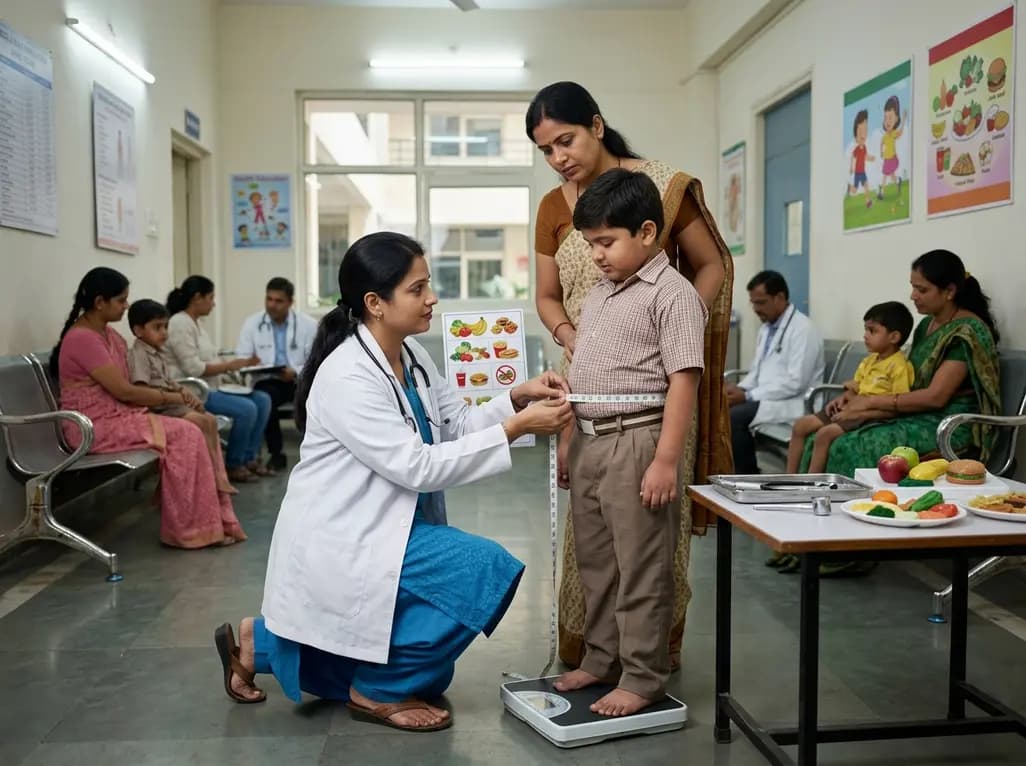
With World Obesity Atlas data warning that over 41 million Indian children are overweight or obese, ICMR and NIN have unveiled a 10-point policy roadmap. The initiative calls for mandatory front-of-pack labeling, HFSS taxes, strict marketing bans, and healthier school environments to curb non-communicable diseases.
Today
