.webp&w=384&q=75)

Loading, please wait...
Loading, please wait...
Understanding youth mental health remains a vital priority for healthcare providers globally, particularly in resource-constrained environments affected by socioeconomic instability and post-pandemic disruptions. A recent comprehensive epidemiological analysis from the 2022–2023 Mozambique Demographic Health Survey assessed 8,154 youth participants aged 15 to 24 years. The findings reveal critical insights into the burden of psychiatric morbidity, showing identical 7.5% prevalence rates for major depressive disorder and generalized anxiety disorder. However, an overwhelming majority of symptomatic individuals did not access formal psychological support.
Epidemiological surveillance offers vital baseline metrics for public health specialists and primary care clinicians. In this national cohort, investigators measured depressive symptoms using the Patient Health Questionnaire-9 and evaluated generalized anxiety through the Generalized Anxiety Disorder-7 tool. Consequently, both major depressive disorder and generalized anxiety disorder exhibited a parallel prevalence of 7.5% across the sampled demographic. Furthermore, these clinical conditions demonstrated substantial co-occurrence among vulnerable subgroups. Notably, the data highlighted that despite substantial distress, overall treatment-seeking remained strikingly deficient across the entire cohort. Specifically, only 9.3% of affected young individuals sought any form of help for their psychiatric symptoms. When youth did pursue assistance, they overwhelmingly turned to informal networks such as family members and close peers rather than clinical providers. Therefore, these findings emphasize that psychological morbidity often remains hidden in community settings. Primary care physicians must therefore maintain vigilant screening protocols during routine adolescent consultations to capture unvoiced emotional distress before secondary psychosocial impairments develop.
Sociodemographic determinants strongly influence both clinical vulnerability and subsequent health behaviors. Multivariate logistic regression models revealed distinct gender differences across symptom presentation and service engagement. Specifically, female participants faced significantly higher odds of experiencing both major depressive disorder and generalized anxiety disorder compared to their male counterparts. However, young women demonstrated significantly lower odds of initiating help-seeking behaviors. Furthermore, economic stability and social structures played defining roles in psychiatric vulnerability. Unemployment, reduced household wealth, and single marital status correlated consistently with elevated odds of developing affective disorders. In addition, these identical socioeconomic disadvantages significantly reduced the probability of seeking supportive intervention. Conversely, higher educational attainment presented a complex dynamic. While advanced education increased the likelihood of reporting anxiety symptoms, it simultaneously boosted positive help-seeking actions. Consequently, healthcare systems must recognize that structural poverty, gender disadvantage, and social isolation collectively amplify psychological vulnerability while creating formidable barriers to clinical care.
Geographic disparities profoundly shape health outcomes, particularly in areas experiencing prolonged armed conflict and civil unrest. The national survey documented marked regional variations in depressive and anxiety morbidity across Mozambique. Most notably, provinces burdened by ongoing internal conflict—such as Cabo Delgado, Nampula, and Zambezia—demonstrated the highest prevalence rates of both major depressive disorder and generalized anxiety disorder. Chronic exposure to violence, forced displacement, loss of community infrastructure, and profound personal insecurity create severe psychological trauma. Consequently, youth residing in conflict zones endure compounded stressors that systematically degrade mental well-being. Furthermore, the destruction of local healthcare facilities in these regions leaves young people with virtually no access to professional psychiatric services. Because conflict disrupts protective family and social networks, affected youth frequently experience profound isolation alongside acute emotional distress. Therefore, clinicians and public health planners must prioritize trauma-informed community interventions and mobile mental health units to reach young populations trapped in conflict-affected environments.
The stark disparity between psychiatric morbidity and actual service utilization represents a formidable public health challenge across low-resource settings. With fewer than one in ten symptomatic youths seeking assistance, the treatment gap exceeds ninety percent. Importantly, heavy reliance on informal support networks demonstrates that young people often avoid formal healthcare infrastructure entirely. Fear of social stigma, cultural misconceptions regarding mental illness, lack of financial resources, and scarce adolescent-friendly clinics severely impede formal care engagement. Moreover, primary care facilities frequently lack dedicated psychiatric professionals, leaving general practitioners to manage complex behavioral presentations. To bridge this divide, healthcare leaders must integrate mental health screening directly into routine primary care and adolescent reproductive health visits. In addition, training community health workers to recognize depressive and anxiety symptoms can demystify psychiatric care. By establishing welcoming, confidential, and destigmatized entry points, health systems can empower vulnerable youth to seek professional clinical guidance promptly.
Healthcare professionals caring for young adults must adopt proactive, multi-tiered strategies to mitigate mental health disparities effectively. First, clinicians should implement brief, validated screening tools such as the PHQ-9 and GAD-7 within general outpatient clinics and school-based health programs. Routine screening identifies hidden psychological distress early, thereby preventing symptom chronicity. Second, physicians must actively address the gender and socioeconomic disparities identified in epidemiological studies. Clinicians should provide targeted psychoeducation to young women and economically disadvantaged patients, reassuring them about confidentiality and treatment efficacy. Third, healthcare systems should foster task-sharing models where trained non-specialists deliver evidence-based psychological interventions, such as cognitive-behavioral counseling and problem-solving therapy. Furthermore, medical practitioners must collaborate with schools, community centers, and digital health platforms to promote mental health literacy. Consequently, combining proactive clinical screening with robust community-based outreach establishes a sustainable continuum of care that protects vulnerable youth across diverse socioeconomic settings.
According to the national survey of over 8,000 participants aged 15 to 24 years, the prevalence of major depressive disorder is 7.5%, and generalized anxiety disorder is also 7.5%. Both conditions represent substantial public health burdens among youth in post-pandemic, conflict-affected settings.
Only 9.3% of affected youth sought help, primarily from family and friends. Major barriers include pervasive social stigma, limited mental health literacy, economic hardships, lack of accessible adolescent-friendly clinics, and scarcity of trained mental health professionals in primary care facilities.
Armed conflict and displacement in regions like Cabo Delgado drastically elevate depression and anxiety rates through persistent trauma and insecurity. Concurrently, conflict dismantles healthcare infrastructure and social support networks, severely restricting young people from accessing professional psychiatric care and counseling services.
Disclaimer: This content is for informational and educational purposes only. It is not intended to be a substitute for professional medical advice, diagnosis, or treatment. Always seek the advice of your physician or other qualified health provider with any questions you may have regarding a medical condition. Refer to the latest local and national guidelines for clinical practice.
References

Read summarized clinical updates, watch expert medical content, and earn CME certifications right from your smartphone.
Open your smartphone camera to scan and install.





A nationwide survey among Mozambican youth reveals a 7.5% prevalence for both major depressive disorder and generalized anxiety disorder, yet only 9.3% sought help. Conflict-affected regions and socioeconomic vulnerabilities significantly heighten risk while reducing service utilization.
last month
A nationwide Korean cohort study of 265,610 individuals reveals that the link between benzodiazepine use and dementia attenuates after adjusting for comorbidity, with no accelerated progression to severe dementia.
Today
Integrating adult genetic services into reproductive and pregnancy care substantially alters clinical management. A study reveals that diagnostic genetic evaluations directly inform maternal, fetal, and neonatal care in nearly 57% of tested patients, highlighting the value of preconception and antenatal genomics.
Today

A landmark systematic review and meta-analysis establishes age-specific normative reference values for pediatric pulse wave velocity, revealing a nonlinear trajectory of arterial stiffness from early childhood through adolescence.
Today
A recent scoping review highlights the efficacy, usability, and patient satisfaction of virtual reality pain management for chronic musculoskeletal pain, emphasizing psychotherapy-based VR protocols.
Today
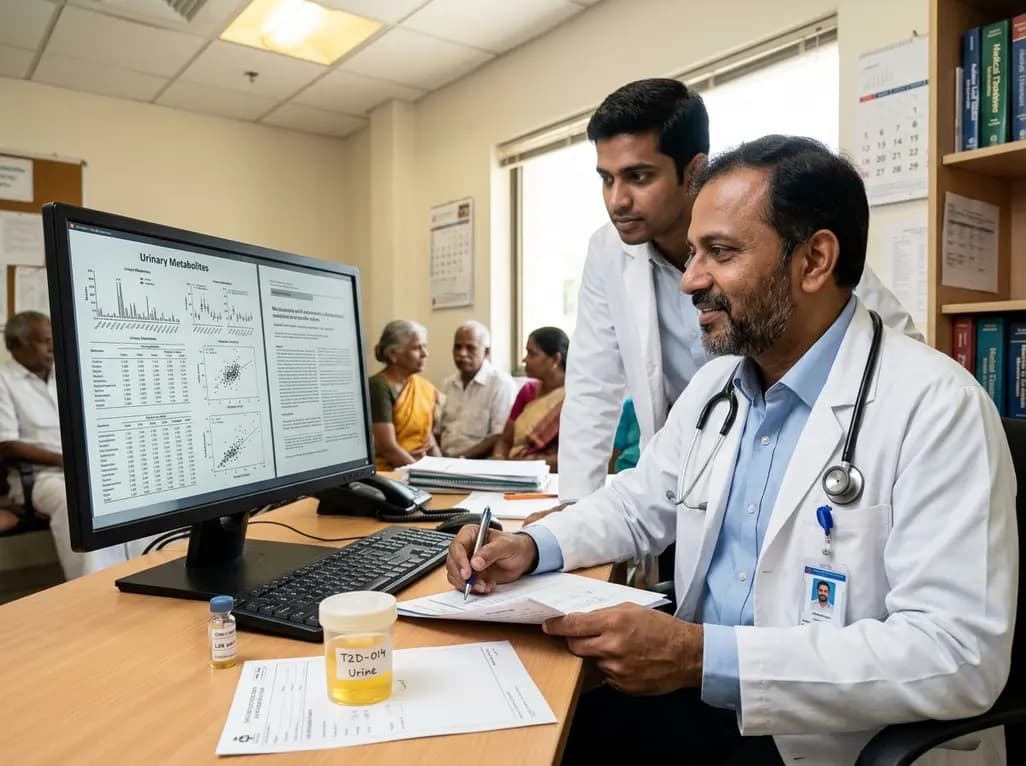
A landmark cross-sectional study in Asian adults with type 2 diabetes identifies novel urinary metabolites linked to mild cognitive impairment. Elevated urinary sucrose and altered metabolites highlight non-invasive pathways for early cognitive risk stratification and targeted metabolic management.
Today
