.webp&w=384&q=75)

Loading, please wait...
Loading, please wait...
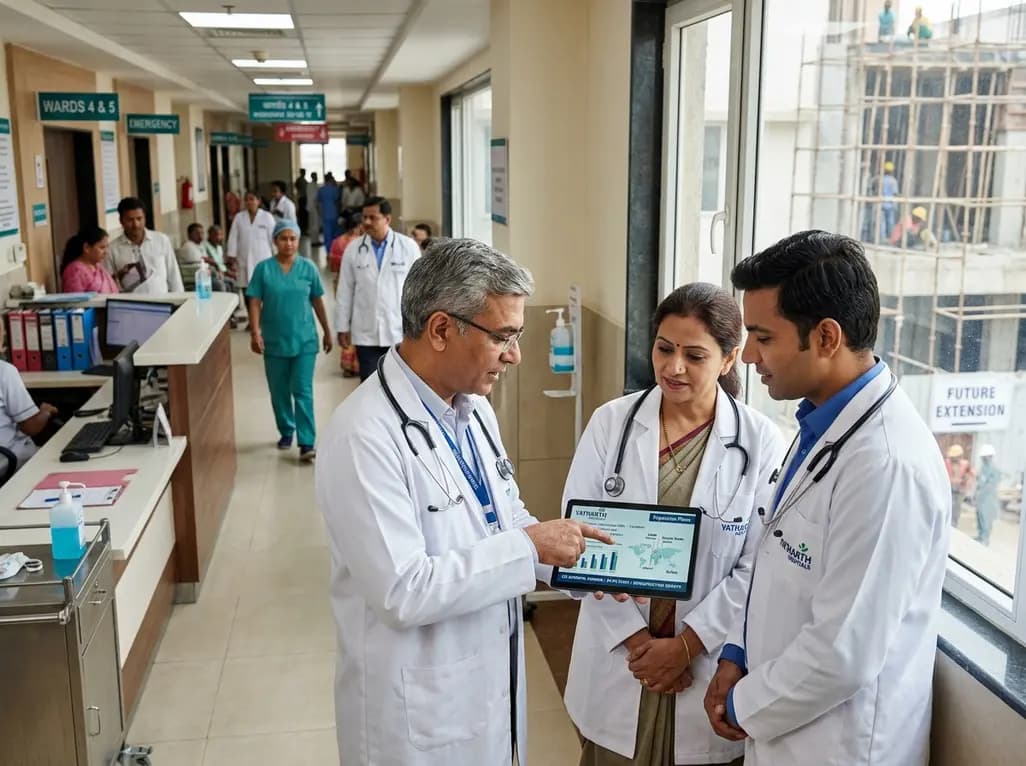
Global private equity firm Advent International has formally approached the Competition Commission of India for regulatory approval. Specifically, the investor seeks to acquire a 24.9 percent minority stake in Yatharth Hospital and Trauma Care Services Limited. This landmark Yatharth Hospitals investment involves a primary capital infusion of approximately Rs 3,150 crore. Furthermore, Advent is executing this transaction through its Cyprus-based investment vehicle, Rasmalai Limited. Consequently, the partnership represents one of the largest capital infusions into the Indian hospital delivery sector this year. In addition, the founding promoter family will retain active management alongside an experienced medical leadership team. Currently, the hospital chain operates multiple multi-speciality tertiary care facilities across North India. Therefore, the fresh primary equity will directly strengthen balance sheet resilience and support operational expansion. Meanwhile, Advent brings comprehensive international experience across hospital systems and life sciences networks. As a result, this collaboration positions the hospital network for disciplined, long-term regional development. Moreover, the transaction preserves local clinical autonomy while adopting international operational standards. Ultimately, the deal demonstrates sustained institutional investor confidence in high-quality Indian healthcare platforms. Additionally, both parties anticipate completing regulatory procedures smoothly over the coming weeks.
The Competition Commission of India serves as the apex fair trade regulator. Under the Competition Act of 2002, the regulatory body evaluates major corporate combinations to protect market competition. In this formal submission, Rasmalai Limited and Yatharth Hospitals submitted comprehensive statutory notices. Specifically, both entities confirmed that the proposed equity acquisition will cause no appreciable adverse effect on domestic market competition. The parties formally identified the relevant commercial segment as the retail sale of pharmaceutical products in India. However, hospital operations also fall within antitrust review boundaries because patient access remains critical. Regulators evaluate whether substantial capital consolidation creates regional monopolies or diminishes consumer choice. Therefore, thorough legal review guarantees transparent pricing mechanisms and fair patient choices across regional healthcare clusters. Additionally, institutional transactions must satisfy statutory guidelines regarding cross-holdings in competing pharmaceutical or hospital enterprises. Consequently, the clear regulatory filing minimizes procedural delays and supports prompt administrative clearance. Furthermore, statutory transparency establishes confidence among public shareholders and clinicians alike. In conclusion, this regulatory oversight assures stakeholders that patient welfare and fair market practices remain fully protected. Thus, the transaction reflects mature compliance standards within India's evolving corporate medical sector.
The substantial capital injection will dramatically accelerate Yatharth's clinical expansion roadmap. Founded in 2008, the healthcare organization has rapidly expanded its multi-speciality footprint across northern India. Presently, the hospital group manages nine operational multi-speciality hospitals housing approximately 2,800 licensed beds. Moreover, ongoing expansion initiatives will soon push total announced bed capacity beyond 3,250 beds. Therefore, this strategic capital deployment provides essential financing to fulfill these infrastructure goals. In particular, hospital executives plan to use the funds for organic hospital bed additions and targeted acquisitions. Furthermore, consolidating healthcare facilities in high-density tier-two cities addresses significant regional deficits in tertiary medical care. Because tier-two urban centers often lack super-speciality facilities, expanding capacity bridges critical healthcare delivery gaps. Consequently, patients in these regions will access advanced clinical interventions without traveling to distant metropolitan hubs. Additionally, strong institutional backing enables the healthcare system to negotiate favorable procurement terms for medical equipment. Ultimately, this capital infusion enhances operational efficiencies and solidifies the hospital provider's regional standing. Thus, the expansion creates modern healthcare ecosystems that serve rapidly growing patient populations with excellence. In summary, substantial capital unlocks transformative opportunities for multi-regional healthcare development.
Substantial equity investment directly influences hospital infrastructure, advanced technologies, and daily bedside patient care. Specifically, private equity infusions provide tertiary hospitals with capital to upgrade critical care units. For instance, hospital leadership can acquire modern robotic surgery consoles, digital catheterization laboratories, and linear accelerators. Consequently, clinical specialists gain access to sophisticated diagnostic instruments that improve procedural accuracy. Furthermore, enhanced financial stability supports the recruitment of experienced super-specialists across diverse medical disciplines. In addition, institutions can standardize evidence-based clinical protocols, ensuring uniform patient outcomes across all units. Meanwhile, patients benefit from shorter waiting times, reduced infection risks, and comprehensive trauma care. Therefore, expanding medical capabilities elevates quality metrics and strengthens community trust in hospital care. Additionally, the availability of comprehensive emergency units prevents avoidable mortalities in critical polytrauma cases. Thus, robust financial backing translates into measurable clinical benefits and enhanced patient survival rates. Moreover, advanced telemetry and diagnostic systems enhance continuous bedside patient monitoring. In conclusion, corporate capital investments play an essential role in uplifting regional clinical healthcare standards. Ultimately, prioritizing clinical excellence ensures sustainable long-term institutional value for all healthcare stakeholders.
Advent's strategic investment in Yatharth Hospitals reflects broader structural trends reshaping the Indian healthcare sector. Over the past decade, institutional private equity investors have poured billions into Indian hospital chains. For example, prominent global funds have backed leading hospital networks across major Indian regions. Consequently, healthcare delivery in India is shifting from fragmented nursing homes toward organized multi-speciality networks. Furthermore, rising disease prevalence across cardiology and oncology drives unprecedented demand for advanced hospital beds. In addition, growing public health insurance penetration enables millions of families to access tertiary care. Therefore, institutional capital provides the necessary scale to build modern, high-volume medical facilities. Meanwhile, private equity sponsors introduce robust corporate governance, streamlined supply chains, and digital health systems. Thus, institutional capital professionalizes hospital management without compromising core clinical ethics. However, healthcare providers must balance commercial growth with compassionate, affordable patient care. Additionally, continuous clinical audits ensure that treatment standards align with established international guidelines. Ultimately, well-structured partnerships expand access to quality tertiary medical care across emerging cities. In summary, private equity remains an indispensable catalyst for India's expanding healthcare infrastructure. Clearly, this ongoing institutional influx strengthens long-term medical development.
Q1: What are the key details of Advent International's proposed acquisition in Yatharth Hospitals?
Advent International has proposed acquiring a 24.9 percent minority stake in Yatharth Hospital and Trauma Care Services Limited through Rasmalai Limited, its Cyprus-based investment entity. The definitive agreement involves an investment of Rs 3,150 crore in primary capital. Furthermore, the transaction preserves the founding promoter family as the largest shareholder. Consequently, this capital infusion directly strengthens the hospital provider's balance sheet while funding multi-speciality network expansion across North India.
Q2: Why is approval from the Competition Commission of India necessary for this transaction?
Under the Competition Act of 2002, the Competition Commission of India must review combinations exceeding statutory asset and turnover thresholds to prevent anti-competitive practices. In this case, Rasmalai Limited and Yatharth Hospitals filed a formal notice confirming that the investment will not create any appreciable adverse effect on competition. Specifically, fair trade scrutiny ensures that capital consolidation within healthcare and retail pharmaceutical sectors does not create regional monopolies or restrict patient access.
Q3: How will this capital infusion impact Yatharth Hospitals' clinical infrastructure and bed capacity?
Yatharth Hospitals currently operates nine multi-speciality hospitals with approximately 2,800 beds and an announced capacity of 3,250 beds. Therefore, deploying the Rs 3,150 crore capital will support ongoing brownfield and greenfield facility expansions. Furthermore, the hospital operator plans to modernize diagnostic equipment, expand critical care units, and introduce advanced robotic surgery platforms. Consequently, enhanced infrastructure will broaden patient access to advanced tertiary and quaternary medical care across high-demand regions.
Disclaimer: This content is for informational and educational purposes only. It does not constitute medical advice or replace professional judgment. Refer to the latest local and national guidelines for clinical practice.
References

Read summarized clinical updates, watch expert medical content, and earn CME certifications right from your smartphone.
Open your smartphone camera to scan and install.





Advent International has approached the Competition Commission of India to acquire a 24.9 percent minority stake in Yatharth Hospitals for Rs 3,150 crore. The strategic investment will fund hospital infrastructure expansion, bolster clinical capabilities, and enhance healthcare access across North India.
Today
According to WHO data, average lifespan reached 73.3 years in 2023, recovering from pandemic lows. However, healthy life expectancy lags at 62.8 years due to surging noncommunicable conditions like cardiovascular disease and dementia, demanding proactive primary screening and sustained chronic care.
Today
A nationwide South Korean study shows underreporting of smoking among women dropped from 57.4% to 36.4% between 2008 and 2021. However, over one-third of female smokers still conceal their habit, highlighting the critical role of cotinine verification in clinical risk assessment.
Today
Medical robotics is transitioning beyond operative suites into diagnostics, cardiology, and endocrinology. Explore how innovations in tele-robotics, AI integration, and nanomedicine are overcoming geographical barriers and transforming precision healthcare delivery across India's evolving disease landscape.
Today
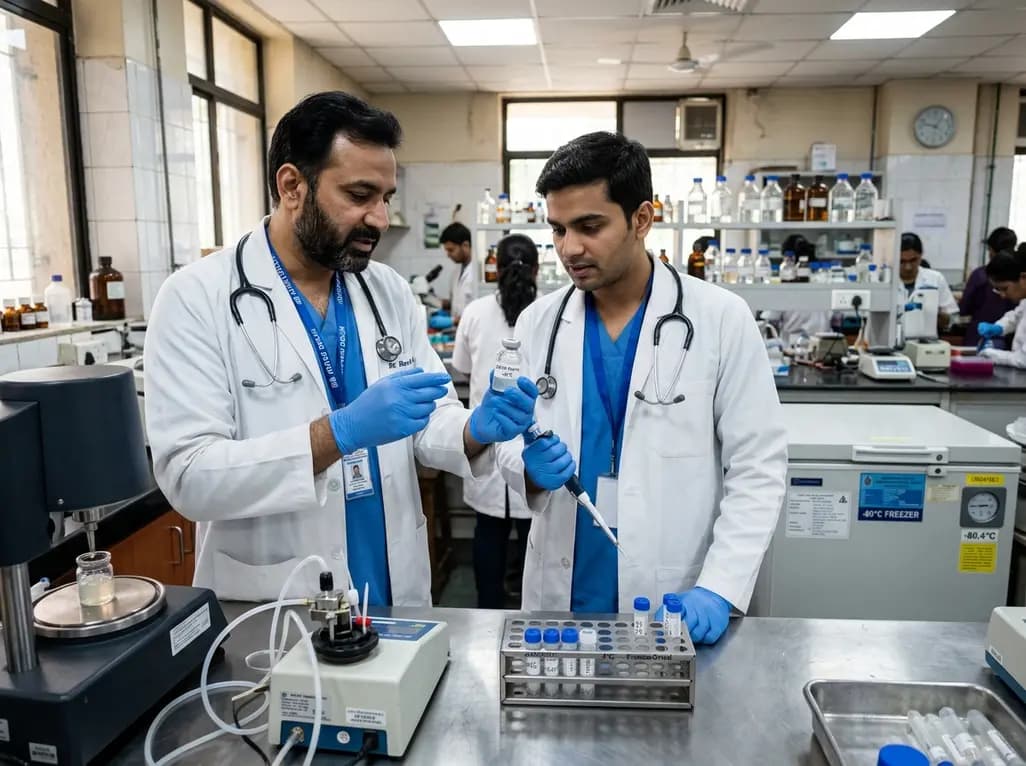
A new study evaluates the rheological stability of decellularized peripheral nerve matrix hydrogels under varied storage conditions. Findings show -80°C storage and freeze-drying preserve gelation kinetics and mechanical stiffness, offering key insights for shipping and translational clinical applications.
Today

A qualitative meta-synthesis highlights the complex interplay between gender dysphoria, minority stress, and eating disorders in transgender and gender-diverse individuals. Clinicians must recognize these distinct drivers to offer supportive, gender-affirming, and interdisciplinary eating disorder care.
Today
