.webp&w=384&q=75)

Loading, please wait...
Loading, please wait...

Historically, the path for women in surgical leadership has been marked by systemic barriers and evolving professional standards. However, recent data highlights the impressive academic and professional profiles of women who successfully reach the position of surgical chair. On average, these leaders achieve their roles approximately 18.5 years after completing their residency training. This timeline underscores the significant dedication and persistence required to ascend to the highest ranks of academic surgery.
Research indicates that specialized training is almost universal among this cohort. Specifically, 96% of women surgical chairs pursued fellowship training across various specialties. Among these, surgical oncology emerged as the most frequent subspecialty, accounting for over a quarter of the leaders. Furthermore, nearly half of these chairs hold additional advanced degrees such as an MBA, MPH, or MS. These qualifications likely provide the administrative and public health expertise necessary for managing complex surgical departments effectively.
The academic impact of these leaders is profound and serves as a benchmark for future aspirants. Notably, women surgical chairs maintain high scholarly productivity, with a mean of 208 publications and over 11,000 citations. Their academic influence is further evidenced by a robust mean H-index of 56.7. This level of achievement demonstrates that academic excellence remains a critical pillar for leadership success in the surgical field. Moreover, many of these women spent an average of eight years at their institutions before their appointment, suggesting that institutional loyalty and internal growth are common pathways to leadership.
Despite these achievements, significant barriers to equity remain in the surgical community. Mentorship and institutional support continue to be vital components for overcoming these hurdles. Ultimately, providing a clear framework of the successful pathways taken by current leaders can inspire and guide the next generation of women surgeons. By understanding these profiles, institutions can better support diverse leadership and foster an environment of growth for all surgeons.
Surgical oncology is the most common specialty among women surgical chairs, representing approximately 26.1% of the cohort. Other chairs come from a diverse range of 13 different surgical specialties.
On average, women surgical chairs reach their leadership positions 18.5 years after completing their residency. They also typically spend about 8.1 years at their specific institution before being appointed as chair.
Disclaimer: This content is for informational and educational purposes only. It does not constitute medical advice or a substitute for professional healthcare consultation. Refer to the latest local and national guidelines for clinical practice.
References
Aldrete AS et al. What Does the Career of a Woman Surgical Chair Look Like? Academic and Professional Profiles of Women in Surgical Leadership. Am Surg. 2026 Apr 11. doi: 10.1177/00031348261441667. PMID: 41964391.
Fayanju O, et al. Racial, Ethnic, and Gender Diversity Among Academic Surgical Leaders in the US. JAMA Surg. 2023;158(12):1260-1268.
Antonoff MB, Backhus L. Women Build Bonds and Break Ceilings to Redefine Leadership in Cardiothoracic Surgery. American College of Surgeons. 2024.

Read summarized clinical updates, watch expert medical content, and earn CME certifications right from your smartphone.
Open your smartphone camera to scan and install.





A descriptive analysis of the educational and academic profiles of women surgical chairs in the U.S., highlighting their paths to leadership roles....
6 months ago

Explore vital recurrent stroke predictors in lacunar stroke patients managed with intensive blood pressure lowering. This analysis examines trial findings from SPS3 to uncover residual vascular risks, metabolic factors, and targeted secondary prevention strategies for high-risk neurological patients.
Today
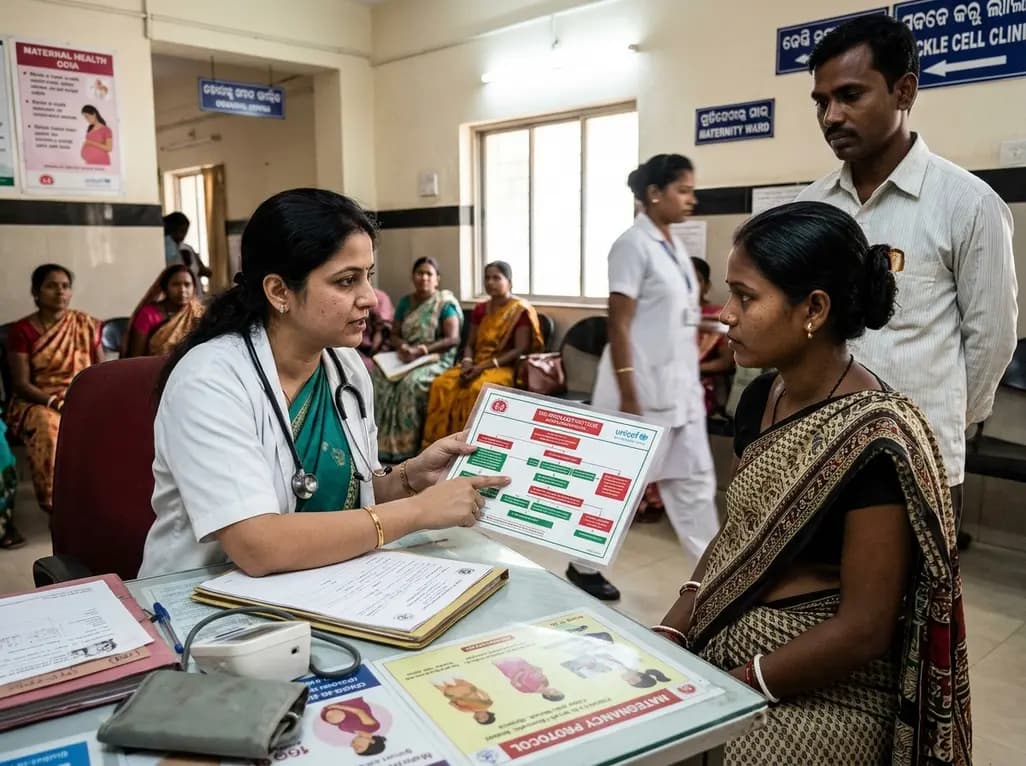
Odisha has established India's first state-level clinical protocol specifically tailored for pregnant women with sickle cell disease. Developed with NHM and UNICEF, the framework provides structured antenatal screening, crisis mitigation, standardized referral pathways, and specialized interdisciplinary care.
Today

India is advancing preventive healthcare by integrating genomics, artificial intelligence, and quantum technologies. With the SANGAM programme sequencing one million Indian genomes, clinicians can unlock personalized therapies, detect cardiometabolic risks early, and curb the burden of diabetes and heart disease.
Today

A randomized controlled trial demonstrates that an eight-week dual-task training intervention significantly improves static and dynamic postural control over standard balance exercises in individuals with chronic ankle instability, addressing critical neurocognitive deficits during athletic and daily activities.
Today

A retrospective cohort study of 7,716 ICU patients from the MIMIC-IV database demonstrates that Gradient Boosting Decision Trees significantly outperform traditional SOFA scores in predicting in-hospital mortality among patients with sepsis and diabetes, with SHAP analysis providing clinical interpretability.
Today
