.webp&w=384&q=75)

Loading, please wait...
Loading, please wait...

As global populations age, preserving functional autonomy in older adults represents a major clinical priority. The WHO ICOPE framework offers a structured approach to evaluate intrinsic capacity and mitigate age-related disability. However, demographic aging unfolds heterogeneously across varying socioeconomic settings. A comparative investigation evaluated cohort data from Brazil (ELSI-Brasil) and Europe (SHARE). The analysis revealed that functional decline begins a full decade earlier in Brazil than in Europe. Consequently, these findings emphasize that social determinants profoundly influence clinical trajectories. Understanding cross-continental variations enables clinicians to tailor geriatric assessments and interventions effectively.
The World Health Organization developed the Integrated Care for Older People guidelines to transition geriatric medicine from disease-centered management toward functional optimization. Intrinsic capacity encompasses the composite physical and mental attributes an individual relies upon throughout life. It includes five core domains: mobility, vitality, cognition, psychological well-being, and sensory function. When primary care clinicians systematically evaluate these domains, they can detect subtle subclinical deficits before irreversible disability develops.
In high-income nations, robust healthcare systems and social welfare programs buffer older adults against rapid health deterioration. Conversely, in low- and middle-income regions, cumulative socioeconomic disadvantages accelerate physiological decline. The comparative analysis included 4,825 Brazilian and 25,978 European participants. By examining both basic and instrumental activities of daily living, researchers showed that intrinsic capacity domains function differently across diverse socioeconomic environments. Therefore, clinicians must recognize that local infrastructure and social safety nets significantly influence biological aging trajectories.
The most striking finding of the cross-continental study is the significant temporal gap in functional decline. Brazilian older adults experienced functional deterioration ten years earlier than their European counterparts. This accelerated timeline stems from lifetime exposure to chronic comorbidities, lower educational attainment, and limited healthcare access. Consequently, individuals in developing economies frequently develop geriatric vulnerability during middle age.
Moreover, the pathways leading to functional dependence diverged noticeably between cohorts. In Europe, structured social and healthcare support helps seniors maintain functional independence despite chronic conditions. In Brazil, however, deficits in intrinsic capacity translated more directly into disability. These observations demonstrate that socioeconomic context strongly modulates how biological vulnerabilities affect daily performance. For clinicians managing diverse populations, these findings underscore the necessity of initiating functional evaluations well before standard retirement thresholds.
Granular evaluation of physical intrinsic capacity demonstrated distinct risk profiles across the two cohorts. Within the mobility domain, handgrip strength served as a powerful protective factor in Europe. In contrast, reduced walking speed was a unique, independent risk factor for basic daily living impairment in Brazil, conferring a sixteen percent higher risk. Walking speed integrates neurological, cardiovascular, and musculoskeletal functions, serving as a sensitive marker of vulnerability in resource-limited settings.
Vitality and sensory function also displayed notable geographic divergence. Unintentional weight loss, signaling compromised vitality and malnutrition, increased basic daily living disability risk by eighteen percent in Europe. Meanwhile, sensory impairments produced divergent effects. Hearing impairment was a stronger predictor of instrumental daily living impairment in Brazil, conferring an odds ratio of 1.27. Conversely, visual impairment was statistically significant only in Europe, associated with a thirty-two percent increased risk. These variations likely reflect differential access to corrective devices, occupational history, and environmental demands.
Mental and emotional faculties strongly influence daily autonomy, though their impacts vary by setting. In the cognitive domain, low self-perceived memory demonstrated consistent risk for instrumental daily living disability across both cohorts. Brazilian participants showed an odds ratio of 1.22, while European participants had an odds ratio of 1.23. This consistency confirms that subjective memory complaints represent a universal indicator of emerging functional loss.
In contrast, psychological determinants displayed marked continental differences. Depressive symptoms posed a higher independent risk in Europe, with odds ratios ranging from 1.67 to 1.71, compared to 1.26 to 1.53 in Brazil. However, poor self-rated health was a far more potent risk factor in Brazil, conferring an odds ratio of 2.72 for basic daily living disability compared to 2.07 in Europe. In developing settings, self-rated health captures broad socioeconomic adversity, unmanaged pain, and healthcare barriers. Clinicians must therefore assess subjective health perceptions alongside standard psychometric tools.
The evidence that functional decline begins a decade earlier in transitional economies requires a shift in primary care workflows. General practitioners and internists should incorporate multidimensional intrinsic capacity screening into routine checkups. Clinicians cannot wait until patients reach age sixty-five to evaluate functional reserves. Instead, screening for gait speed, self-rated health, and subjective cognitive changes should commence in midlife.
Furthermore, targeted interventions must promptly address specific domain deficits. For mobility limitations, structured resistance training and balance exercises preserve motor performance and prevent falls. For sensory deficits, community hearing and vision screenings can halt functional loss before disability worsens. Managing psychological distress and poor self-rated health requires collaborative models integrating medical care with community resources. Through proactive care, clinicians can sustain intrinsic capacity and prolong independence.
Public health leaders must utilize cross-continental evidence to build equitable healthy aging strategies. The United Nations Decade of Healthy Ageing emphasizes that longevity without functional capability imposes substantial burdens on individuals and health systems. Because socioeconomic inequalities accelerate functional decline, health policies must integrate social welfare with clinical services. Subsidizing sensory aids, ensuring nutritional security, and expanding community rehabilitation centers represent cost-effective investments.
In addition, digital screening platforms and trained community health workers can extend geriatric assessments to underserved rural populations. Early identification of vulnerable adults allows timely implementation of preventive measures. Ultimately, eliminating the ten-year gap in functional performance requires concerted efforts targeting social determinants of health alongside clinical care. Adapting global guidelines to local realities ensures that healthy aging becomes accessible across all populations.
The WHO ICOPE framework provides evidence-based guidelines for primary care providers to assess and optimize intrinsic capacity in older adults. By screening five core domains—mobility, vitality, cognition, psychological health, and sensory function—the framework helps prevent functional disability, supports caregivers, and promotes equitable healthy aging worldwide.
Functional decline begins earlier in Brazil due to lifelong cumulative socioeconomic disparities, higher burdens of unmanaged chronic illness, and limited healthcare access. These systemic factors deplete physiological reserves prematurely, causing basic and instrumental daily living impairments to emerge ten years earlier than in higher-income European populations.
Primary care physicians should initiate functional screening during midlife rather than waiting for advanced age. Clinicians should evaluate walking speed, grip strength, sensory capacity, self-perceived memory, and self-rated health. Detecting early deficits enables prompt implementation of exercise, nutritional support, sensory correction, and psychosocial interventions to preserve functional autonomy.
Disclaimer: This content is for informational and educational purposes only. It is not intended to be a substitute for professional medical advice, diagnosis, or treatment. Always seek the advice of your physician or other qualified health provider with any questions you may have regarding a medical condition. Refer to the latest local and national guidelines for clinical practice.
References

Read summarized clinical updates, watch expert medical content, and earn CME certifications right from your smartphone.
Open your smartphone camera to scan and install.





A comparative analysis using the WHO ICOPE framework reveals that functional decline begins a decade earlier in Brazil than Europe, driven by socioeconomic disparities in intrinsic capacity domains like mobility, vitality, and sensory function. Clinical strategies must be tailored to regional realities.
last month

Ceftriaxone therapy can lead to biliary sludge and gallstone formation due to calcium-ceftriaxone precipitation. A recent cohort study shows that the noninvasive Fibrosis-4 (FIB-4) index, alongside treatment duration, independently predicts lithogenesis, enabling proactive risk stratification.
Today

A multiparametric MRI approach combining quantitative T2 shading, apparent diffusion coefficient (ADC) measurements, and morphological signs provides superior diagnostic accuracy over subjective evaluation to differentiate ovarian endometriomas from benign hemorrhagic cysts.
Today

A landmark case report reveals a donor heart beating for a century in a 63-year-old recipient, challenging conventional age limits in cardiac transplantation and offering critical lessons on organ longevity, donor selection, and long-term graft survival.
Today
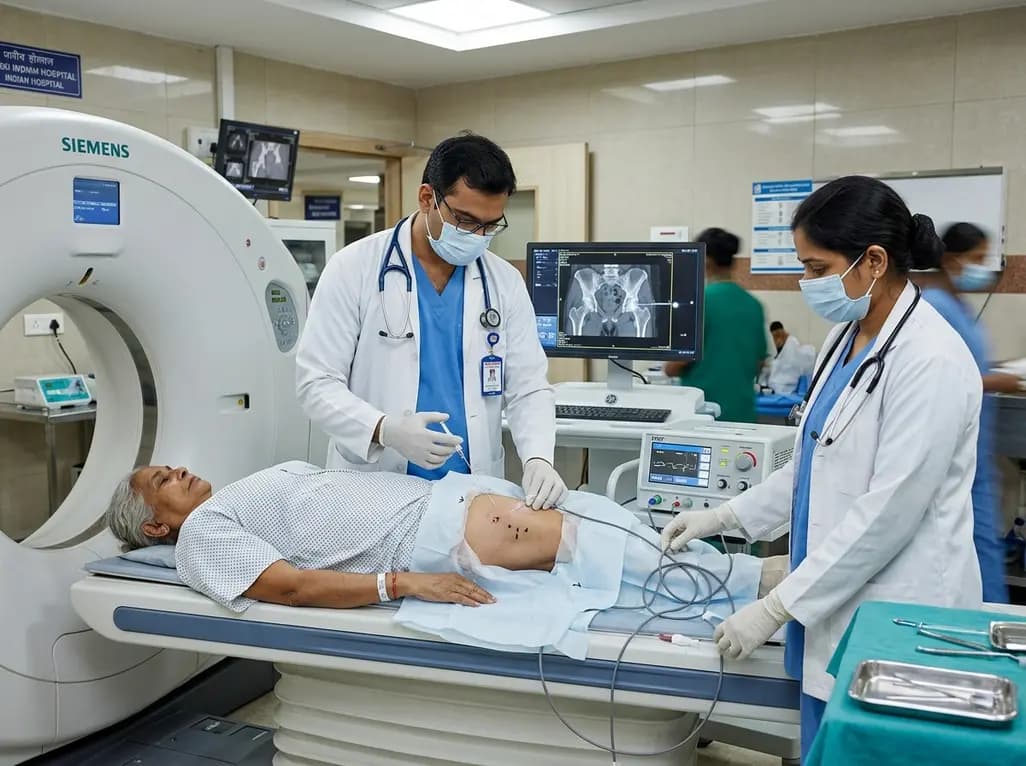
CT-guided pulsed radiofrequency ablation of the obturator nerve delivers durable pain relief up to 12 months in mild-to-moderate hip osteoarthritis, while offering a safe short-term palliative bridge for severe grade 4 disease without procedural complications.
Today

New research reveals that M1 macrophage-derived exosomes aggravate diabetic nephropathy by transferring WTAP to stabilize S1PR2 mRNA. Silencing WTAP in these vesicles attenuates endothelial injury and renal fibrosis, pointing toward innovative nanomedicine therapies.
Yesterday
