.webp&w=384&q=75)

Loading, please wait...
Loading, please wait...

End-stage heart failure continues to impose a severe global disease burden. While medical therapies and mechanical circulatory support devices offer palliative benefits, heart transplantation remains the definitive therapeutic gold standard. However, the chronic scarcity of suitable donor organs restricts transplantation access for thousands of critically ill patients worldwide. Clinicians have traditionally enforced strict chronologic age limits to protect post-transplant graft survival. Nevertheless, groundbreaking clinical reports are challenging long-held assumptions regarding cardiac biological senescence. A remarkable updated case report highlights a donor heart that has now functioned continuously for an entire century. The organ currently supports a 63-year-old recipient who demonstrates excellent clinical stability. Consequently, this extraordinary milestone provides profound insights into older donor heart transplantation, organ preservation, and graft durability.
In 2017, transplant cardiologists documented a unique cardiac allograft that had demonstrated exceptional resilience over several decades. The updated clinical follow-up confirms that this donor heart has officially crossed the 100-year mark of continuous physiological function. Remarkably, the recipient received this organ decades ago and continues to maintain active, independent daily living. Diagnostic evaluations reveal preserved biventricular systolic function, normal fill pressures, and an absence of symptomatic heart failure. Furthermore, serial surveillance examinations show no evidence of accelerated cardiac allograft vasculopathy or significant mechanical deterioration. Transplant specialists consider this specific graft to be the oldest surviving donor heart recorded in medical literature. Therefore, the case provides unequivocal proof that an allograft can surpass typical human life expectancy under optimal conditions. It also underscores that chronologic age does not automatically mirror myocardial biological decline.
Historically, organ procurement organizations and transplant committees avoided donor hearts from individuals older than 50 or 55 years. Transplant teams feared that age-related vascular stiffness, subclinical coronary artery disease, and myocardial fibrosis would trigger early graft failure. However, persistent donor shortages and escalating waitlist mortality have prompted an urgent re-examination of these rigid paradigms. Clinicians are now shifting focus from simple chronologic donor age toward meticulous physiologic assessment. Comprehensive screening protocols utilize invasive coronary angiography, advanced echocardiography, and direct functional inspection during organ procurement. Consequently, transplant centers can successfully identify resilient allografts from older donors that possess normal diastolic properties and pristine coronary architecture. When centers select these organs carefully, older grafts can successfully rescue patients who would otherwise die awaiting ideal donors.
Recent international registry analyses offer valuable nuance regarding the real-world performance of older allografts. Large multicenter cohort evaluations indicate that older donor heart transplantation achieves acceptable medium-term survival rates when teams match donors prudently. Nevertheless, registries highlight important interactive risk profiles. Specifically, pairing an older donor allograft with an elderly, fragile recipient with multiorgan compromise correlates with higher one-year mortality. In contrast, older donor hearts transplanted into younger or physiologically stable recipients demonstrate durable long-term hemodynamic function and functional capacity. Moreover, modern immunosuppressive regimens have substantially decreased acute cellular and antibody-mediated rejection episodes. By mitigating excessive immunologic damage, clinicians can preserve the microvascular integrity of older organs over prolonged periods, enabling extended functional graft lifespans.
Understanding how a cardiac allograft sustains mechanical performance for a century requires an examination of underlying myocardial physiology. Normal aging processes induce progressive cardiomyocyte hypertrophy, interstitial collagen deposition, and diminished microvascular capillary density. However, cardiac senescence exhibits profound heterogeneity among individuals due to distinct genetic backgrounds and environmental exposures. Some hearts demonstrate intrinsic cellular protective mechanisms, such as robust mitochondrial quality control, efficient autophagy, and low basal inflammation. Additionally, transplanting a healthy heart into an appropriate neurohormonal and hemodynamic environment shields the organ from toxic systemic stressors. Rigorous post-transplant control of arterial blood pressure, strict glycemic management, and modern statin therapy prevent the progression of de novo atherosclerosis. Thus, disciplined medical care can preserve donor organ structural integrity across multiple decades.
The lessons derived from this century-old allograft carry vital implications for contemporary cardiothoracic surgical practice. Across many regions, including South Asia, transplant waiting lists expand relentlessly while donor pools remain severely constrained. To bridge this gap, modern programs are adopting expanded donor criteria alongside donation after circulatory death protocols. Furthermore, normothermic ex vivo machine perfusion platforms now allow dynamic real-time evaluation of older hearts before implantation. These perfusion platforms assess lactate clearance, coronary vascular resistance, and contractility under physiological temperatures. Consequently, transplant teams can objectively verify allograft viability before committing to implantation. By combining objective functional validation with rigorous post-operative management, surgical teams can safely expand organ acceptance criteria and significantly reduce waitlist mortality.
The primary concern is the elevated risk of pre-existing coronary artery disease, occult myocardial fibrosis, and primary graft dysfunction. Consequently, transplant teams require comprehensive invasive coronary angiography and echocardiography to ensure structural and functional integrity before accepting donor hearts from older individuals.
Older donor age does not substantially increase acute cellular rejection rates compared to younger grafts. However, older allografts possess less cellular reserve to recover from severe immunologic insults. Therefore, clinicians must maintain precise, balanced immunosuppression to prevent rejection while avoiding drug-induced renal or metabolic toxicity.
Normothermic ex vivo machine perfusion systems pump warm, oxygenated blood through the retrieved donor heart. This technology allows clinicians to measure real-time functional parameters, including metabolic lactate clearance and coronary perfusion dynamics. As a result, teams can verify myocardial viability objectively before transplanting higher-risk organs.
Disclaimer: This content is for informational and educational purposes only and should not be taken as medical advice. Refer to the latest local and national guidelines for clinical practice.
References
Evans J et al. Allograft Beating for a Century: An Update on the Oldest Surviving Donor Heart: A Case Report. Transplant Proc. 2026 Sep 26. doi: undefined. PMID: 42800759.
Wang Y, Chen H, Liu X, et al. Increased mortality when combining older donors and recipients in heart transplantation. World J Transplant. 2024;14(2):93821.
Costanzo MR, Dipchand A, Starling R, et al. The International Society of Heart and Lung Transplantation Guidelines for the care of heart transplant recipients. J Heart Lung Transplant. 2010;29(8):914-956.
Ueno T, Correa A, Nayak R, et al. Outcomes Steady as Hearts Donated After Circulatory Death Rise in the US. J Am Coll Cardiol. 2026;88(12):1201-1212.

Read summarized clinical updates, watch expert medical content, and earn CME certifications right from your smartphone.
Open your smartphone camera to scan and install.





A landmark case report reveals a donor heart beating for a century in a 63-year-old recipient, challenging conventional age limits in cardiac transplantation and offering critical lessons on organ longevity, donor selection, and long-term graft survival.
Today
New evidence from the J-ECOH study demonstrates that exclusive and dual use of heated tobacco products significantly increases sleep latency and restless sleep among workers. These findings refute harm reduction claims, highlighting critical sleep health risks relevant to clinical counseling in India.
Today
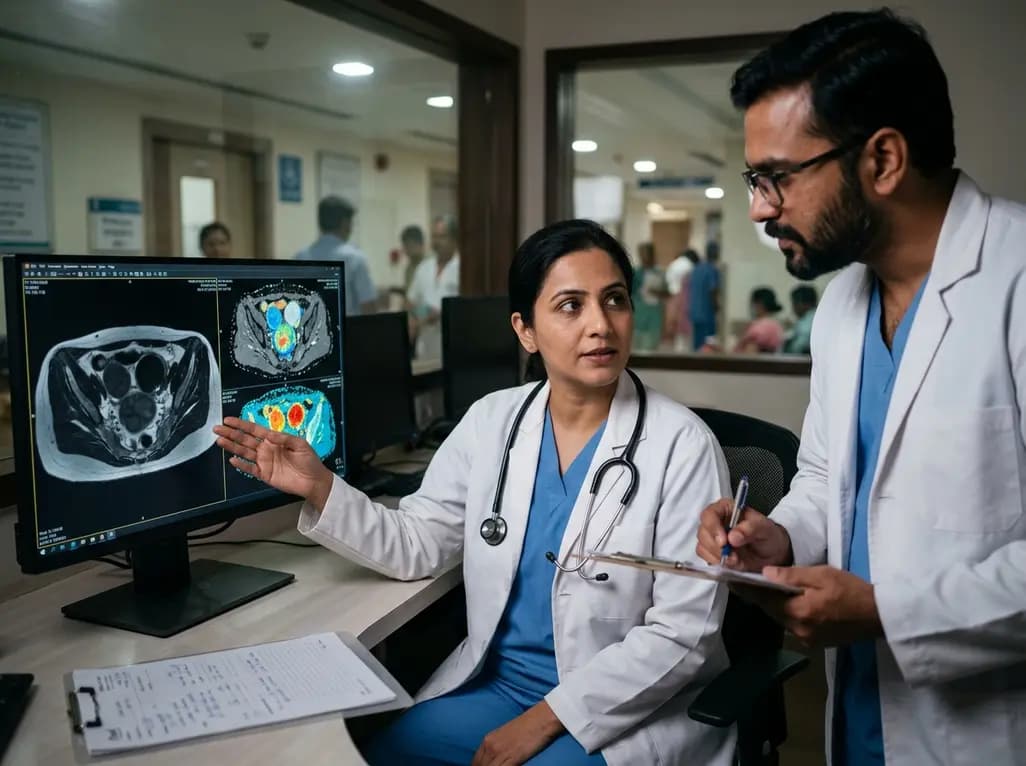
A multiparametric MRI approach combining quantitative T2 shading, apparent diffusion coefficient (ADC) measurements, and morphological signs provides superior diagnostic accuracy over subjective evaluation to differentiate ovarian endometriomas from benign hemorrhagic cysts.
Today
A new randomized crossover trial reveals that a hinged ulnar gutter orthosis significantly improves hand function and weight-bearing tolerance compared to standard volar splints in patients with degenerative triangular fibrocartilage complex lesions, supporting functionally permissive orthotic designs.
Today
New research reveals that M1 macrophage-derived exosomes aggravate diabetic nephropathy by transferring WTAP to stabilize S1PR2 mRNA. Silencing WTAP in these vesicles attenuates endothelial injury and renal fibrosis, pointing toward innovative nanomedicine therapies.
Yesterday
