.webp&w=384&q=75)

Loading, please wait...
Loading, please wait...

Digital health technologies are transforming neurological care across the globe. In recent years, wearables in epilepsy have emerged as promising tools that offer real-time seizure detection and automated alerting. These non-invasive tools monitor physiological parameters such as accelerometry, heart rate variability, and electrodermal activity. Consequently, they provide crucial safety alerts for patients and caregivers during dangerous convulsive episodes. However, successful long-term implementation depends heavily on patient engagement, comfort, and device usability. Clinicians must understand how patients perceive these tools to guide realistic adoption. A systematic evaluation of user perspectives offers vital insights into real-world adherence and device satisfaction.
Wearable seizure detection devices (SDDs) offer significant clinical value in outpatient epilepsy management. Historically, clinicians relied almost exclusively on subjective patient diaries to assess seizure frequency. Unfortunately, patients frequently underreport seizures due to postictal amnesia, nocturnal occurrence, or unawareness. Continuous non-invasive monitoring provides objective data that clinicians can use to optimize anti-seizure medications. Furthermore, these devices provide automated alerts to caregivers when convulsive seizures occur. This rapid notification helps mitigate seizure-related injuries and potentially reduces the risk of sudden unexpected death in epilepsy (SUDEP). Therefore, integrating digital biosensors into home routines represents a meaningful milestone for patient safety. Despite these clear theoretical advantages, technology alone cannot ensure clinical efficacy. Devices must integrate seamlessly into daily routines so that patients wear them consistently. Evaluating user experience is therefore essential for sustainable therapeutic success.
Usability represents the most critical determinant of sustained device usage among patients with epilepsy and their caregivers. Patients universally prioritize hardware that features straightforward setup, intuitive software interfaces, and minimal maintenance. Moreover, battery longevity serves as a decisive practical feature. Users strongly dislike devices that require multiple recharges throughout the day because frequent charging disrupts continuous monitoring. In addition, waterproof or water-resistant construction is vital for uninterrupted wear during personal hygiene activities. When devices require complex pairing or frequent recalibration, users quickly develop operational fatigue. Consequently, device manufacturers must prioritize plug-and-play simplicity to foster high adherence rates. Clinicians should also consider user digital literacy before recommending specific sensor models. By matching device complexity with individual capability, healthcare teams can prevent early device abandonment.
Wearability and physical comfort directly dictate whether an individual will wear a monitor over long durations. Most individuals express a clear preference for wrist-worn or arm-worn devices over chest straps or bulky patches. Because epilepsy management requires long-term vigilance, devices must use lightweight, hypoallergenic, and breathable materials. If a sensor causes skin irritation or excessive sweating, patients inevitably stop wearing it. Furthermore, aesthetic appeal and discretion play substantial psychosocial roles. Many individuals with epilepsy experience social stigma and fear unwanted disclosure of their medical condition. Therefore, designs that closely resemble standard commercial smartwatches or fitness trackers achieve much higher acceptance. When a device appears overly clinical or cumbersome, users feel self-conscious in public or occupational settings. Designing unobtrusive hardware successfully bridges the gap between medical utility and social comfort.
Diagnostic performance remains a central priority for both patients and healthcare providers. Users demand high sensitivity for generalized tonic-clonic seizures to ensure timely emergency intervention. However, high sensitivity frequently generates frequent false-positive alarms during vigorous physical exertion or daily motor tasks. Consequently, repeated false alarms cause severe alarm fatigue, disrupting sleep and creating unnecessary anxiety for families. Conversely, false negatives create a false sense of security, which undermines user trust in digital health tools. While validated algorithms perform reliably for motor seizures, detecting non-motor and focal seizures remains technically challenging. Therefore, continuous algorithmic refinement using multimodal sensors is vital. Clinicians must educate families about current detection limitations so they maintain realistic performance expectations during home monitoring.
Despite significant enthusiasm for digital monitoring, practical barriers frequently restrict widespread clinical adoption. Device acquisition costs and recurring software subscription fees represent major financial obstacles for many families. Furthermore, limited reimbursement from public and private health insurance schemes worsens health disparities in resource-limited settings. Concerns regarding data privacy, cloud security, and personal data ownership also deter prospective users. Nevertheless, proactive recommendations from trusted healthcare professionals significantly enhance patient motivation and confidence. When neurologists actively endorse wearable devices and explain their safety benefits, patients demonstrate substantially greater willingness to invest in the technology. Clinicians must therefore lead educational discussions, address privacy questions, and help patients navigate device selection effectively.
The future of epilepsy monitoring relies on closer collaboration between biomedical engineers, clinical neurologists, and patient advocacy groups. Future hardware must integrate advanced artificial intelligence to deliver individualized seizure detection algorithms tailored to specific patient semiology. Additionally, researchers must conduct longitudinal studies to quantify how long-term wearable use impacts overall quality of life and caregiver stress. Seamless integration of wearable data streams into electronic medical records will also facilitate timely clinical adjustments. Ultimately, addressing financial barriers and refining sensor ergonomics will democratize access to these life-saving technologies. By maintaining a patient-centric focus, the medical community can fully harness digital health to improve safety and autonomy for people with epilepsy.
Wearable seizure detection devices provide continuous monitoring and generate real-time caregiver alerts during convulsive seizures. Consequently, they help prevent physical trauma, reduce caregiver anxiety, provide objective seizure frequency tracking, and potentially lower the risk of sudden unexpected death in epilepsy through timely emergency intervention.
Frequent false alarms trigger significant alarm fatigue and heighten emotional stress for both patients and caregivers. When standard daily activities trigger erroneous alerts, users experience sleep disruptions and frustration. Over time, persistent false alarms degrade trust in device reliability and frequently lead to early discontinuation.
Clinicians can actively discuss validated device options, assess individual patient technical capabilities, and set realistic expectations regarding detection accuracy. Furthermore, healthcare providers can guide patients toward discreet, comfortable designs and assist them in establishing reliable emergency response protocols for real-world home monitoring.
Disclaimer: This content is for informational and educational purposes only. It is not intended as medical advice or as a substitute for professional healthcare consultation, diagnosis, or treatment. Always seek the advice of qualified healthcare professionals with any questions regarding medical conditions or clinical decisions. Refer to the latest local and national guidelines for clinical practice.
References

Read summarized clinical updates, watch expert medical content, and earn CME certifications right from your smartphone.
Open your smartphone camera to scan and install.





Discover essential insights into user preferences, accuracy expectations, and practical barriers regarding wearable seizure detection devices in epilepsy care.
last month
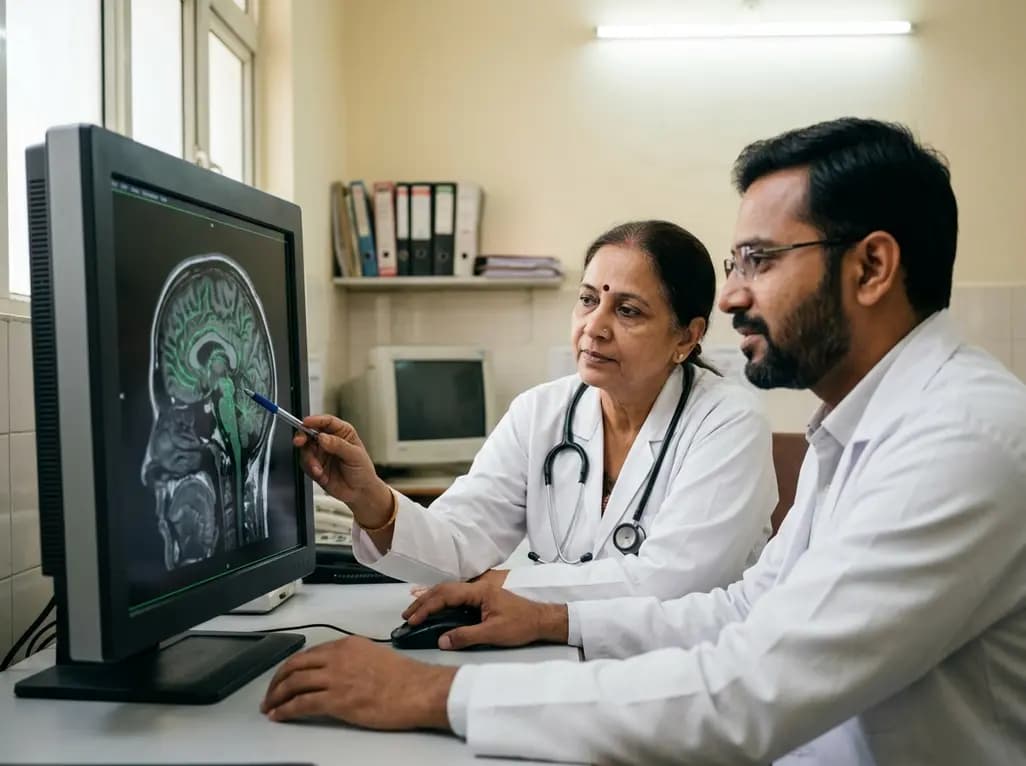
UK Research and Innovation is deploying £80 million across the NHS to trial nine cutting-edge technologies. The initiative features seven-minute brain MRIs, blood biomarker assays, and predictive AI tools, aiming to evaluate 92% of suspected cases within 18 weeks and overcome lengthy diagnostic backlogs.
Today

A mixed-methods study identifies key drivers of PMTCT service utilization among adolescent girls and young women aged 15-24. Highlighting age disparities, PrEP uptake, and systemic barriers, the evidence guides clinicians toward adolescent-responsive, integrated maternal HIV prevention protocols.
Today

PepsiCo and Monster Beverage have challenged the FSSAI ban on the energy drink label in Indian courts. While companies highlight supply disruptions, regulatory actions spotlight severe cardiovascular and metabolic risks associated with excessive caffeine, sugar, and taurine consumption, especially in adolescents.
Today

A narrative review investigates whether the articularis genus muscle functions as an independent anatomical entity or blends with the vastus intermedius. We evaluate its morphology, role in retracting the suprapatellar bursa, and direct clinical significance in anterior knee pain and arthroplasty.
Today

A Bayesian multilevel meta-analysis reveals that aerobic training combined with moderate carbohydrate restriction modestly lowers HbA1c in type 2 diabetes. However, sparse data and very low certainty leave incremental benefits over exercise or diet alone unproven, highlighting the need for individualized care.
Today
