.webp&w=384&q=75)

Loading, please wait...
Loading, please wait...

Managing typical absence seizures presents a chronic therapeutic challenge for neurologists and pediatricians. Patients frequently experience dozens of brief episodes each day, yet they often remain unaware of these fleeting lapses in consciousness. Consequently, traditional patient-reported seizure diaries demonstrate severe inaccuracies. Clinical decisions that depend solely on subjective reporting can inadvertently cause either undertreatment or unnecessary drug toxicity. Routine hospital-based electroencephalography also has limitations because brief twenty-minute recordings frequently fail to capture paroxysmal events occurring during everyday domestic routines. To bridge this critical diagnostic gap, clinicians increasingly explore ambulatory technologies. The integration of wearable EEG absence epilepsy monitoring represents a transformative step forward in neurotherapeutics. By capturing brain dynamics in natural home environments over prolonged periods, wearable sensors provide continuous objective electrophysiological metrics. Clinicians can accurately evaluate therapeutic responses soon after modifying antiseizure medications. Furthermore, automated signal processing algorithms alleviate the immense interpretive burden that long-term continuous recordings usually impose on medical specialists. Recent proof-of-concept research demonstrates that wearable systems successfully guide medication adjustments. In addition, these remote diagnostic platforms facilitate personalized dosing regimens that improve seizure freedom while minimizing adverse pharmacological reactions in complex clinical cohorts.
In a groundbreaking proof-of-concept study, investigators evaluated whether home-based wearable electroencephalography (wEEG) could tailor antiseizure medication regimens. Specifically, researchers prospectively followed nineteen patients, including twelve females, with a median age of twenty-four years over a median duration of five months. Patients wore an unobtrusive wearable EEG device for twelve to twenty-four hours approximately one week after clinicians adjusted their antiseizure medications. Consequently, the median recording duration reached 21.3 hours per session, demonstrating exceptional compliance in ambulatory settings. In this trial, investigators designated three-hertz generalized spike-wave discharges lasting three seconds or longer as surrogate markers for typical absence seizures. Following initial data collection, expert clinical neurophysiologists manually inspected the raw electrographic tracings. The medical team subsequently utilized these objective electrophysiological findings to guide clinical decision-making, such as drug titration or substitution. Importantly, primary study outcomes focused on achieving seizure freedom, tracking consecutive measurements without relapse, and documenting drug-related adverse reactions. Furthermore, researchers applied a specialized machine learning pipeline to the recorded data to evaluate automated event detection. Finally, a neurologist independently reviewed algorithm outputs to benchmark diagnostic performance against manual human review.
The therapeutic results achieved through objective home monitoring revealed remarkable clinical utility. Overall, fifteen out of nineteen participants, representing seventy-nine percent of the cohort, achieved complete seizure freedom by their final recording session. More impressively, among eleven individuals diagnosed with drug-refractory epilepsy, seven patients (sixty-three percent) attained seizure control following device-guided therapy. However, the study also demonstrated the unpredictable, fluctuating nature of absence epilepsy. Ten participants relapsed after demonstrating a median of one to two consecutive recording sessions without any detectable three-hertz spike-wave discharges. Without home-based electrographic surveillance, these silent recurrences would have escaped clinical detection entirely. In addition, clinicians documented adverse drug effects in twenty-one percent of patients during the trial. Because physicians received precise neurophysiological feedback, they could swiftly adjust dosages to balance efficacy against pharmacologic toxicity. Manual inspection of all recorded files identified a total of 806 three-hertz spike-wave discharges meeting the three-second duration threshold. Thus, longitudinal ambulatory recordings reliably captured clinically meaningful disease patterns that standard episodic clinic consultations consistently overlook.
Although continuous ambulatory EEG generates invaluable data, manual review of prolonged recordings creates a major bottleneck in busy hospital clinics. Expert visual analysis of a twenty-four-hour recording required a median review time of twenty-seven minutes, ranging up to forty-five minutes. To solve this operational obstacle, researchers deployed an automated machine learning pipeline specifically trained to flag generalized spike-wave discharges. Consequently, the algorithm dramatically streamlined data analysis. When neurologists reviewed machine-annotated files, the median interpretation time dropped sharply to just 4.3 minutes per twenty-four-hour session. This remarkable efficiency gain represents an approximate eighty-four percent reduction in physician workload. Crucially, this immense time savings did not compromise diagnostic accuracy. The machine learning pipeline achieved a sensitivity of 0.80 and precision of 0.95, yielding an overall F1-score of 0.87. Additionally, the algorithm demonstrated exceptional specificity, exhibiting a remarkably low false-positive rate of only 0.007 events per hour. Therefore, automated artificial intelligence frameworks empower neurologists to interpret high-volume home monitoring data swiftly without sacrificing analytical reliability.
Underreporting remains one of the most pervasive hurdles in managing absence seizures. Because absence episodes rarely cause convulsive motor signs or traumatic falls, patients and caregivers frequently miss dozens of daily paroxysms. Consequently, relying on conventional seizure diaries introduces severe observational bias into clinical care. When clinicians base dose titrations on inaccurate patient self-reports, patients remain exposed to ongoing cognitive disruption and poor academic performance. Moreover, refractory absence epilepsy requires meticulous pharmacological adjustments, often involving complex drug regimens. As demonstrated in this trial, sixty-three percent of refractory cases gained seizure freedom once physicians leveraged objective spike-wave discharge quantification. Furthermore, wearable EEG systems provide a scalable, decentralized alternative that expands specialized neurological surveillance across outpatient clinics and resource-constrained settings. Patients apply lightweight sensors at home, avoiding disruptive hospital admissions and costly travel expenses. Specifically, scheduling ambulatory recordings approximately one week after medication changes allows physicians to evaluate steady-state pharmacodynamics accurately. Ultimately, incorporating wearable electroencephalography into routine neurological workflows fosters proactive, precise, and personalized care for patients with absence epilepsy.
Standard routine EEG records brain activity for only twenty to thirty minutes within an artificial clinic environment, frequently missing intermittent paroxysms. Conversely, wearable EEG captures continuous brain data for twelve to twenty-four hours in the patient's domestic setting, providing an extensive, objective picture of daily spike-wave discharge frequencies during normal activities.
Typical absence seizures cause brief lapses in consciousness that last only a few seconds without prominent convulsive motor movements. Because patients experience instantaneous amnesia during each episode, they cannot perceive their own seizures. Caregivers also mistake these momentary behavioral pauses for normal daydreaming, resulting in substantial underreporting in traditional seizure diaries.
Machine learning algorithms do not replace clinical neurologists; instead, they serve as powerful decision-support triage tools. Algorithms rapidly filter hundreds of recording hours to highlight probable spike-wave discharges. The physician conducts the definitive expert review, dramatically reducing overall interpretation time while preserving strict clinical diagnostic accuracy and patient safety standards.
Disclaimer: This content is for informational and educational purposes only and does not constitute medical advice, diagnosis, or treatment. Healthcare professionals should exercise their clinical judgment when applying this information. Refer to the latest local and national guidelines for clinical practice.
References

Read summarized clinical updates, watch expert medical content, and earn CME certifications right from your smartphone.
Open your smartphone camera to scan and install.





A proof-of-concept study shows at-home wearable EEG and machine learning improve absence epilepsy care, helping 79% of patients achieve seizure freedom after medication adjustment while slashing review time to 4.3 minutes.
Today

A multicenter propensity-matched study evaluated DOAC plus single versus dual antiplatelet therapy after carotid artery stenting. Findings revealed comparable intracranial hemorrhage and ischemic stroke rates, supporting DOAC plus SAPT as a viable antithrombotic strategy in high-risk patients.
Today

Meghalaya recorded a historic 55% reduction in maternal deaths, dropping from 244 to 107 over five years. Through the MOTHER app, dedicated transit homes, and expanded infrastructure like the 150-bed Tura Maternity Hospital with its first public NICU, the state demonstrates an effective public health model.
Today
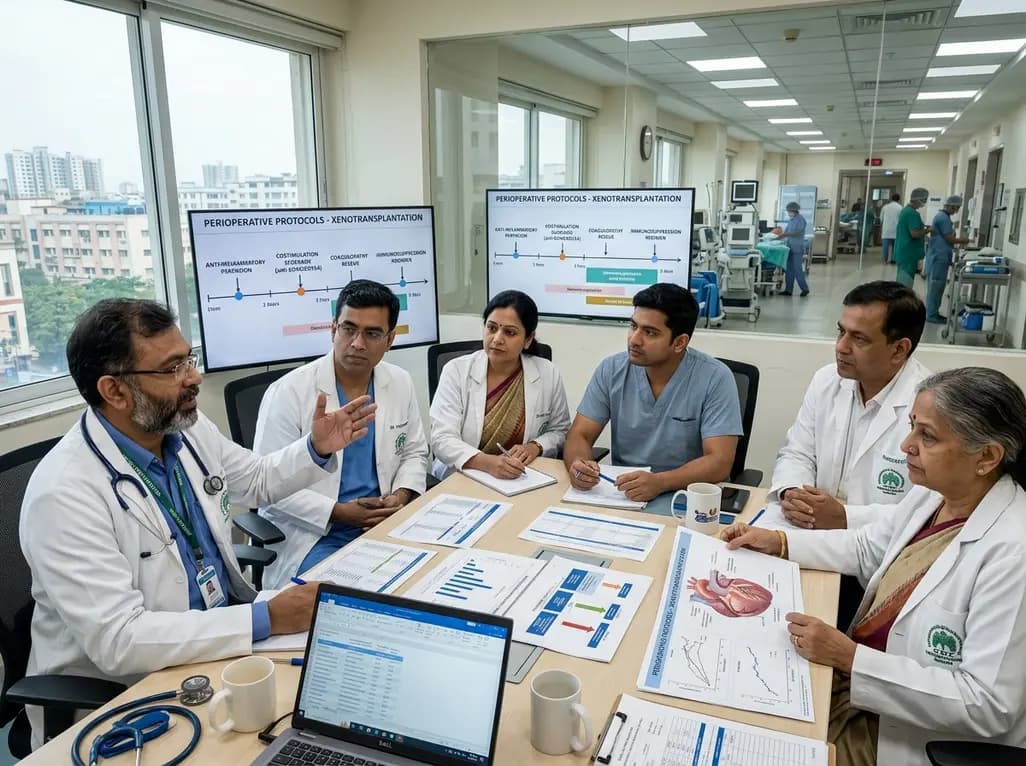
Explore modern perioperative management protocols for clinical xenotransplantation. Learn how costimulation blockade, anti-inflammatory perfusion, and coagulopathy rescue overcome interspecies hurdles.
Yesterday
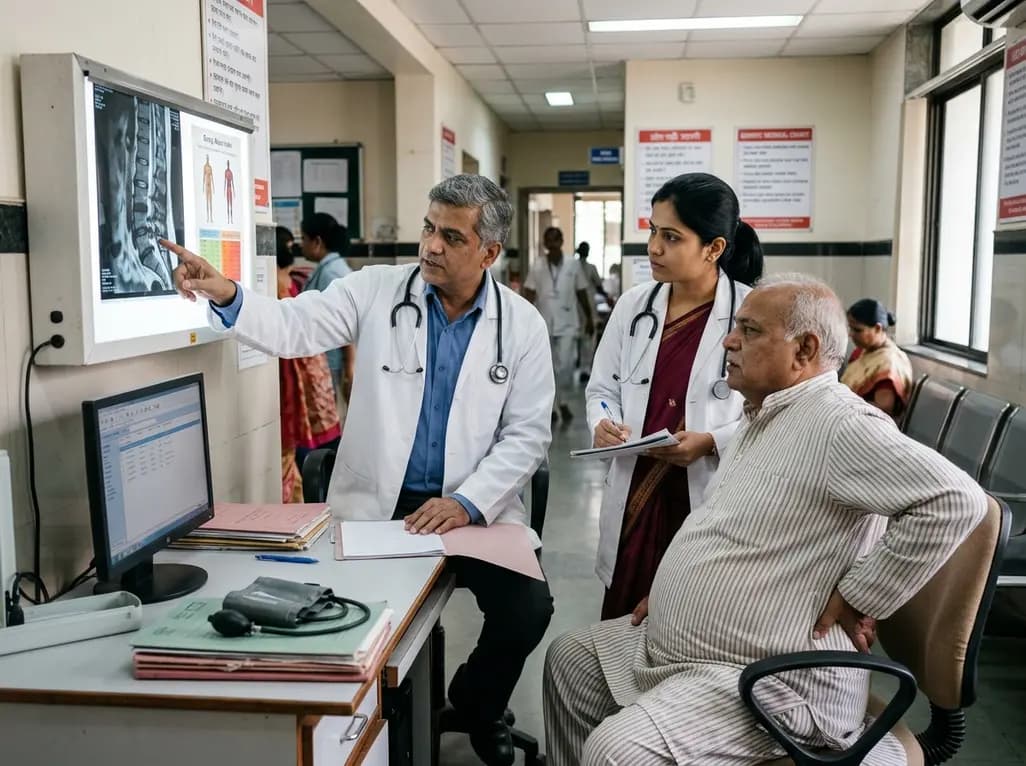
A cross-sectional study reveals that sarcopenic obesity independently increases functional impairment and severe disc degeneration in patients with degenerative lumbar spinal stenosis, highlighting the need for body composition assessment.
Today
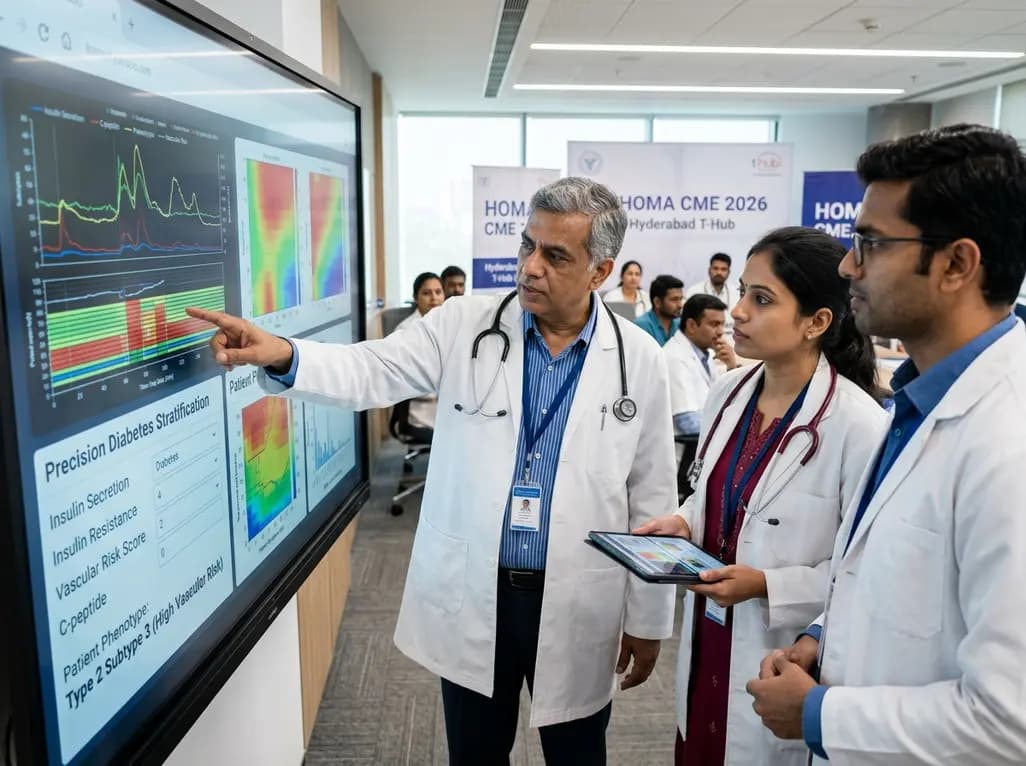
At Homa CME 2026 at Hyderabad's T-Hub, healthcare leaders emphasized moving beyond routine metrics through digital calculators and precision stratification. Discover why characterizing individual insulin secretion, resistance patterns, and vascular risks transforms chronic metabolic care in India.
Yesterday
