

Loading, please wait...
Loading, please wait...

Acute armed conflicts and geopolitical crises profoundly threaten perinatal healthcare delivery and maternal psychological well-being. When hostilities suddenly escalate, hospital systems must rapidly reconfigure facilities to protect vulnerable patients and clinical personnel. A landmark prospective investigation evaluated the maternal birth experience of parturients who delivered in a fortified underground facility following wartime missile threats. The research team systematically gathered maternal responses before delivery and within forty-eight hours postpartum. Furthermore, investigators compared these clinical findings against pre-war baseline metrics gathered during peaceful clinical conditions.
Consequently, the investigation offers crucial objective insights into the intersection of external trauma, hospital environment, and perinatal outcomes. Severe external hazards inevitably compromise the serene, predictable setting traditionally required for physiological labor. Therefore, examining these adverse influences allows obstetricians, midwives, and healthcare administrators to design effective trauma-informed care protocols. Clinicians must understand how extreme ambient stressors fundamentally alter the childbirth journey. By recognizing these psychological vulnerabilities, medical teams can better support parturients experiencing acute environmental crises.
Hospital leadership responded to imminent security threats by moving all obstetric and neonatal services into a subterranean bunker. Although underground facilities offer vital ballistic protection against missile strikes, they present formidable sensory and emotional challenges for laboring patients. Specifically, fortified shelters lack natural daylight, impose physical confinement, and generate continuous mechanical ventilation noise. In addition, the emergency relocation forced clinical personnel to adapt workflows within compressed physical boundaries, drastically altering routine patient movement and clinical ergonomics.
Remarkably, the study documented a twenty-five percent decline in total hospital delivery volume during the wartime period compared to the preceding year. This substantial decrease indicates that many pregnant individuals avoided hospital visits, relocated to safer geographic regions, or encountered severe transport obstacles. Furthermore, remaining parturients navigated labor amid pervasive personal worry regarding family safety. Notably, twenty-two percent of enrolled participants reported having an immediate family member serving on active military duty during their hospital admission, adding intense emotional distress to labor.
The study demonstrated that armed conflict significantly degrades maternal satisfaction across all stages of obstetric hospitalization. Overall, forty-nine percent of surveyed mothers affirmed that the ongoing war negatively affected their childbirth experience. Moreover, an overwhelming eighty percent of participants reported adverse effects on their postpartum hospitalization experience. These stark proportions clearly demonstrate how pervasive environmental distress permeates every phase of the obstetric hospital stay, from active labor through recovery.
Postpartum recovery units in underground shelters frequently experience overcrowding, reduced personal privacy, and restricted visiting hours. Consequently, newly delivered mothers struggle to achieve restorative physical rest after exhaustive labor. Furthermore, heightened security alarms and ambient communal panic disrupt essential bedside healing. Clinicians must recognize that physical safety alone does not ensure a positive birth experience. Therefore, obstetric teams must actively prioritize empathetic emotional support, noise reduction, and structured privacy safeguards even within heavily fortified emergency shelters.
Maternal-newborn bonding represents an exceptionally delicate neurobiological continuum during early postpartum life. Disturbingly, thirty percent of study participants reported that the war negatively affected initial bonding with their newborn. Acute maternal stress triggers intense neuroendocrine cascades, elevating circulating cortisol, epinephrine, and sympathetic nervous system tone. Consequently, this persistent fight-or-flight state suppresses endogenous oxytocin pulsatility, which impedes spontaneous maternal attachment behaviors and complicates early breastfeeding initiation.
In addition, persistent apprehension regarding newborn safety in an active conflict zone evokes severe emotional exhaustion and intrusive postpartum anxiety. When mothers perceive continuous environmental threats, their cognitive bandwidth shifts toward survival rather than calm infant interaction. Therefore, maternity teams must implement targeted bonding interventions immediately following delivery. Healthcare providers can effectively mitigate these neuroendocrine disruptions by actively promoting uninterrupted skin-to-skin contact, encouraging immediate rooming-in, and providing compassionate bedside lactation guidance.
Continuous labor support provides proven psychological and physiological protection during childbirth, reducing pain perception and intervention rates. However, wartime disruptions created significant obstacles for birth companions. Approximately eleven percent of parturients reported that the conflict altered their chosen labor supporter. In many instances, primary partners were unavailable due to military deployment or domestic childcare obligations during the emergency.
Importantly, the study demonstrated an increased maternal preference for continuous support during instrumental births compared to pre-war cohorts. Operative deliveries, including vacuum and forceps extractions, inherently heighten maternal anxiety, pain, and feelings of physical vulnerability. Facing these invasive interventions inside an underground shelter amplified the maternal demand for reassuring emotional presence. Thus, healthcare facilities must maintain compassionate visitor guidelines even during security crises. Furthermore, implementing universal mental health screening and dedicated doula assistance safeguards maternal dignity during acute catastrophes.
Acute maternal stress elevates systemic cortisol and sympathetic tone, which can suppress natural oxytocin pulsatility required for maternal-infant attachment. Furthermore, high environmental anxiety diverts maternal cognitive focus toward immediate survival, reducing emotional responsiveness to newborn cues. Consequently, approximately thirty percent of mothers in crisis zones experience impaired bonding. Providing uninterrupted skin-to-skin contact, quiet recovery environments, and empathetic lactation assistance effectively counteracts these neuroendocrine disruptions and strengthens early attachment.
Instrumental births involve vacuum extractors or forceps, which inherently elevate acute maternal fear, pain perception, and physical vulnerability. In an underground crisis environment, these procedural stressors become magnified by unfamiliar surroundings and underlying trauma. Consequently, parturients strongly desire continuous emotional advocacy and reassurance from a trusted companion during invasive interventions. Having a dedicated support person mitigates panic, improves maternal coping mechanisms, and significantly reduces the psychological trauma often associated with complicated deliveries.
Hospitals establishing emergency maternity facilities must address psychosocial comfort alongside physical safety. Administrators should implement acoustic dampening and warm indirect lighting to soften harsh subterranean architecture. Furthermore, clinical teams must establish clear privacy partitions between postpartum beds to foster dignity and rest. In addition, institutions should facilitate flexible visitation policies, ensuring every parturient maintains continuous labor companionship despite strict hospital-wide security protocols, thereby preserving the essential maternal birth experience.
Disclaimer: This content is for informational and educational purposes only... Refer to the latest local and national guidelines for clinical practice.
References

Read summarized clinical updates, watch expert medical content, and earn CME certifications right from your smartphone.
Open your smartphone camera to scan and install.





A prospective study evaluates the maternal birth experience and early newborn bonding in an underground maternity ward during wartime, revealing significant adverse effects on hospitalization and an increased need for labor support.
Today
A recent cross-sectional study reveals that prolonged residence at high altitude significantly escalates foot frostbite risk among lowland migrants, with chronic mountain sickness acting as a significant physiological mediator through hyperviscosity and microcirculatory stasis.
Today
A litigation-derived series of 252 women highlights the risks of repeat revisions after midurethral sling surgery. Recurrent incontinence occurred in up to 60% of patients, and repeat revision rates reached 70%, emphasizing cautious patient selection and skilled multidisciplinary management.
Today
A multicenter study evaluating paired cardiac CT scans reveals that the virtual circle method reliably predicts index transcatheter valve frame expansion and changes in valve-to-aorta distance during redo-TAVR, offering accurate or conservative coronary risk stratification in 85% of cases.
Today
Synovial plicae are embryologic remnants in major joints that can cause symptomatic synovial plica syndrome when inflamed or fibrotic. This comprehensive clinical guide reviews the embryology, anatomy, MRI features, conservative management, and arthroscopic outcomes across the knee, elbow, hip, and shoulder.
Today
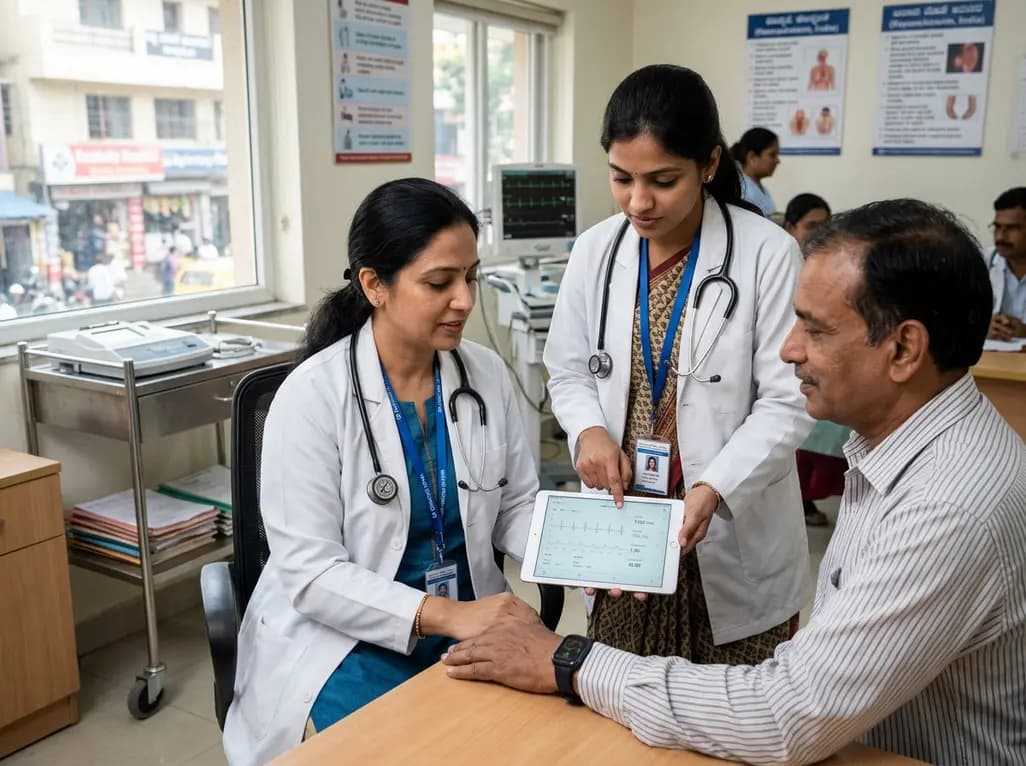
India is poised to transform chronic disease management through wearable health technology. Discover how continuous remote monitoring and predictive algorithms empower clinicians to detect early cardiovascular signals, personalize metabolic interventions, and deliver equitable preventive care across populations.
Today
