.webp&w=384&q=75)

Loading, please wait...
Loading, please wait...
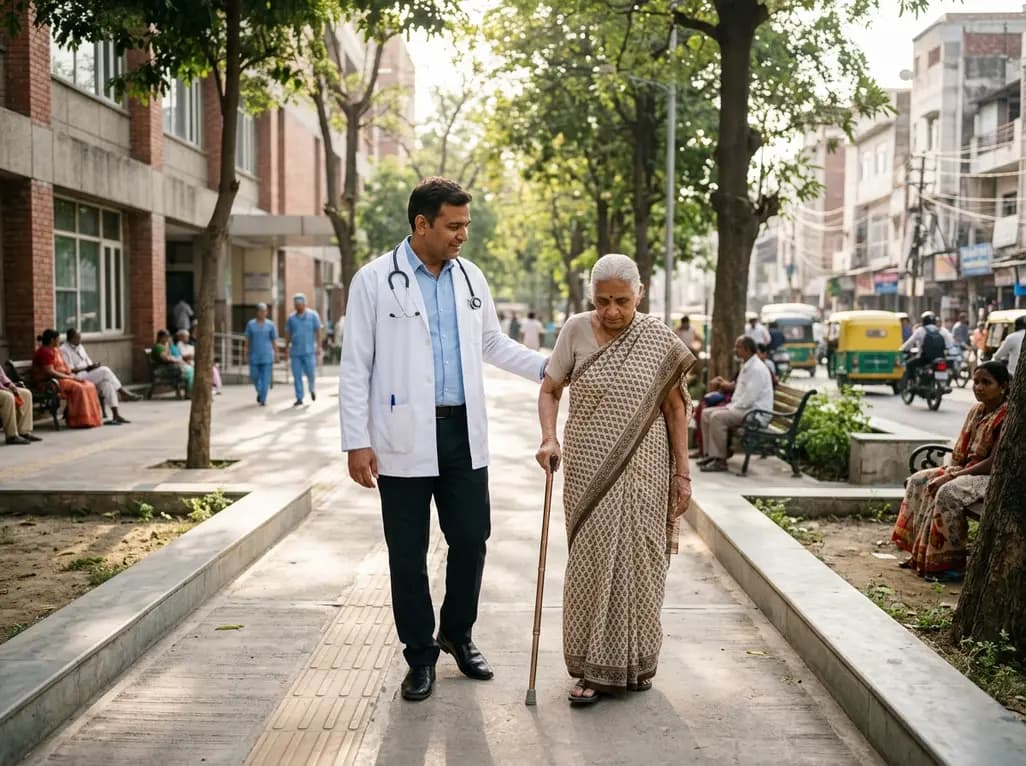
Maintaining functional independence and physical mobility represents a cornerstone of healthy aging across diverse populations. Recent evidence highlights that walkability in older age serves as a vital environmental determinant of physical activity, mental well-being, and social participation. Traditional urban planning and public health frameworks frequently evaluate walkability through generic metrics such as street connectivity and commercial density. However, these conventional tools often fail to capture how sensory decline, musculoskeletal impairments, and cognitive changes alter the walking experience of seniors. A newly published framework establishes a function-sensitive methodology to assess urban built environments specifically for aging individuals. By aligning environmental attributes with individual functional capacities, clinicians and municipal leaders can better support community mobility, reduce fall risks, and mitigate social isolation among vulnerable older adults.
Physical activity provides substantial protection against cardiovascular disease, sarcopenia, metabolic disorders, and cognitive decline in senior populations. Consequently, the immediate neighborhood environment plays an instrumental role in shaping whether an older person stays active or becomes homebound. Walkability describes how conducive a physical setting is to safe, comfortable, and purposeful pedestrian travel. Nevertheless, older adults encounter unique environmental challenges that rarely affect younger demographics. For example, broken footpaths, short pedestrian signal phases, inadequate resting places, and steep curb cuts can quickly transform an ordinary street into an impassable barrier.
Moreover, the psychological perception of environmental safety significantly influences daily physical activity levels. Fear of falling or anxieties surrounding fast-moving traffic often dissuade older adults from venturing outdoors independently. In addition, when local destinations such as pharmacies, grocery markets, and primary healthcare clinics become inaccessible on foot, seniors experience diminished self-efficacy. Therefore, assessing the built environment solely through population density or intersection count provides an incomplete picture of neighborhood usability. Clinicians and urban planners must recognize that environmental demands and individual functional capacities constantly interact to determine real-world mobility.
To overcome the limitations of standard metrics, researchers established an age-specific operationalization framework derived from expert Delphi consensus panels. This comprehensive model integrates three primary environmental dimensions to evaluate neighborhood suitability for older residents. The first dimension centers on the residential environment and transport infrastructure. It evaluates physical footpath quality, sidewalk width, barrier-free access, curb ramp gradations, public transit connectivity, and roadway separation. Consequently, this dimension ensures that basic physical pathways support assistive devices like canes, walkers, and wheelchairs.
The second dimension focuses on the accessibility of essential destinations and social meeting spaces. Older adults require convenient proximity to healthcare facilities, community centers, grocery stores, postal outlets, and green recreational parks. When these destinations sit within manageable walking distances, seniors maintain active daily routines and preserve meaningful social contacts. The third dimension encompasses the aesthetic attractiveness, cleanliness, and overall safety of the environment. Adequate street illumination, presence of shade trees, reduced crime risk, and ample resting benches encourage outdoor engagement. Together, these three interrelated pillars establish a robust foundation for identifying microscale physical barriers and promoting active community living.
A central innovation of the revised assessment paradigm is its systematic examination of the dynamic interplay between functional status and environmental demands. In functional geriatrics, disability does not exist solely within the individual; rather, it emerges when environmental challenges exceed a person's physiological reserves. For instance, an individual with mild knee osteoarthritis may navigate smooth indoor hallways easily but struggle profoundly on uneven cobblestones or steep inclines. Similarly, seniors with reduced visual contrast sensitivity face heightened fall risks when stepping across poorly illuminated or unmarked curbs.
Furthermore, the framework emphasizes that functional limitations fluctuate across time due to acute illnesses or progressive chronic disorders. Therefore, function-sensitive assessments must measure how environments accommodate varying levels of motor, sensory, and cognitive capacities. By utilizing mixed-method research paradigms, such as the Munich WALK initiative, investigators combine geographical information system (GIS) mapping with qualitative walk-and-talk interviews. These real-time field assessments allow older participants to point out micro-level obstacles, including cracked pavement, poorly timed crosswalks, or absent seating. Consequently, this integrative approach links objective spatial datasets directly with subjective, lived functional experiences.
Bridging municipal data with public health initiatives creates powerful opportunities for evidence-based community interventions. When local authorities analyze spatial audit data alongside patient health metrics, they can prioritize infrastructure upgrades in high-density senior neighborhoods. For example, installing mid-block pedestrian refuges, extending crosswalk signal durations, and repairing deteriorated sidewalks deliver immediate safety benefits. In addition, municipal planners can place ergonomic seating benches at frequent intervals, allowing individuals with reduced cardiopulmonary stamina or chronic pain to rest comfortably.
Moreover, creating age-friendly urban corridors fosters social inclusion and reduces the psychological burden of loneliness. Public spaces with pleasant greenery, accessible community gardens, and smooth walking loops stimulate informal social interactions among neighbors. Furthermore, these environmental modifications support active travel modes, reducing reliance on personal motor vehicles or specialized transport. Accordingly, interdisciplinary collaboration between urban architects, transport engineers, and healthcare practitioners is essential to translate functional assessment insights into practical municipal policies. Such collaborative investments generate enduring health dividends across entire urban populations.
For primary care physicians and geriatricians, understanding neighborhood walkability provides essential context for personalized clinical counseling. When advising sedentary older patients to increase daily step counts, clinicians should routinely inquire about local environmental barriers. A patient diagnosed with mild cognitive impairment or vestibular dysfunction may avoid walking simply due to a lack of safe, continuous sidewalks. Therefore, addressing environmental context during comprehensive geriatric assessments allows physicians to offer realistic, actionable lifestyle recommendations.
Additionally, healthcare providers can collaborate with community physiotherapists and occupational therapists to design tailored walking routes. Clinicians can guide patients toward flat, well-lit local parks that feature stable handrails and plentiful seating. Furthermore, medical professionals can serve as proactive public health advocates within their municipal jurisdictions. By presenting clinical evidence on fall prevention, mobility maintenance, and mental health preservation, physicians can encourage local civic bodies to invest in function-sensitive urban redesign. Ultimately, integrating environmental awareness into routine geriatric care ensures more effective management of chronic diseases and promotes sustained healthy aging.
Neighborhood walkability directly promotes daily physical exercise, which significantly lowers the risk of cardiovascular disease, metabolic disorders, sarcopenia, and progressive cognitive impairment. Furthermore, accessible pedestrian environments foster community mobility, enabling older adults to complete personal errands and visit healthcare centers independently. Consequently, seniors who reside in highly walkable neighborhoods report superior quality of life, fewer depressive symptoms, and substantially lower rates of social isolation.
A function-sensitive urban environment incorporates smooth, well-maintained sidewalks without elevation hazards, tactile paving, and curb ramps with gentle slopes. In addition, it integrates longer pedestrian crossing signals, frequent shaded benches for resting, bright nighttime illumination, and clean public restrooms. These thoughtful physical accommodations enable older adults with mild motor, visual, or cardiopulmonary limitations to navigate their surrounding communities safely and comfortably without facing excessive physical strain.
Healthcare practitioners can incorporate built environment evaluations by routinely inquiring about outdoor physical barriers, local footpath conditions, and transit accessibility during comprehensive geriatric reviews. Consequently, doctors can prescribe individualized physical exercise routines that utilize safe community pathways, recommend suitable assistive mobility aids, and connect patients with localized senior support programs. Furthermore, clinicians can leverage clinical insights to advocate for municipal improvements that support older adult mobility.
Disclaimer: This content is for informational and educational purposes only and does not constitute medical advice or substitute for professional clinical judgment. Refer to the latest local and national guidelines for clinical practice.
References

Read summarized clinical updates, watch expert medical content, and earn CME certifications right from your smartphone.
Open your smartphone camera to scan and install.





A function-sensitive framework evaluates urban walkability for older adults by examining the interaction between built environments and functional capacities to support mobility, fall prevention, and healthy aging.
last month

This clinical review examines the dangerous intersection of climate change and antimicrobial resistance (AMR). It highlights thermal selection, altered transmission pathways, and the imperative for One Health and Planetary Health adaptation frameworks to preserve therapeutic efficacy.
Today
Discover the crucial distinctions between mesonephric and mesonephric-like proliferations of the female genital tract. Learn the key histomorphologic, immunohistochemical, and molecular differences essential for accurate diagnosis and clinical management.
Today
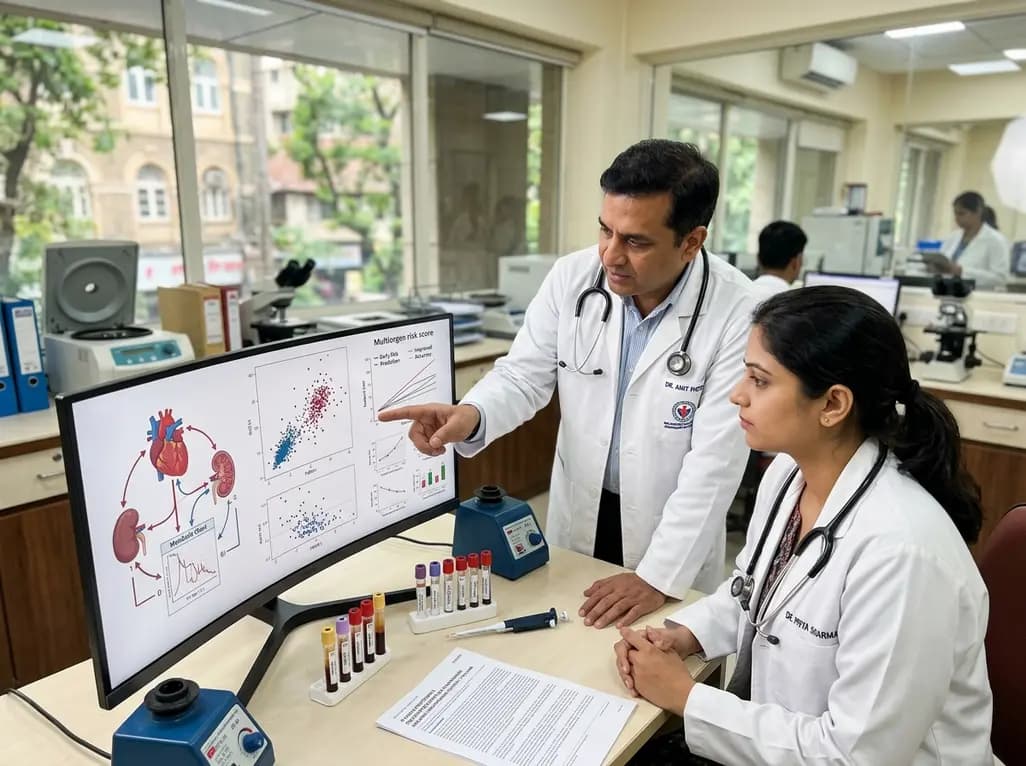
A large UK Biobank study reveals that plasma proteomic signatures capture preclinical organ damage and improve multiorgan risk prediction across early CKM syndrome stages 0 to 2 beyond traditional PREVENT clinical models.
Today

A narrative review investigates whether the articularis genus muscle functions as an independent anatomical entity or blends with the vastus intermedius. We evaluate its morphology, role in retracting the suprapatellar bursa, and direct clinical significance in anterior knee pain and arthroplasty.
Today

A Bayesian multilevel meta-analysis reveals that aerobic training combined with moderate carbohydrate restriction modestly lowers HbA1c in type 2 diabetes. However, sparse data and very low certainty leave incremental benefits over exercise or diet alone unproven, highlighting the need for individualized care.
Today
